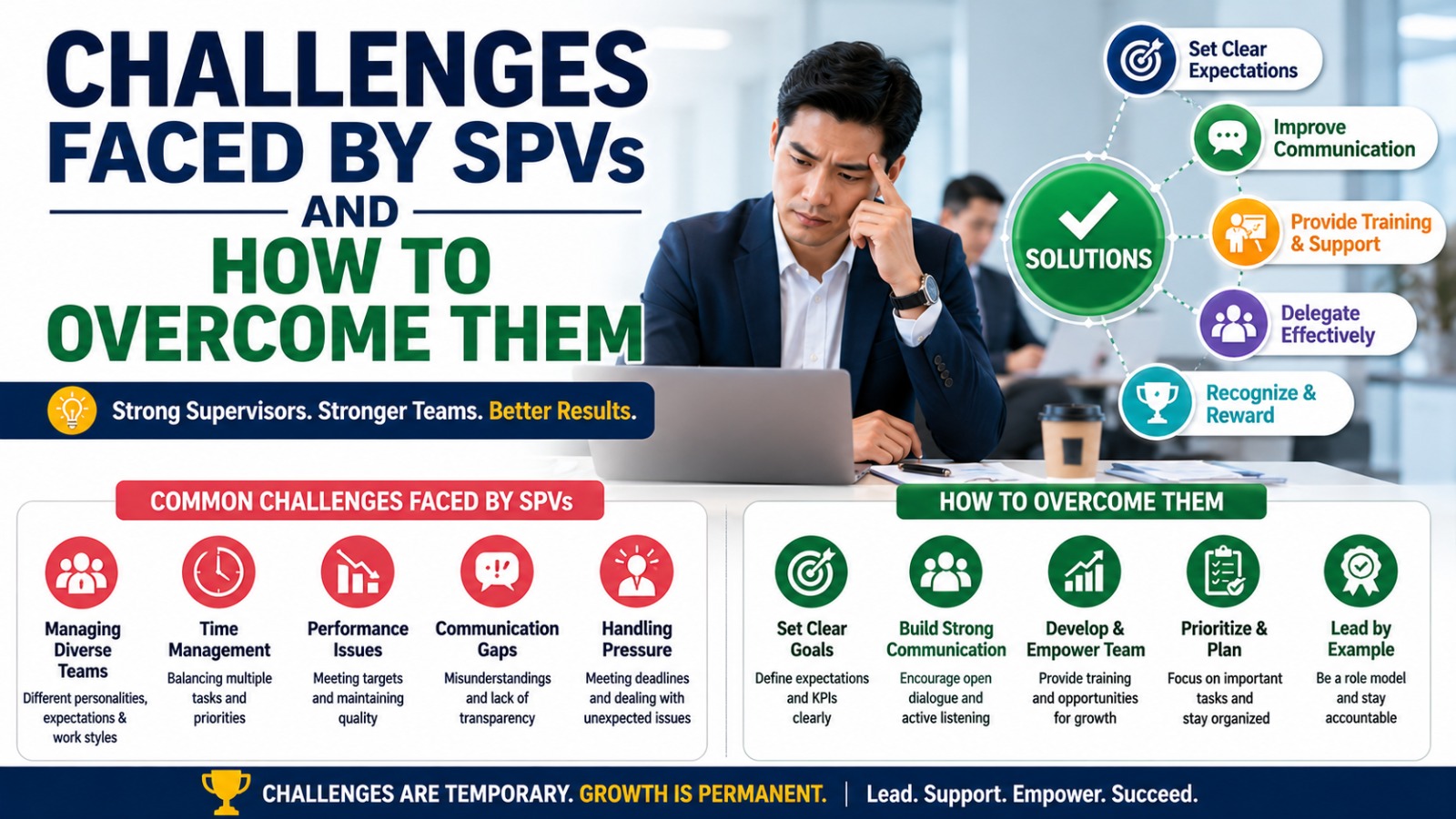
Supervisors, commonly known as SPVs, play a critical role in managing daily business operations and ensuring team productivity. They act as a bridge between management and employees, making their responsibilities both challenging and demanding. SPVs are expected to maintain discipline, solve workplace problems, motivate employees, and achieve company targets at the same time.
Because of these responsibilities, supervisors often face various challenges that can affect team performance and operational efficiency. Understanding these challenges and learning how to overcome them can help SPVs become more effective leaders and improve workplace productivity.
DIFFICULTY MANAGING DIFFERENT PERSONALITIES
One of the biggest challenges faced by supervisors is managing employees with different personalities, attitudes, and work styles. Some employees may work well independently, while others require more guidance and motivation.
Conflicts can also occur when team members have different opinions or communication styles.
HOW TO OVERCOME IT
SPVs should develop strong communication and emotional intelligence skills. Understanding employee personalities helps supervisors choose the best management approach for each individual.
Effective strategies include:
- Listening actively to employee concerns
- Encouraging respectful communication
- Treating employees fairly
- Building positive relationships within the team
Good interpersonal skills help supervisors maintain a harmonious work environment.
PRESSURE TO ACHIEVE COMPANY TARGETS
Supervisors are often responsible for ensuring teams meet productivity goals, sales targets, or operational deadlines. High expectations from management can create significant pressure.
When targets are difficult to achieve, supervisors may experience stress and frustration.
HOW TO OVERCOME IT
SPVs should improve planning and time management skills. Breaking large targets into smaller achievable goals can help teams stay focused and motivated.
Supervisors should also:
- Monitor team progress regularly
- Provide clear instructions
- Support employees facing difficulties
- Encourage teamwork and collaboration
Strong organization helps supervisors manage pressure more effectively.
HANDLING EMPLOYEE DISCIPLINE PROBLEMS
Workplace discipline issues such as lateness, poor attendance, low productivity, or rule violations are common challenges for supervisors.
Managing disciplinary problems incorrectly may reduce employee morale or create workplace tension.
HOW TO OVERCOME IT
Supervisors should address discipline problems professionally and consistently. Clear workplace rules and fair treatment are essential.
Helpful approaches include:
- Providing constructive feedback
- Conducting private discussions
- Applying company policies consistently
- Recognizing positive improvements
Balanced discipline management encourages accountability without damaging employee relationships.
LACK OF COMMUNICATION BETWEEN MANAGEMENT AND EMPLOYEES
SPVs often serve as the communication link between upper management and staff members. Miscommunication can lead to confusion, low morale, and reduced productivity.
Employees may also feel frustrated if information is unclear or delayed.
HOW TO OVERCOME IT
Supervisors should prioritize transparent and effective communication. Important updates should be delivered clearly and promptly to all team members.
Regular meetings, feedback sessions, and open discussions can improve communication flow within the workplace.
EMPLOYEE MOTIVATION ISSUES
Some employees may lose motivation due to workload stress, limited career growth, or lack of recognition. Low motivation can reduce team productivity and workplace morale.
HOW TO OVERCOME IT
SPVs can improve employee motivation by:
- Recognizing employee achievements
- Providing encouragement and support
- Offering development opportunities
- Creating positive work environments
- Setting realistic goals
Motivated employees are generally more productive and cooperative.
CONFLICT RESOLUTION CHALLENGES
Workplace conflicts between employees can disrupt teamwork and create uncomfortable work environments. Supervisors are often responsible for resolving disputes fairly.
HOW TO OVERCOME IT
Supervisors should remain neutral and focus on finding solutions rather than blaming individuals. Listening to all parties involved helps identify the root cause of the conflict.
Effective conflict resolution requires:
- Calm communication
- Fair decision-making
- Respectful mediation
- Clear workplace policies
Quick and professional conflict handling helps maintain workplace harmony.
ADAPTING TO WORKPLACE CHANGES
Technology, business strategies, and company policies continue to evolve. Supervisors may struggle to adapt to new systems or help employees adjust to changes.
HOW TO OVERCOME IT
SPVs should remain open to learning and continuous improvement. Participating in leadership training and skill development programs can improve adaptability.
Supervisors should also guide employees through transitions by providing clear explanations and proper support.
MANAGING WORKLOAD AND STRESS
Supervisors often balance multiple responsibilities, including reporting, monitoring employee performance, solving operational problems, and meeting deadlines. Heavy workloads may lead to burnout.
HOW TO OVERCOME IT
Effective time management and delegation are essential for reducing stress. Supervisors should prioritize important tasks and avoid handling everything alone.
Maintaining work-life balance and seeking management support when necessary can also improve stress management.
BUILDING TEAM COOPERATION
Some teams struggle with collaboration, communication, or trust issues. Poor teamwork can reduce operational efficiency and workplace morale.
HOW TO OVERCOME IT
SPVs should encourage teamwork by promoting mutual respect, collaboration, and shared goals.
Team-building activities, open communication, and positive leadership can strengthen team relationships and improve cooperation.
CONCLUSION
Supervisors face many workplace challenges, including managing employee behavior, achieving company targets, resolving conflicts, and maintaining team motivation. These responsibilities require strong leadership, communication, and problem-solving skills.
By developing effective management strategies and maintaining positive workplace relationships, SPVs can overcome challenges successfully and lead their teams more effectively. Strong supervision not only improves employee performance but also supports overall organizational success.
Tentang Penulis
Gusti Ayu Tita P
Penulis — Universitas STEKOM
Penulis aktif yang berfokus pada isu-isu akademik, teknologi pendidikan, dan pengembangan sumber daya manusia di lingkungan kampus.