
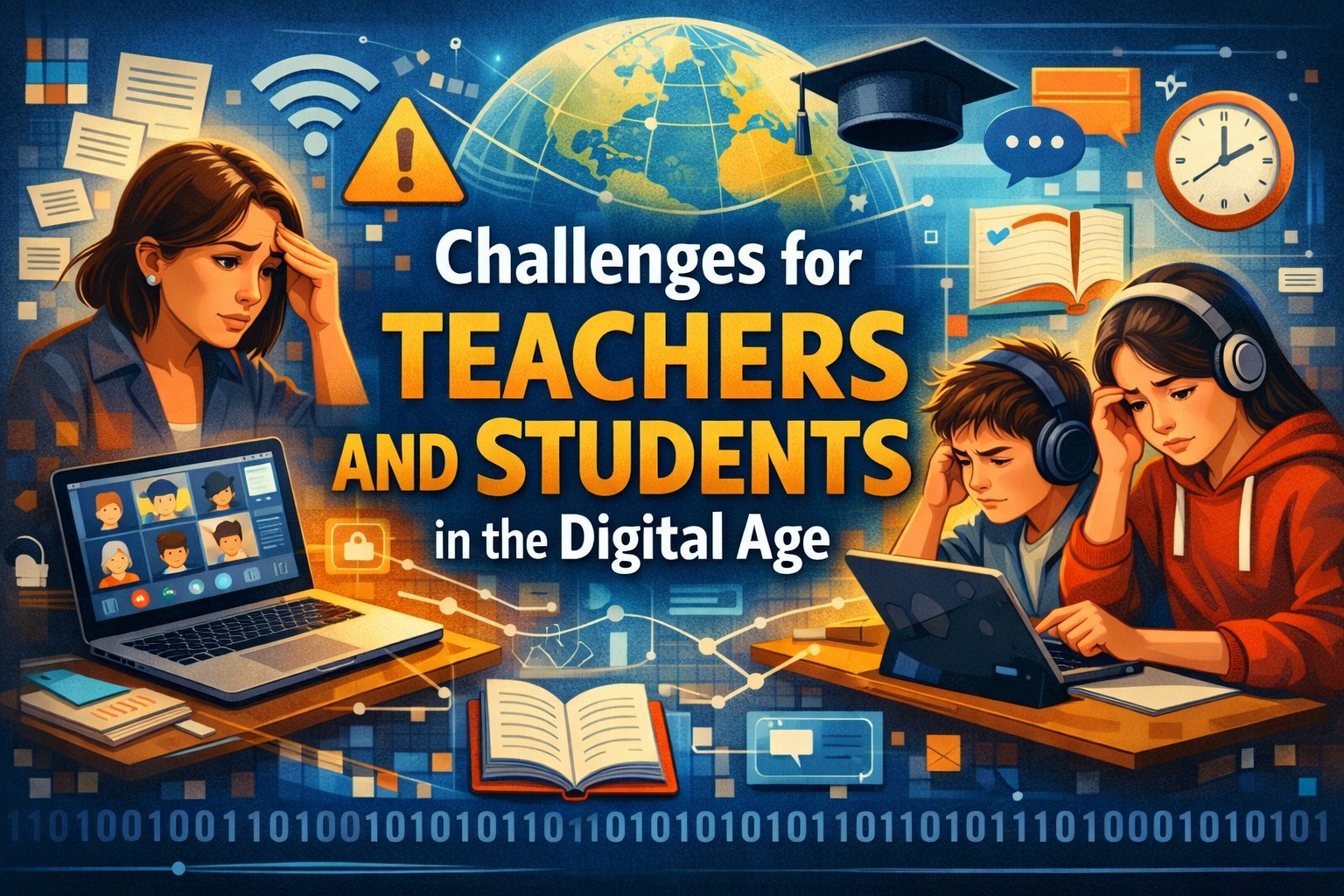
The digital age has transformed the education sector in remarkable ways. Technology has introduced online learning platforms, virtual classrooms, artificial intelligence, and interactive educational tools that make learning more flexible and accessible. While these innovations offer many benefits, they also create significant challenges for both teachers and students.
In today’s modern educational environment, teachers and students must adapt to rapid technological changes while maintaining effective learning processes. Therefore, understanding the challenges of the digital age is essential for improving the quality of education and preparing future generations for global competition.
THE IMPACT OF DIGITAL TECHNOLOGY ON EDUCATION
Technology has changed how education is delivered and accessed. Students can now learn through online courses, digital applications, educational videos, and virtual collaboration tools.
Teachers also use technology to create interactive lessons and improve classroom engagement. Digital platforms allow learning to continue beyond traditional classrooms, making education more flexible and efficient.
However, the increasing dependence on technology also creates new educational problems that affect teaching and learning experiences.
CHALLENGES FACED BY STUDENTS
One of the biggest challenges for students in the digital age is maintaining focus during learning activities. Social media, online games, and digital entertainment often distract students from their studies.
Students also face information overload because of the large amount of online content available. Without proper guidance, they may struggle to identify reliable information sources.
Another challenge is unequal access to technology. Some students still lack internet access, laptops, or digital devices needed for modern learning systems.
In addition, excessive screen time can affect students’ physical health, mental well-being, and social interaction skills.
CHALLENGES FACED BY TEACHERS
Teachers also experience many challenges in adapting to digital education systems. Some educators still need additional training to effectively use digital teaching tools and online learning platforms.
Managing virtual classrooms can be difficult because teachers may struggle to maintain student engagement and discipline in online environments.
The rapid development of educational technology also requires teachers to continuously improve their digital skills and teaching strategies.
In addition, teachers often face increased workloads due to online assessments, digital content preparation, and administrative responsibilities.
THE IMPORTANCE OF DIGITAL LITERACY
Digital literacy has become an essential skill for both teachers and students. Students must learn how to use technology responsibly, avoid misinformation, and protect themselves from online risks.
Teachers also need strong digital literacy skills to create effective learning materials and guide students in using digital tools productively.
Schools should integrate digital literacy programs into their curriculum to help students and teachers adapt to technological changes successfully.
CHARACTER EDUCATION IN THE DIGITAL ERA
Despite technological advancement, character education remains an important part of modern learning. Students need moral values such as discipline, honesty, empathy, and responsibility to use technology wisely.
The influence of social media and online culture can negatively affect students if they are not guided properly. Problems such as cyberbullying, plagiarism, and digital addiction are becoming more common in the digital age.
Schools and families must work together to strengthen students’ character development alongside technological education.
STRATEGIES TO OVERCOME DIGITAL CHALLENGES
Several strategies can help teachers and students face the challenges of the digital age. Schools should provide adequate technological infrastructure and equal access to digital learning resources.
Teacher training programs must also be improved to help educators develop digital teaching skills and innovative learning methods.
In addition, schools should encourage balanced technology use by promoting healthy digital habits and time management for students.
Interactive learning methods such as project-based learning, collaborative activities, and blended learning can also improve student engagement and learning outcomes.
THE FUTURE OF DIGITAL EDUCATION
The future of education will continue to evolve with technological advancement. Artificial intelligence, virtual reality, and personalized learning systems are expected to become more common in educational institutions.
However, technology should support learning rather than replace human interaction completely. Teachers will continue to play an essential role in guiding students academically and emotionally.
A balanced approach between technology, creativity, and character education will create a stronger and more sustainable education system.
CONCLUSION
The digital age presents both opportunities and challenges for teachers and students. Technology has improved access to education and created innovative learning methods, but it has also introduced issues such as distractions, digital inequality, and technological adaptation challenges.
By strengthening digital literacy, improving teacher competence, promoting character education, and providing equal access to technology, schools can better prepare students for future success. Collaboration between educators, parents, and governments is essential to create an effective and inclusive digital education system.
Tentang Penulis
Gusti Ayu Tita
Penulis — Universitas STEKOM
Penulis aktif yang berfokus pada isu-isu akademik, teknologi pendidikan, dan pengembangan sumber daya manusia di lingkungan kampus.



