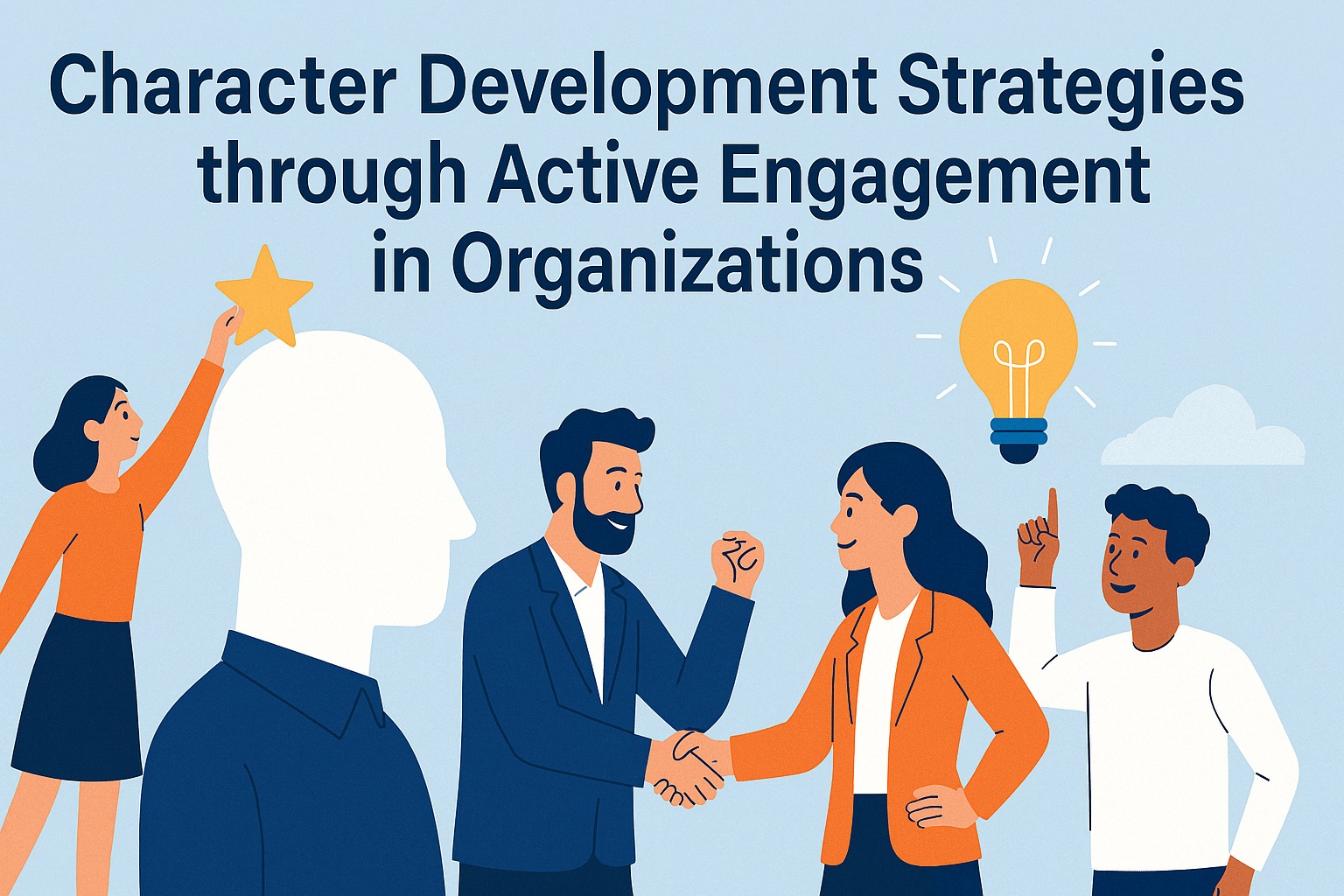
Active engagement in organizations represents an effective strategy for character development in academic and professional contexts. Character is not formed solely through theoretical learning, but through continuous practice, responsibility, and reflection. Organizational environments provide real-life situations that challenge individuals to demonstrate discipline, integrity, collaboration, and resilience.By participating consistently in organizational activities, individuals gain experiential learning opportunities that strengthen their moral foundation and leadership potential.
ACTIVE PARTICIPATION AS A FOUNDATION FOR CHARACTER GROWTH
Character development begins with active involvement. Individuals who take initiative in organizational programs learn to move beyond passive participation. They become responsible contributors rather than mere observers.
Through structured roles and responsibilities, members develop accountability and time management skills. Meeting deadlines, fulfilling commitments, and maintaining consistency cultivate discipline. These habits gradually form a reliable and trustworthy personality.
Active engagement also encourages self-awareness. Interaction with peers exposes individuals to feedback, helping them recognize areas for improvement and refine personal values.
STRATEGIC LEARNING THROUGH RESPONSIBILITY AND REFLECTION
Organizations create strategic learning opportunities through practical challenges. Managing events, coordinating teams, and solving unexpected problems require critical thinking and emotional control.
After completing projects, evaluation sessions allow members to reflect on successes and shortcomings. This reflective practice strengthens emotional intelligence and moral reasoning.
By continuously combining action and reflection, individuals develop balanced character traits such as humility, perseverance, and fairness. These qualities are essential for sustainable leadership growth.
COLLABORATION AS A TOOL FOR ETHICAL FORMATION
Collaboration within organizations teaches respect for diversity and shared responsibility. Members must cooperate with individuals from different backgrounds, perspectives, and communication styles.
Through teamwork, individuals learn empathy, patience, and negotiation skills. Resolving conflicts constructively reinforces ethical behavior and mutual respect.
This collaborative process ensures that character formation is not individualistic but socially grounded. Ethical awareness becomes embedded in everyday interaction.
LONG-TERM IMPACT ON PERSONAL AND PROFESSIONAL LIFE
Character developed through organizational engagement has long-term implications. Individuals who actively participate in organizations often demonstrate higher confidence, adaptability, and leadership competence.
In professional environments, these qualities translate into stronger teamwork, responsible decision-making, and ethical conduct. Employers recognize such individuals as reliable and capable contributors.
Beyond career advantages, strong character supports personal stability and meaningful social relationships. It becomes a guiding framework for navigating complex life situations.
CONCLUSION
Character development strategies through active engagement in organizations combine responsibility, reflection, and collaboration. Organizational participation offers practical experiences that shape discipline, integrity, and resilience.
By committing to active involvement, individuals invest in long-term personal growth and professional readiness. In a world that demands competence and ethical awareness, strong character remains the foundation of lasting success.
Tentang Penulis
Gusti Ayu Tita
Penulis — Universitas STEKOM
Penulis aktif yang berfokus pada isu-isu akademik, teknologi pendidikan, dan pengembangan sumber daya manusia di lingkungan kampus.