
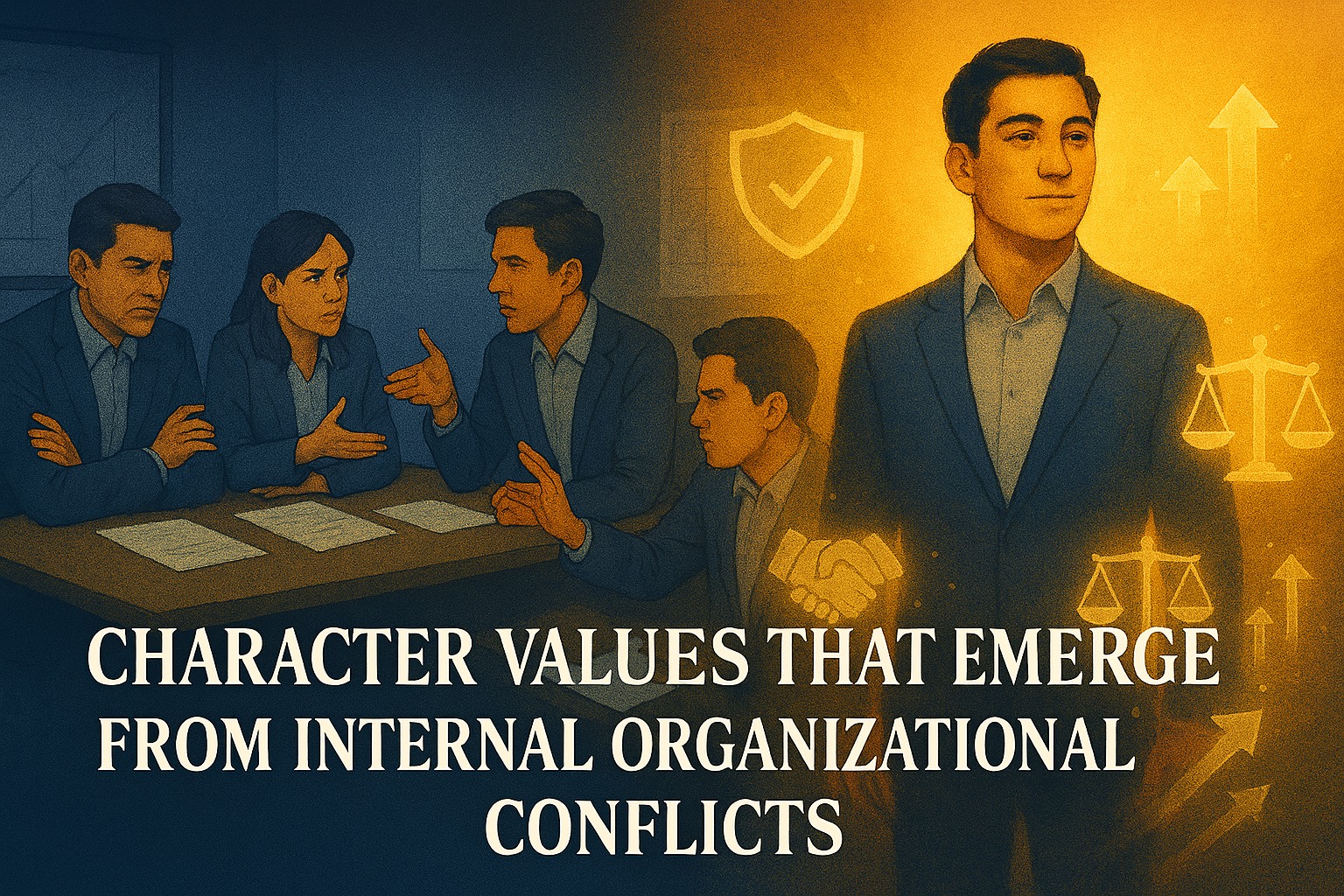
Internal organizational conflicts are often viewed as disruptive and counterproductive. However, when managed constructively, these conflicts can become powerful catalysts for character development. Within teams, committees, and leadership structures, disagreements are inevitable. Yet it is precisely through these moments of tension that essential character values begin to emerge.
Rather than weakening an organization, internal conflicts can strengthen individuals by refining emotional intelligence, integrity, accountability, and resilience. For young professionals and students alike, understanding how character values develop through organizational conflict is key to long-term personal growth.
CONFLICT AS A NATURAL PART OF ORGANIZATIONAL LIFE
No organization operates without differences in opinion. Members bring diverse perspectives, cultural backgrounds, communication styles, and expectations. These differences often lead to misunderstandings or competing priorities.
Instead of seeing conflict as failure, it should be recognized as a natural outcome of collaboration. When individuals engage in discussions about strategy, resource allocation, or leadership direction, disagreements reflect active participation rather than dysfunction.
By accepting conflict as normal, organizations create space for learning rather than avoidance.
EMOTIONAL INTELLIGENCE THROUGH DISAGREEMENT
One of the most significant character values that emerges from internal organizational conflicts is emotional intelligence. When tensions rise, individuals must manage their reactions carefully.
Responding with patience rather than anger, listening instead of interrupting, and seeking understanding instead of dominance require emotional maturity. These behaviors are not automatic; they develop through repeated exposure to challenging situations.
Over time, members learn to separate personal feelings from professional responsibilities. This ability to regulate emotions becomes a lasting strength in both workplace and personal relationships.
INTEGRITY TESTED UNDER PRESSURE
Conflict often tests integrity. In moments of disagreement, individuals may feel tempted to manipulate information, shift blame, or prioritize personal interests.
However, those who choose honesty and fairness during conflict strengthen their moral foundation. Upholding transparency, admitting mistakes, and standing by ethical principles build credibility within the organization.
Integrity shaped through conflict is stronger than integrity formed in comfort. It reflects conscious choices made under pressure.
ACCOUNTABILITY AND OWNERSHIP
Internal conflicts frequently reveal gaps in communication, planning, or execution. These situations require individuals to take responsibility for their roles.
Acknowledging mistakes and participating in solution-building demonstrate accountability. Instead of blaming others, responsible members focus on collective improvement.
This sense of ownership fosters maturity. Over time, accountability becomes embedded in personal standards of behavior, influencing professional conduct beyond the organization.
RESILIENCE AND ADAPTABILITY
Organizational conflicts can be emotionally draining. However, navigating them successfully builds resilience. Members learn that tension does not signal collapse but an opportunity for refinement.
By working through disagreements, individuals develop adaptability. They learn to adjust perspectives, compromise strategically, and seek balanced solutions.
This resilience prepares them for complex environments where differing opinions are common. Rather than avoiding conflict, they approach it with confidence and problem-solving skills.
LONG TERM CHARACTER DEVELOPMENT
The character values formed through internal organizational conflicts extend far beyond meetings and projects. Emotional intelligence, integrity, accountability, and resilience become defining traits.
In professional settings, individuals who have navigated organizational conflict effectively are better equipped to handle workplace disagreements and leadership challenges. They understand that growth often comes through discomfort.
Internal conflict, when addressed constructively, is not a threat to character it is a training ground for it. Through honest dialogue and shared responsibility, organizations become spaces where strong values are not only discussed but lived.
Tentang Penulis
Gusti Ayu Tita
Penulis — Universitas STEKOM
Penulis aktif yang berfokus pada isu-isu akademik, teknologi pendidikan, dan pengembangan sumber daya manusia di lingkungan kampus.



