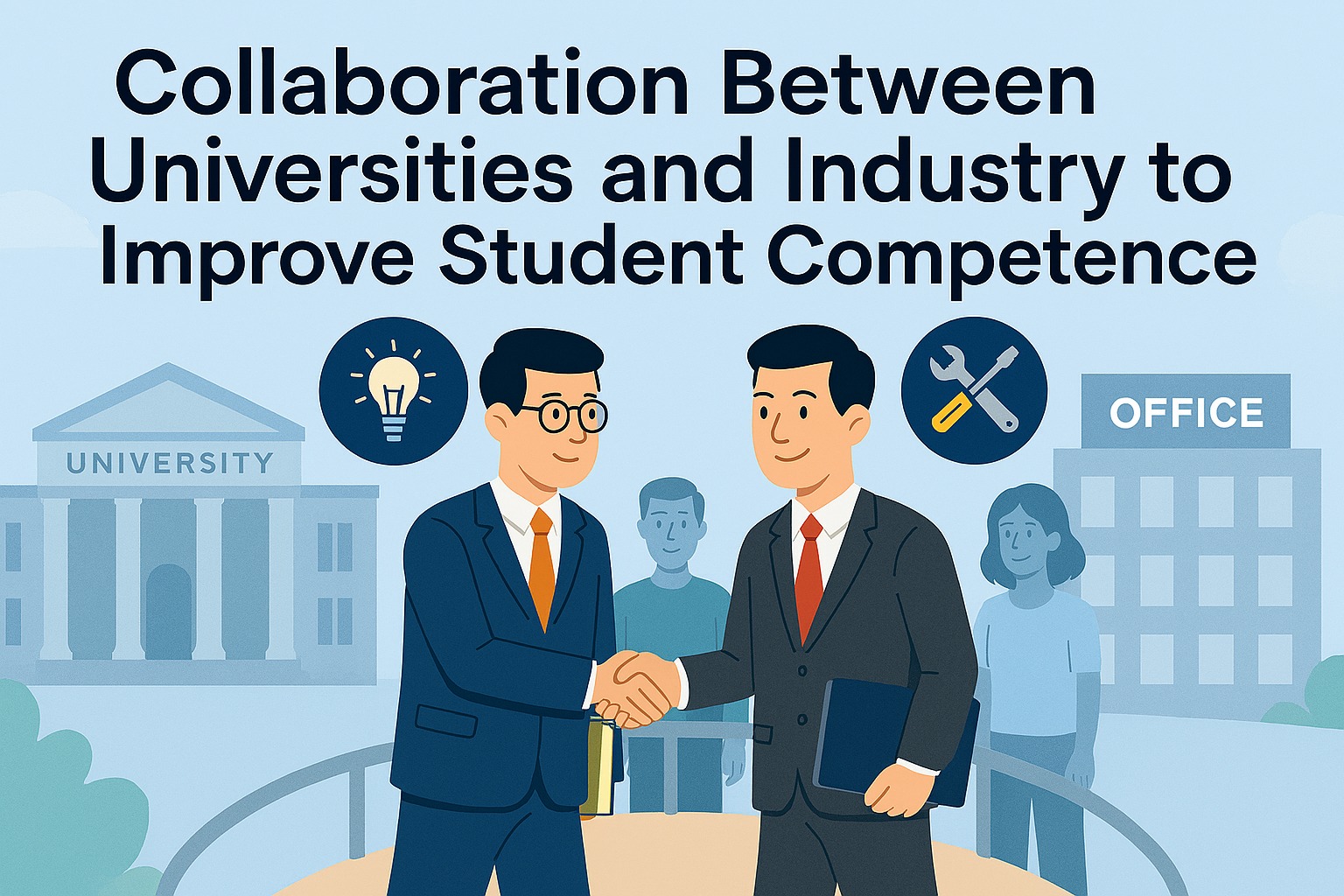
In an increasingly competitive and technology-driven job market, graduates are expected to be more than academically qualified. Employers seek individuals who possess relevant skills, practical experience, and the ability to adapt to real workplace demands. Collaboration between universities and industry has become a key strategy to improve student competence and career readiness. By working together, universities and industry partners can align academic learning with real-world needs, ensuring that students develop both theoretical understanding and practical skills that are relevant to current and future labor markets.
THE NEED FOR UNIVERSITY–INDUSTRY COLLABORATION
The rapid evolution of industries often creates a gap between what is taught in classrooms and what is required in the workplace. Without strong collaboration, graduates may struggle to meet industry expectations.
University–industry collaboration helps to:
- Align curricula with industry standards
- Reduce skill gaps among graduates
- Ensure education remains relevant and up to date
This partnership allows education systems to respond more effectively to workforce demands.
ENHANCING PRACTICAL SKILLS THROUGH REAL-WORLD EXPOSURE
One of the most significant benefits of collaboration is increased access to real-world learning experiences. Industry involvement provides students with opportunities to engage in internships, projects, and applied research.
Through these experiences, students can:
- Apply theoretical knowledge in professional settings
- Gain hands-on experience with industry tools and technologies
- Understand workplace processes and expectations
This exposure strengthens practical competence and confidence.
INDUSTRY INPUT IN CURRICULUM DEVELOPMENT
Industry participation in curriculum design ensures that academic programs reflect current professional practices. Employers can offer insights into emerging trends, required skills, and technological advancements.
With industry input, curricula become:
- More relevant to market needs
- Focused on in-demand competencies
- Better aligned with career pathways
This approach helps students graduate with skills that are immediately applicable.
DEVELOPING SOFT SKILLS AND PROFESSIONAL ATTITUDES
Beyond technical expertise, collaboration with industry supports the development of essential soft skills. Interaction with professionals helps students learn communication, teamwork, and workplace ethics.
Key soft skills developed include:
- Professional communication
- Collaboration and leadership
- Problem-solving and adaptability
These competencies are critical for long-term career success.
BENEFITS FOR STUDENTS, UNIVERSITIES, AND INDUSTRY
University–industry collaboration creates mutual benefits for all stakeholders. Students gain valuable experience and improved employability, while universities enhance educational quality and relevance.
Industry partners benefit by:
- Accessing skilled and job-ready graduates
- Contributing to workforce development
- Identifying potential future employees
This collaborative ecosystem supports sustainable talent development.
CHALLENGES AND STRATEGIES FOR EFFECTIVE COLLABORATION
Despite its benefits, collaboration can face challenges such as misaligned expectations, limited resources, or communication barriers. To overcome these issues, clear objectives and structured partnerships are essential.
Effective strategies include:
- Establishing long-term partnerships
- Defining shared goals and responsibilities
- Regular evaluation and feedback mechanisms
These strategies help ensure collaboration remains productive and impactful.
CONCLUSION
Collaboration between universities and industry plays a crucial role in improving student competence. By integrating academic learning with real-world experience, such partnerships equip students with relevant skills, practical knowledge, and professional attitudes. As industries continue to evolve, strong university–industry collaboration will remain essential in preparing students for successful and sustainable careers.
Tentang Penulis
Gusti Ayu Tita
Penulis — Universitas STEKOM
Penulis aktif yang berfokus pada isu-isu akademik, teknologi pendidikan, dan pengembangan sumber daya manusia di lingkungan kampus.