
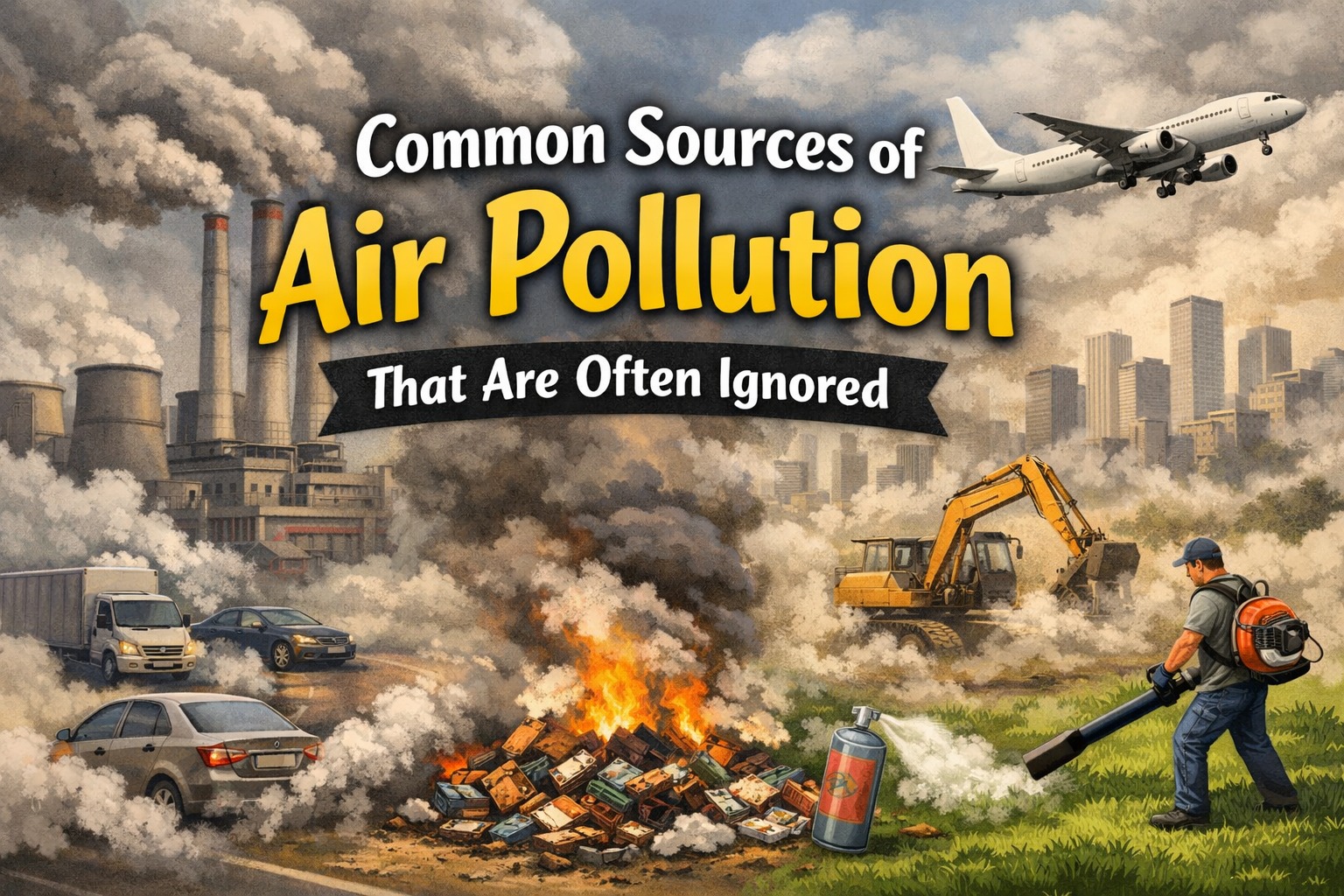
Air pollution has become one of the biggest environmental problems in modern society. Many people assume that pollution only comes from factories, vehicles, or industrial waste. However, there are several hidden sources of air pollution that are often ignored in daily life. These unnoticed contributors can significantly affect human health, environmental quality, and overall well-being.
Understanding these common yet overlooked pollution sources is important for creating a cleaner and healthier environment. By recognizing them, individuals and communities can take simple steps to reduce harmful emissions and improve air quality.
WHY AIR POLLUTION MATTERS
Air pollution affects millions of people around the world every year. Poor air quality can lead to respiratory diseases, heart problems, allergies, and even long-term health complications. Children, elderly individuals, and people with weak immune systems are especially vulnerable.
In addition to health impacts, polluted air also damages ecosystems, contributes to climate change, and reduces overall quality of life. This is why identifying hidden pollution sources is just as important as controlling major industrial emissions.
HOUSEHOLD CLEANING PRODUCTS
Many household cleaning products release harmful chemicals into the air. Products such as air fresheners, bleach, disinfectants, and aerosol sprays often contain volatile organic compounds (VOCs). These chemicals can cause indoor air pollution and may trigger headaches, breathing difficulties, and skin irritation.
Using natural cleaning alternatives or ensuring proper ventilation can help reduce indoor pollution caused by these products.
BURNING TRASH AT HOME
In some communities, burning household waste is still considered a practical way to dispose of garbage. Unfortunately, this activity releases toxic gases and fine particles into the air. Plastic, rubber, and synthetic materials produce dangerous smoke that can harm both humans and the environment.
Reducing waste, recycling materials, and using proper waste management systems are better solutions to prevent air contamination.
CIGARETTE SMOKE
Cigarette smoke is another major source of indoor air pollution that is often underestimated. Both active smokers and passive smokers are exposed to harmful chemicals such as carbon monoxide and tar. Continuous exposure can increase the risk of lung disease, asthma, and heart problems.
Creating smoke-free environments at home and in public places can significantly improve air quality.
VEHICLES LEFT IDLING
Many people leave their vehicles running while parked, especially when waiting for someone or using air conditioning. Although it may seem harmless, idling vehicles continue to release exhaust emissions into the atmosphere. These emissions contribute to carbon dioxide buildup and poor urban air quality.
Turning off engines when not in use is a simple habit that can reduce unnecessary pollution.
CONSTRUCTION DUST
Construction activities generate large amounts of dust and microscopic particles. Renovation projects, road repairs, and building demolitions can spread pollutants into nearby neighborhoods. Without proper dust control, these particles may affect breathing and visibility.
Construction companies should apply safety measures such as water spraying and protective barriers to minimize dust pollution.
USE OF GENERATORS
Portable generators are commonly used during power outages or in areas with unstable electricity. However, generators powered by gasoline or diesel produce harmful exhaust fumes. Prolonged exposure to generator emissions may lead to serious health risks.
Switching to cleaner energy alternatives or maintaining generators properly can help reduce pollution levels.
POORLY MAINTAINED AIR CONDITIONERS
Air conditioners that are rarely cleaned can circulate dust, bacteria, and pollutants indoors. Dirty filters reduce air quality and may worsen allergies or respiratory conditions. Regular maintenance is essential to keep indoor environments healthy and comfortable.
Cleaning filters and ensuring proper ventilation can make a significant difference in air quality.
HOW TO REDUCE EVERYDAY AIR POLLUTION
There are several simple ways people can reduce air pollution in daily life, including:
- Using environmentally friendly products
- Avoiding open waste burning
- Reducing private vehicle use
- Maintaining household appliances regularly
- Planting more trees and greenery
- Saving energy whenever possible
Small actions from individuals can collectively create a major positive impact on the environment.
CONCLUSION
Air pollution does not only come from large factories or heavy traffic. Many everyday activities and household habits also contribute to declining air quality. Cleaning products, cigarette smoke, trash burning, vehicle idling, and poorly maintained appliances are some common sources that are often ignored.
By becoming more aware of these hidden contributors, people can make smarter and healthier choices. Reducing air pollution starts with simple daily habits that protect both human health and the environment for future generations.
Tentang Penulis
Gusti Ayu Tita
Penulis — Universitas STEKOM
Penulis aktif yang berfokus pada isu-isu akademik, teknologi pendidikan, dan pengembangan sumber daya manusia di lingkungan kampus.



