
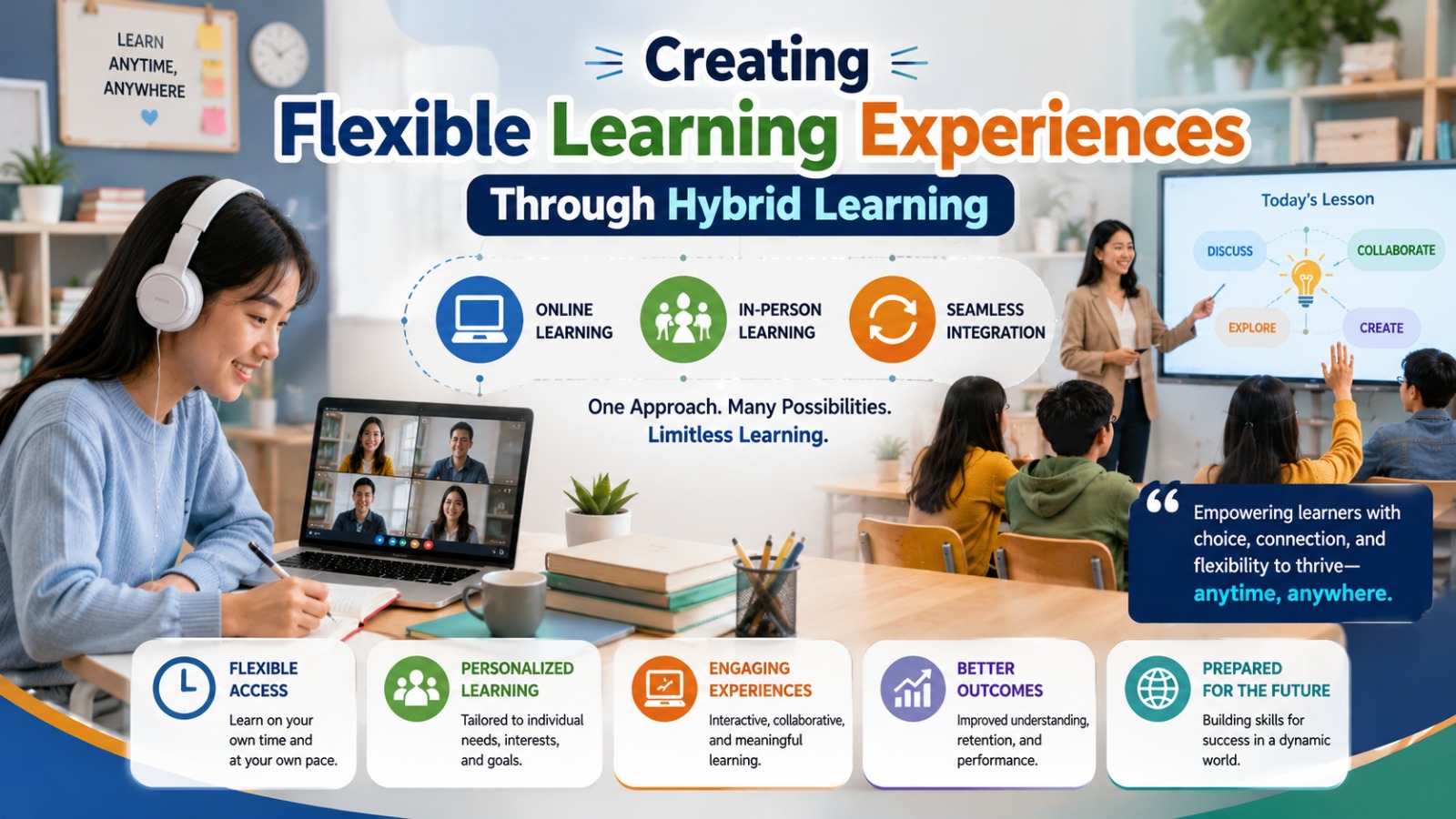
Education is no longer limited to a single classroom, fixed schedules, or one-way instruction. As technology continues to influence the way people study and work, learners increasingly expect educational systems that fit their different routines, needs, and learning styles. In response to these changes, hybrid learning has become one of the most effective ways to create flexible learning experiences.
Hybrid learning combines traditional face-to-face teaching with online learning activities. This approach allows students to benefit from direct interaction with teachers while also enjoying the convenience of digital access. As a result, hybrid learning offers a more adaptable model that matches the realities of modern education.
UNDERSTANDING FLEXIBILITY IN EDUCATION
Flexible learning means giving students more control over when, where, and sometimes how they learn. It does not remove structure completely. Instead, it creates opportunities for learners to access materials, complete tasks, and review lessons in ways that better fit their individual circumstances.
In today’s world, flexibility has become increasingly important. Students may have different responsibilities, varying learning speeds, and different levels of access to educational resources. A flexible learning environment helps address these differences more effectively than traditional one-size-fits-all models.
HOW HYBRID LEARNING CREATES FLEXIBILITY
Hybrid learning supports flexibility by blending the strengths of in-person and digital instruction.
Classroom sessions provide real-time explanations, immediate feedback, and social interaction. Online components allow students to revisit lessons, access resources at any time, and complete assignments outside the physical classroom.
This combination gives learners more freedom without removing teacher guidance. Students can engage with course content in ways that suit their personal schedules and learning preferences.
SUPPORTING DIFFERENT LEARNING PACES
Every student learns at a different speed. Some understand new concepts quickly, while others need more time to absorb information.
Hybrid learning helps solve this challenge by giving students ongoing access to digital materials such as recorded lectures, readings, and practice activities. Learners can repeat difficult sections, review important concepts, and study more deeply when needed.
This flexibility can improve understanding and reduce pressure, especially for students who may struggle in fast-paced classroom settings.
INCREASING ACCESSIBILITY TO LEARNING
Flexible learning is closely connected to accessibility. Hybrid learning allows students to continue learning even when attending every in-person session is difficult.
A student who misses class can often access online notes, videos, or assignments. Learners who live farther away, have family responsibilities, or face temporary limitations can stay connected to the learning process.
This wider access helps educational institutions create more inclusive learning opportunities.
ENCOURAGING INDEPENDENT LEARNING HABITS
One of the most valuable outcomes of hybrid learning is the development of learner independence.
Because part of the educational process happens outside the classroom, students must manage their own time, organize tasks, and take greater responsibility for completing work. These experiences help build self-discipline and stronger study habits.
Over time, students become more confident in directing their own learning progress.
THE ROLE OF TEACHERS IN FLEXIBLE LEARNING
Flexibility does not mean less teacher involvement. In fact, teachers play an essential role in designing effective hybrid learning experiences.
Educators must plan lessons carefully so that both in-person and online activities support the same learning goals. They also need to provide clear instructions, accessible materials, and regular feedback.
When hybrid learning is thoughtfully designed, flexibility becomes a tool for stronger engagement rather than confusion.
CHALLENGES OF IMPLEMENTING HYBRID LEARNING
Although hybrid learning creates many opportunities, it also presents challenges.
Not all students have equal access to reliable internet or suitable devices. Some learners may also struggle with time management or motivation when studying independently.
To create truly flexible learning experiences, institutions must provide technical support, teacher training, and strategies that help students stay engaged.
CONCLUSION
Hybrid learning has become a powerful approach for creating flexible learning experiences in modern education.
By combining face-to-face interaction with digital accessibility, it allows students to learn in ways that better fit their needs, schedules, and learning styles. It also supports accessibility, encourages independence, and helps institutions respond to the demands of today’s educational environment.
As education continues to evolve, hybrid learning offers a practical path toward more adaptable, inclusive, and effective learning experiences.
Tentang Penulis
Gusti Ayu Tita
Penulis — Universitas STEKOM
Penulis aktif yang berfokus pada isu-isu akademik, teknologi pendidikan, dan pengembangan sumber daya manusia di lingkungan kampus.



