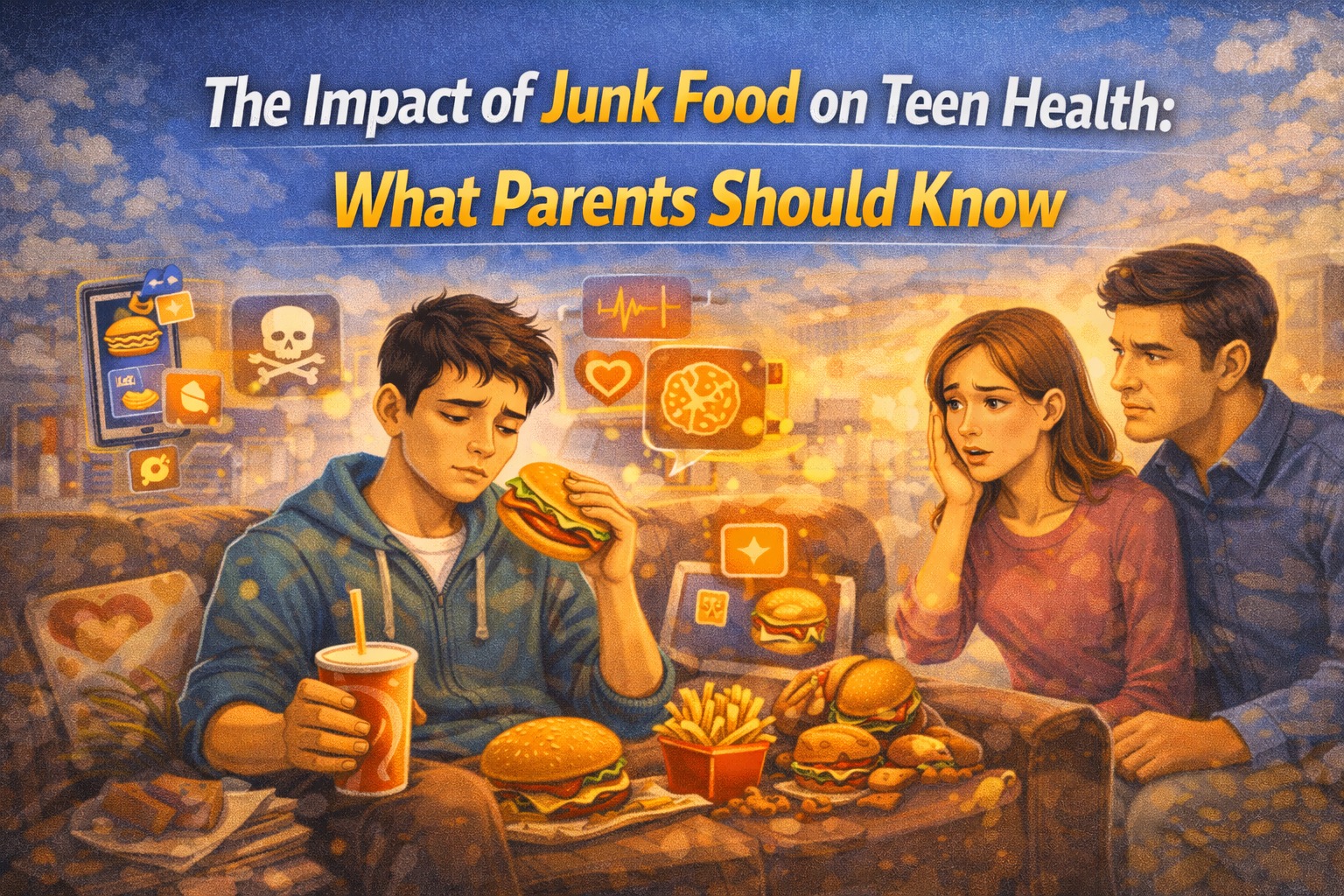
Changes in lifestyle and the easy access to fast food have made junk food increasingly close to teenagers’ daily lives. Amid busy school schedules and social activities, many teenagers choose junk food as their main option without considering its nutritional value. This situation has become an important concern for parents, as unhealthy eating patterns can seriously affect adolescents’ growth and development.
Why Teenagers Prefer Junk Food
Junk food offers tasty flavors, quick preparation, and relatively affordable prices. In addition, the influence of advertising, social media, and peer trends makes fast food appear attractive and modern in the eyes of teenagers.
The lack of family mealtime also contributes to this habit. Without sufficient supervision and nutrition education, teenagers tend to choose instant food over home-cooked meals that are more nutritious.
The Impact of Junk Food on Teenagers’ Physical Health
Excessive consumption of junk food can lead to nutritional imbalance. Foods high in saturated fat, sugar, and salt increase the risk of unhealthy weight gain. Obesity among teenagers has become an increasingly common problem.
Moreover, junk food can trigger health issues such as high blood pressure, unstable blood sugar levels, and digestive problems. If this habit continues into adulthood, the risk of chronic diseases will increase significantly.
The Effect of Poor Eating Habits on Mental Health
The impact of junk food is not only physical but also mental. A diet low in essential nutrients can affect mood, energy levels, and concentration. Several studies indicate that unhealthy food consumption is associated with increased fatigue, stress, and anxiety.
Teenagers who lack balanced nutrition are also more likely to experience a decline in academic performance due to difficulty focusing and feeling tired easily while studying.
The Role of Parents in Regulating Teenagers’ Eating Habits
Parents play a crucial role in shaping healthy eating habits. Setting an example of a balanced diet at home is an effective first step. Teenagers tend to imitate their parents’ habits, including food choices.
In addition, open communication about the effects of junk food should be built without being overly preachy. With a positive approach, teenagers are more likely to understand the importance of maintaining a healthy diet.
Practical Steps to Reduce Junk Food Consumption
Reducing junk food does not have to be done drastically. Parents can start by providing healthy snack alternatives that are still appealing to teenagers. Involving children in meal preparation can also increase their interest in nutritious food.
Limiting excessive pocket money and encouraging regular family meals can gradually but consistently help control teenagers’ eating patterns.
Conclusion
Junk food is difficult to separate from modern life, but its impact on teenagers’ health cannot be ignored. Parents need to understand the risks of excessive junk food consumption and take an active role in guiding their children toward healthier eating habits. With family support and proper education, teenagers can grow healthier both physically and mentally.
Tentang Penulis
Gusti Ayu Tita
Penulis — Universitas STEKOM
Penulis aktif yang berfokus pada isu-isu akademik, teknologi pendidikan, dan pengembangan sumber daya manusia di lingkungan kampus.