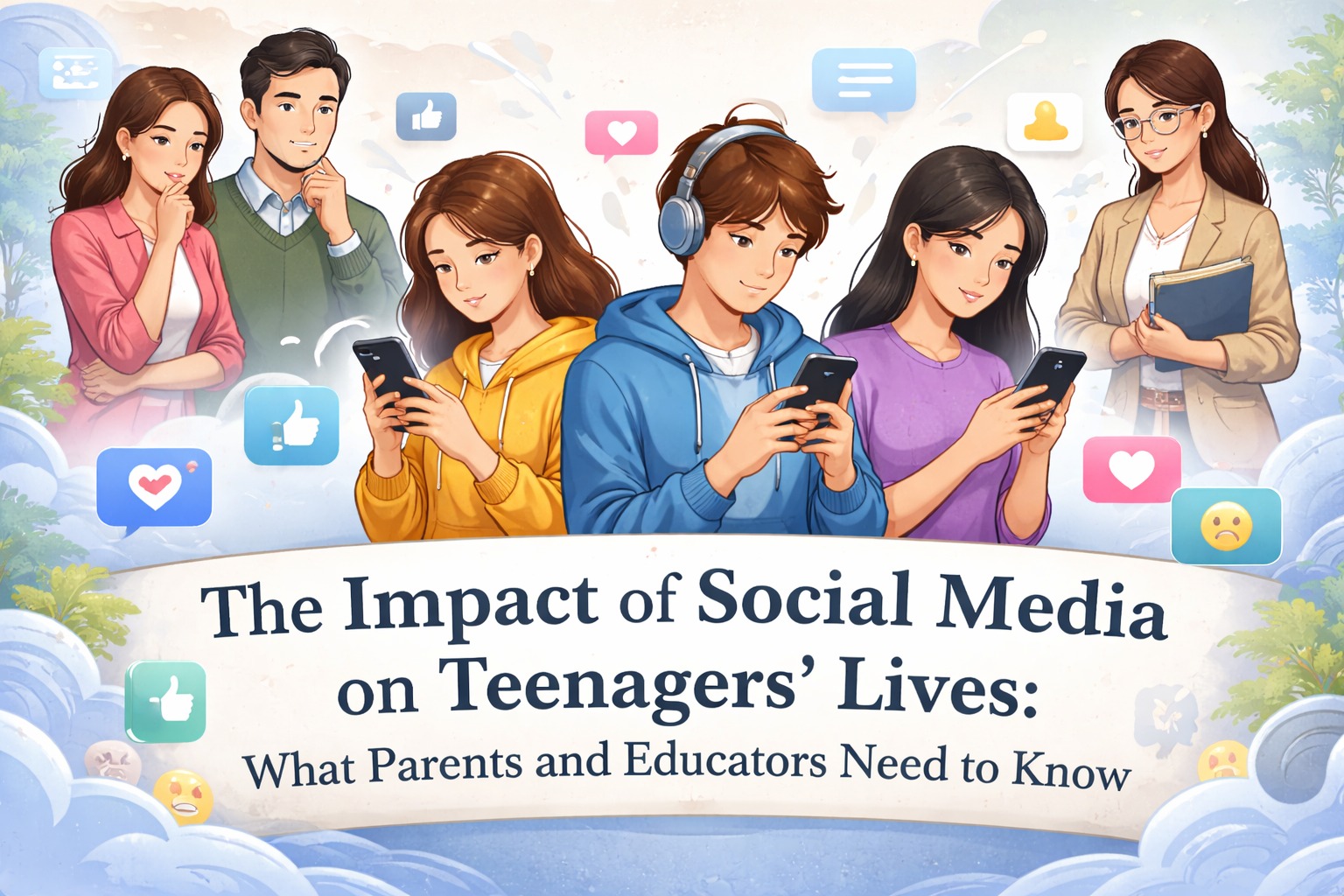
Social media has become an inseparable part of modern teenagers’ lives. Platforms such as Instagram, TikTok, and WhatsApp are used not only for communication but also for self-expression, information-seeking, and identity formation. Despite its benefits, social media also brings various impacts that parents and educators need to understand wisely.
The Role of Social Media in Teenagers’ Lives
For teenagers, social media functions as a digital social space. It allows them to interact with peers, follow trends, and express creativity. When used appropriately, social media also provides access to educational information, positive communities, and opportunities for self-development.
Positive Impacts of Social Media on Teenagers
Social media offers several tangible benefits for teenagers, including improved communication skills and digital literacy. Teenagers can also develop creative thinking through visual content, short videos, and writing. Additionally, social media often serves as a source of social support, helping teenagers share experiences and find communities with similar interests.
Negative Impacts of Social Media to Watch Out For
On the other hand, uncontrolled use of social media can lead to negative effects. Teenagers may experience screen addiction, decreased academic focus, and social pressure due to constant comparison with others. Exposure to age-inappropriate content can also influence their mindset and behavior without proper guidance.
The Impact of Social Media on Teenagers’ Mental Health
Mental health is a crucial aspect that must be considered. Excessive online interaction can trigger stress, anxiety, and low self-esteem. Therefore, adults around teenagers need to recognize behavioral changes, such as withdrawal or emotional instability, as signs that additional attention is needed.
The Role of Parents in Monitoring Social Media Use
Parents play a key role in guiding teenagers toward healthy social media habits. Open communication, two-way discussions, and setting time limits can help teenagers use social media more wisely. Parents should also model balanced and responsible device use.
The Role of Educators in Digital Literacy Education
Educators can contribute by integrating digital literacy education into schools. Teenagers need skills to evaluate information critically, understand online ethics, and use social media as a learning tool. With educators’ support, social media can become a productive and educational resource.
Conclusion
The impact of social media on teenagers’ lives is unavoidable, but it can be managed effectively. Collaboration between parents and educators is essential to help teenagers use social media positively, safely, and responsibly. With proper guidance, social media can support healthy growth and development in the digital era.
Tentang Penulis
Gusti Ayu Tita
Penulis — Universitas STEKOM
Penulis aktif yang berfokus pada isu-isu akademik, teknologi pendidikan, dan pengembangan sumber daya manusia di lingkungan kampus.