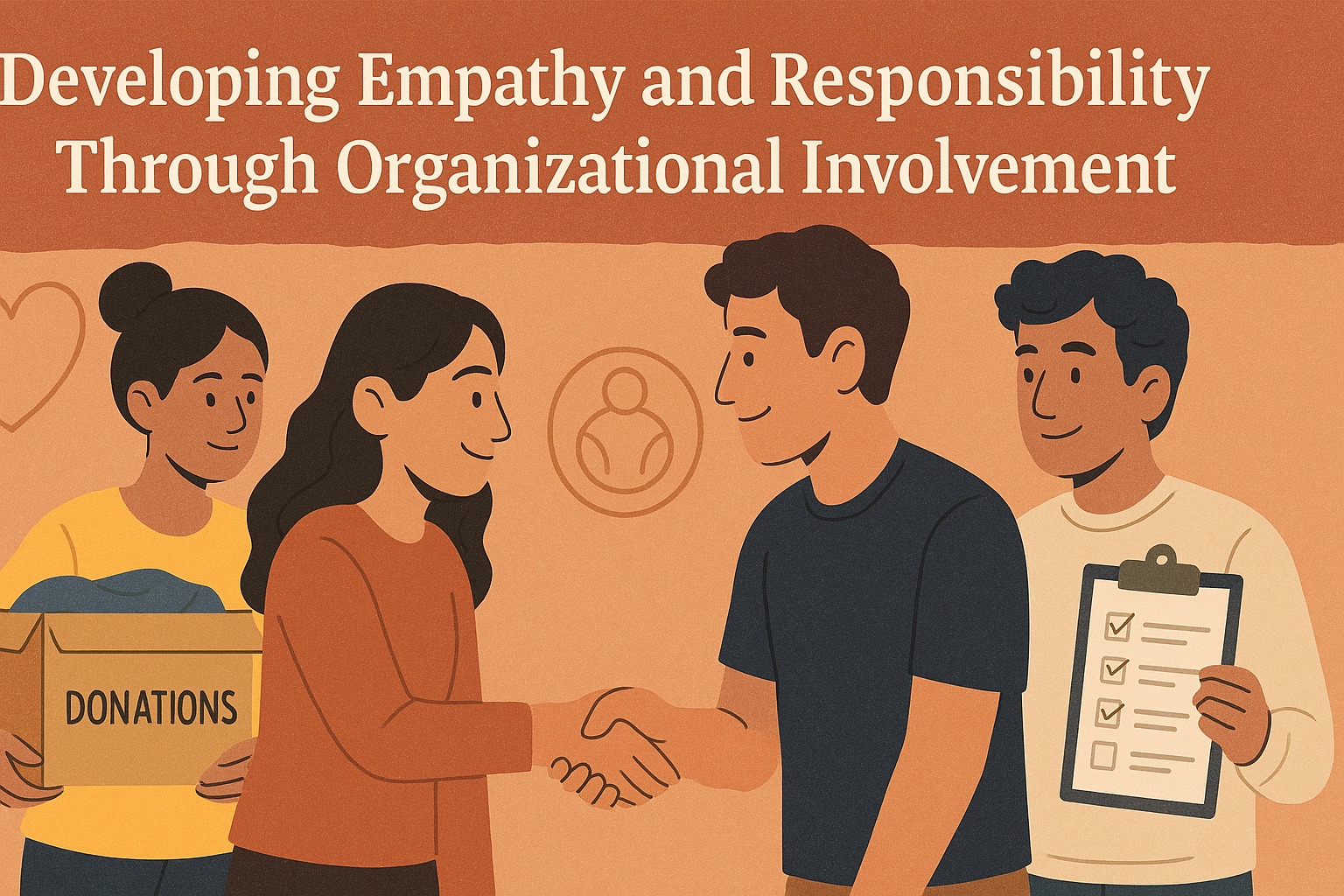
In today’s competitive academic environment, students are often encouraged to focus on grades and technical competence. However, long-term success requires more than intellectual ability. Empathy and responsibility are two essential qualities that shape strong leaders and compassionate individuals. One of the most effective ways to cultivate these qualities is through organizational involvement.
By actively participating in campus or community organizations, students gain real-life experiences that strengthen emotional awareness and accountability. Organizational spaces become practical training grounds where character is formed through action, reflection, and collaboration.
UNDERSTANDING THE VALUE OF EMPATHY IN ORGANIZATIONS
Empathy is the ability to understand and share the feelings of others. In organizational settings, empathy plays a crucial role in maintaining harmony and building trust among members.
When students work together on projects, they encounter different personalities, perspectives, and challenges. Listening to others’ ideas, respecting diverse opinions, and offering support during difficult times help develop emotional sensitivity. Instead of focusing solely on personal achievement, members begin to consider the needs and feelings of the team.
Through consistent interaction, empathy grows naturally, strengthening both relationships and overall team performance.
LEARNING RESPONSIBILITY THROUGH ACTIVE PARTICIPATION
Responsibility is not simply about completing tasks; it is about being accountable for decisions and outcomes. Organizational involvement requires members to commit their time, energy, and effort to shared goals.
Whether managing an event, coordinating a meeting, or handling administrative duties, students learn that their actions directly impact others. Missing deadlines or neglecting tasks can affect the entire team. This awareness builds a strong sense of accountability.
Over time, students become more disciplined and reliable, qualities that are essential for academic success and future careers.
DEVELOPING SOCIAL AWARENESS AND COLLABORATION SKILLS
Organizations often consist of individuals from diverse academic backgrounds and social experiences. This diversity encourages members to step outside their comfort zones and understand different viewpoints.
By collaborating on group initiatives, students practice constructive communication and conflict resolution. Disagreements become opportunities to learn patience and mutual respect. Instead of reacting emotionally, they learn to approach issues thoughtfully and fairly.
Such experiences enhance social awareness, enabling students to interact effectively in broader communities.
BUILDING CHARACTER THROUGH CHALLENGES
Organizational activities are not always smooth or predictable. Budget limitations, scheduling conflicts, and unexpected obstacles require adaptability and cooperation. Facing these challenges together strengthens collective responsibility.
Students learn to support one another during stressful situations. They develop resilience while maintaining empathy, ensuring that challenges do not damage relationships. This balance between firmness and compassion shapes mature and dependable individuals.
Character is built not in comfort, but in moments that require understanding and commitment.
PREPARING FOR FUTURE LEADERSHIP ROLES
Empathy and responsibility are fundamental qualities of effective leadership. Leaders who understand their team members’ perspectives can make wiser decisions. Likewise, leaders who accept responsibility inspire trust and loyalty.
Organizational involvement offers early exposure to leadership dynamics. Even small roles provide valuable lessons in managing expectations and guiding others. These experiences prepare students for professional environments where emotional intelligence and accountability are highly valued.
Employers increasingly recognize that technical skills alone are insufficient. The ability to collaborate responsibly and lead with empathy distinguishes exceptional individuals.
CONCLUSION
Developing empathy and responsibility through organizational involvement is a transformative journey. By engaging in teamwork, handling responsibilities, and overcoming shared challenges, students cultivate qualities that extend beyond academic achievement.
Organizations serve as meaningful spaces where personal growth occurs naturally. Through consistent participation, individuals learn to care deeply, act responsibly, and contribute positively to their communities.
Ultimately, organizational involvement shapes not only capable professionals but also compassionate leaders who are ready to make a meaningful impact.
Tentang Penulis
Gusti Ayu Tita
Penulis — Universitas STEKOM
Penulis aktif yang berfokus pada isu-isu akademik, teknologi pendidikan, dan pengembangan sumber daya manusia di lingkungan kampus.