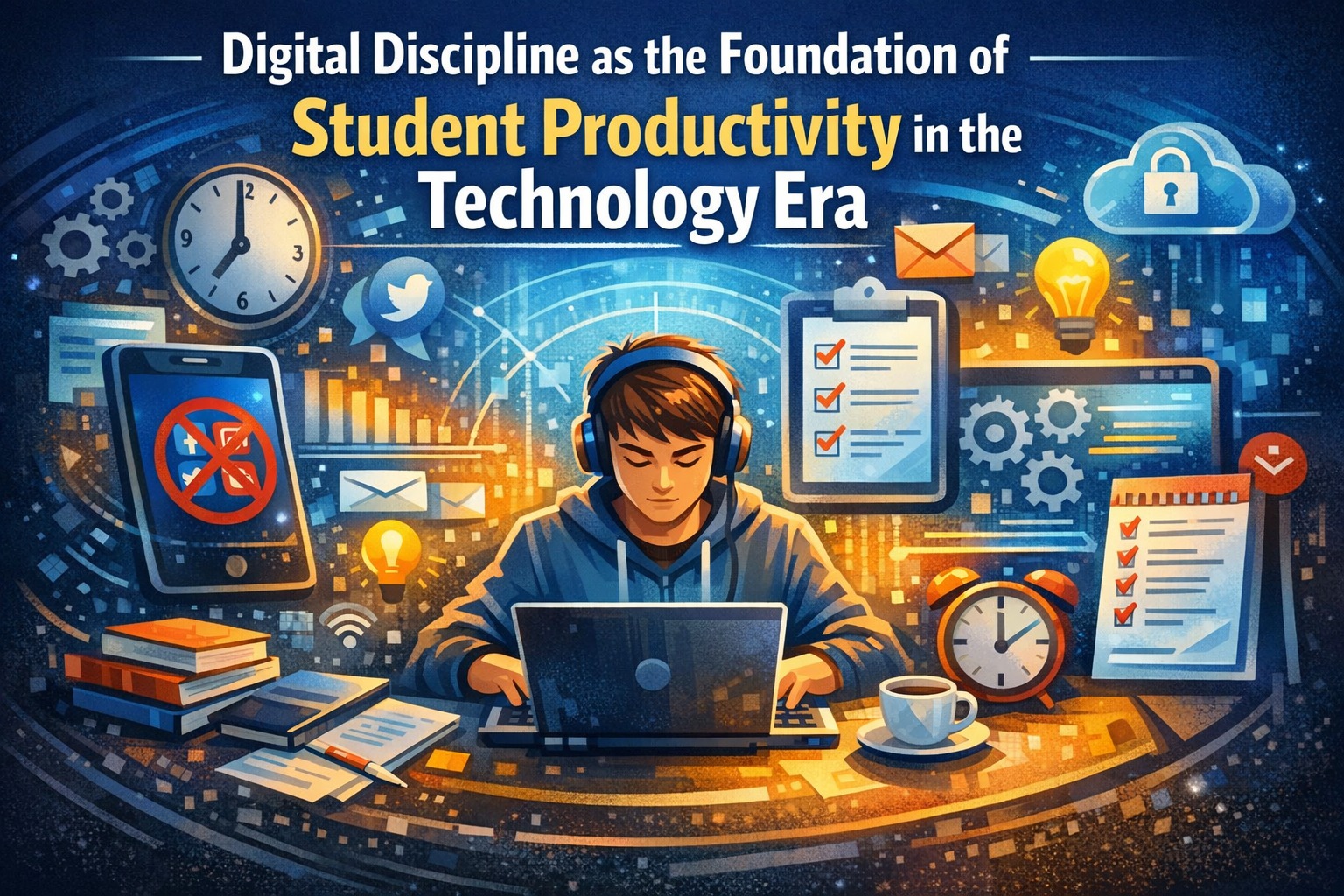
The rapid development of technology has significantly transformed the learning environment for students. Digital devices, online platforms, and unlimited internet access provide opportunities to learn faster and more efficiently than ever before. However, these same technologies can also create distractions that reduce productivity if not managed properly.
Many students struggle to balance academic responsibilities with the temptations of digital entertainment. Social media, online videos, and constant notifications can easily consume hours that should be dedicated to studying. Without strong self-control, technology may become a barrier to academic success.
For this reason, digital discipline has become a fundamental skill for students in the technology era. It allows them to manage digital tools responsibly and maintain consistent productivity in their academic lives.
UNDERSTANDING DIGITAL DISCIPLINE
Digital discipline refers to the ability to control how, when, and why technology is used. Instead of allowing devices and applications to dictate their attention, disciplined students consciously decide how technology fits into their daily routines.
This mindset encourages students to prioritize important academic activities before engaging in digital entertainment. It also helps them avoid unnecessary multitasking, which often reduces efficiency and focus.
By practicing digital discipline, students learn to use technology as a tool that supports learning rather than a distraction that interrupts it.
THE ROLE OF SELF-CONTROL IN PRODUCTIVITY
Self-control plays a critical role in maintaining digital discipline. Students must be able to resist the temptation to check their phones or browse unrelated content while studying.
One effective approach is setting clear personal rules for digital usage. For example, students may decide not to open social media applications during study hours or limit entertainment content to specific times of the day.
These boundaries help create a structured routine where academic tasks receive priority. Over time, such habits strengthen students’ ability to focus and maintain productivity.
BUILDING A DISCIPLINED DIGITAL ROUTINE
Creating a disciplined digital routine requires consistency and awareness. Students can begin by organizing their daily schedules and identifying periods dedicated to studying, resting, and using technology for leisure.
Another helpful step is minimizing digital clutter. Turning off unnecessary notifications, removing distracting applications, and organizing digital workspaces can significantly reduce interruptions.
Students can also benefit from setting realistic goals for each study session. When tasks are clearly defined, it becomes easier to stay focused and avoid digital distractions.
LONG-TERM BENEFITS OF DIGITAL DISCIPLINE
Students who practice digital discipline often experience long-term improvements in their academic performance. With fewer distractions, they can complete assignments more efficiently and understand learning materials more deeply.
Beyond academic success, digital discipline also prepares students for future professional environments. Many modern careers require strong focus, time management, and responsible technology use.
By mastering digital discipline during their student years, individuals build valuable habits that support lifelong productivity.
CONCLUSION
Technology is an essential part of modern education, but it requires responsible management. Without discipline, digital tools can easily distract students and reduce their academic performance.
By developing digital discipline, students gain control over their technology usage and create a productive learning environment. Through clear boundaries, structured routines, and consistent self-control, they can turn technology into a powerful ally for academic success.
In the technology era, digital discipline is not just an advantage—it is a necessary foundation for sustainable student productivity.
Tentang Penulis
Gusti Ayu Tita
Penulis — Universitas STEKOM
Penulis aktif yang berfokus pada isu-isu akademik, teknologi pendidikan, dan pengembangan sumber daya manusia di lingkungan kampus.