
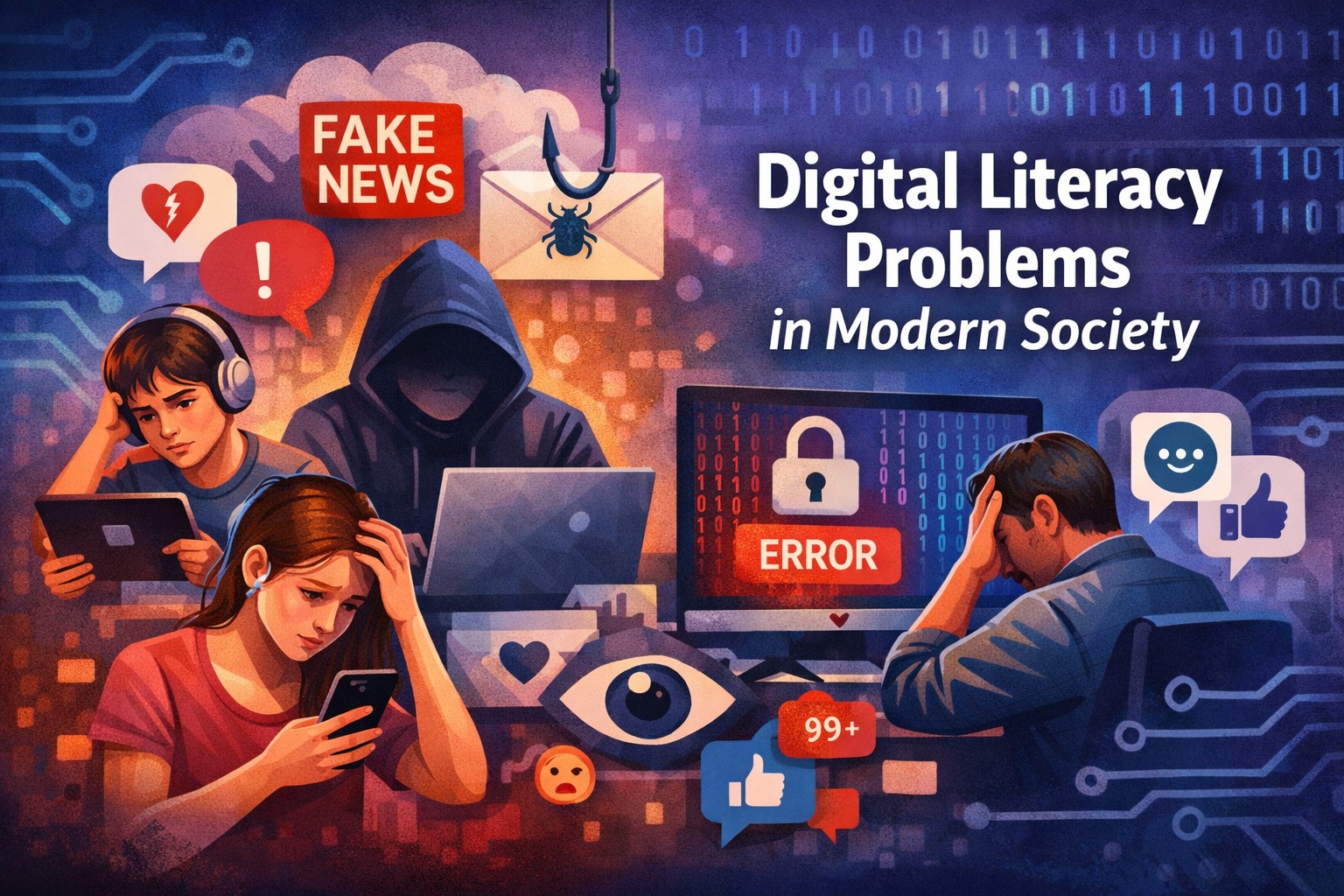
In today’s fast-moving digital era, technology has become an inseparable part of human life. People use the internet for communication, education, business, entertainment, and even financial transactions. However, despite the rapid growth of technology, many individuals still face serious challenges in understanding and using digital tools effectively. These challenges are commonly known as digital literacy problems.
Digital literacy is not only about knowing how to operate gadgets or access social media. It also involves the ability to evaluate information critically, protect personal data, communicate responsibly, and use technology productively. Without proper digital literacy, society can easily become vulnerable to misinformation, cybercrime, and unhealthy online behavior.
UNDERSTANDING DIGITAL LITERACY
Digital literacy refers to the ability to access, understand, analyze, and use digital technology wisely. It includes skills such as searching for reliable information, using online communication platforms, managing digital privacy, and understanding the ethical use of technology.
In modern society, digital literacy has become an essential skill for students, workers, business owners, and even older generations. Unfortunately, not everyone has equal access to digital education, which creates gaps in knowledge and technological understanding.
COMMON DIGITAL LITERACY PROBLEMS
SPREAD OF MISINFORMATION
One of the biggest problems in digital literacy is the rapid spread of misinformation and fake news. Many internet users easily believe and share information without verifying its accuracy. Social media platforms often become places where false information spreads quickly and influences public opinion.
This issue can create social conflict, confusion, and distrust in society. People with low digital literacy may struggle to distinguish between factual news and misleading content.
CYBERSECURITY THREATS
Another major challenge is the lack of awareness regarding cybersecurity. Many users still use weak passwords, click suspicious links, or share personal information carelessly online. These actions increase the risk of hacking, identity theft, and online fraud.
Without proper digital literacy, individuals may become easy targets for cybercriminals who exploit technological ignorance for financial or personal gain.
DIGITAL ADDICTION
Excessive use of smartphones, social media, and online games has become a serious issue in modern society. Many people spend hours scrolling through social media instead of engaging in productive activities or real-life interactions.
Digital addiction can negatively affect mental health, reduce productivity, and damage social relationships. Young people are especially vulnerable because they are highly connected to digital platforms from an early age.
LACK OF CRITICAL THINKING
Many internet users consume information passively without analyzing the credibility of sources. This lack of critical thinking makes people more likely to fall for scams, hoaxes, and manipulative online content.
Digital literacy should encourage users to question information, compare sources, and think logically before making decisions based on online content.
FACTORS CAUSING DIGITAL LITERACY PROBLEMS
LIMITED EDUCATION
In some areas, digital literacy education is still limited. Schools may focus more on theoretical learning than practical digital skills. As a result, students may know how to use devices but lack understanding of online ethics and digital safety.
TECHNOLOGY GAP
Not all communities have equal access to technology and internet services. Rural areas often face limitations in internet infrastructure, making it difficult for residents to improve their digital knowledge.
RAPID TECHNOLOGICAL DEVELOPMENT
Technology changes very quickly, and some people struggle to keep up with new applications, platforms, and digital trends. Older generations, in particular, may find it challenging to adapt to modern digital systems.
IMPACT OF LOW DIGITAL LITERACY
Low digital literacy can have serious consequences for individuals and society. People may become victims of online scams, experience privacy violations, or develop unhealthy internet habits. Businesses can also suffer from cyberattacks caused by poor digital security awareness among employees.
In education, students with weak digital literacy skills may struggle to find credible academic sources and use technology effectively for learning. Meanwhile, society as a whole may face increased social polarization due to misinformation and online manipulation.
SOLUTIONS TO IMPROVE DIGITAL LITERACY
DIGITAL EDUCATION PROGRAMS
Governments, schools, and organizations should provide digital literacy training programs for all age groups. These programs should teach internet safety, critical thinking, fact-checking, and responsible online behavior.
PROMOTING CYBERSECURITY AWARENESS
People need to understand the importance of strong passwords, secure online practices, and data privacy protection. Cybersecurity education should become a regular part of digital learning.
ENCOURAGING RESPONSIBLE INTERNET USE
Parents, teachers, and communities should guide young people to use technology wisely and balance online activities with real-world interactions. Healthy digital habits can reduce the risk of addiction and mental health problems.
IMPROVING ACCESS TO TECHNOLOGY
Equal access to internet services and digital devices is important for reducing the digital divide. Governments and private sectors should collaborate to improve technological infrastructure in underserved areas.
CONCLUSION
Digital literacy problems have become one of the biggest challenges in modern society. While technology offers many benefits, it also creates risks when people lack the skills to use it responsibly. Problems such as misinformation, cybersecurity threats, digital addiction, and low critical thinking continue to affect individuals worldwide.
Improving digital literacy requires cooperation between governments, educational institutions, families, and communities. By developing digital awareness and responsible online behavior, society can maximize the benefits of technology while minimizing its negative impacts.
Tentang Penulis
Gusti Ayu Tita
Penulis — Universitas STEKOM
Penulis aktif yang berfokus pada isu-isu akademik, teknologi pendidikan, dan pengembangan sumber daya manusia di lingkungan kampus.



