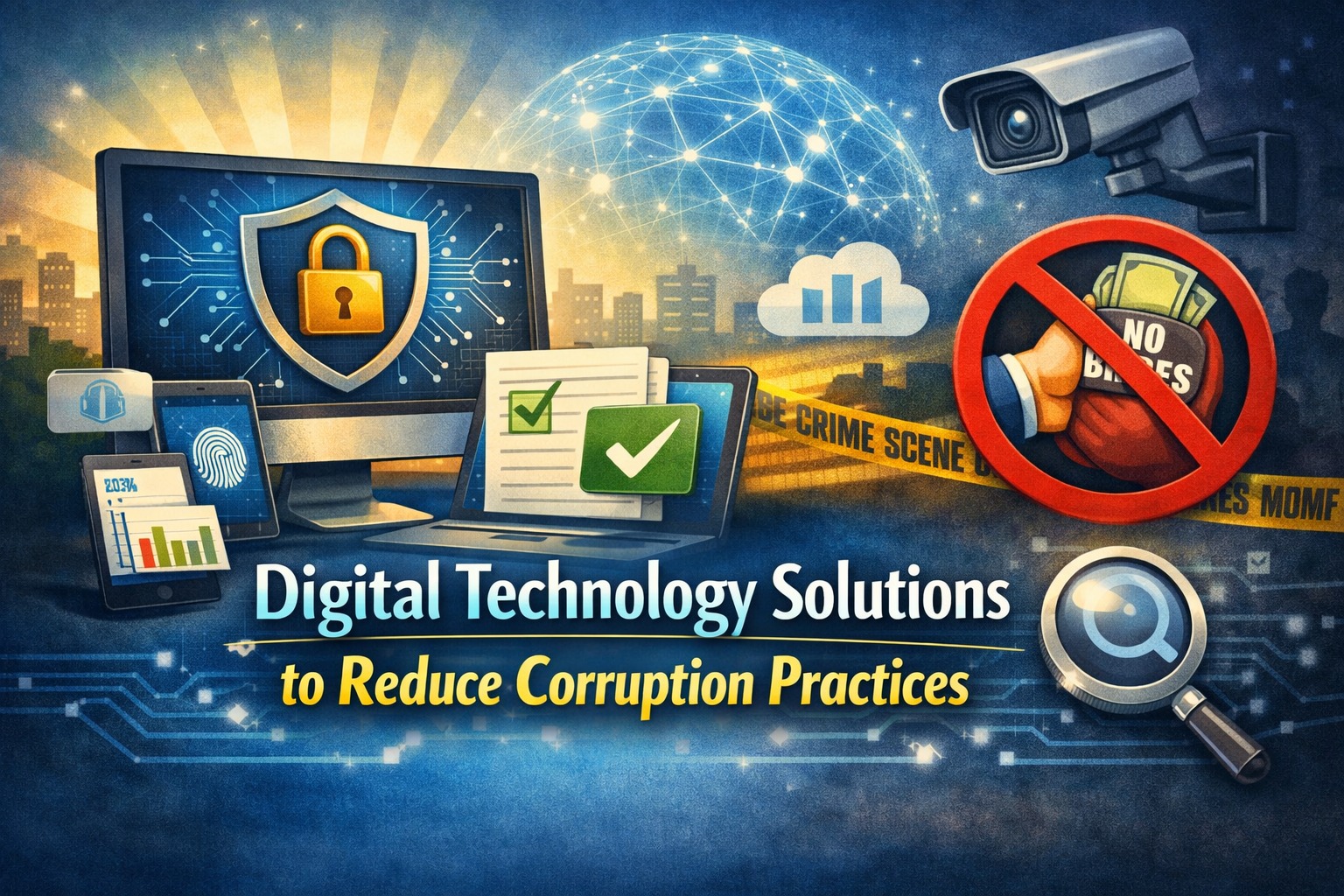
Corruption remains one of the biggest challenges faced by many countries around the world. It affects economic growth, weakens public trust, and creates inequality in society. In recent years, digital technology has become a powerful tool in reducing corruption practices by increasing transparency, improving accountability, and minimizing human manipulation in public services. The use of modern technology offers practical solutions that can help governments, organizations, and communities fight corruption more effectively.
THE ROLE OF DIGITAL TECHNOLOGY IN FIGHTING CORRUPTION
Digital technology helps reduce corruption by creating systems that are more transparent and easier to monitor. Traditional manual systems often allow illegal transactions, bribery, and misuse of authority to occur without detection. By replacing manual processes with digital platforms, opportunities for corruption can be significantly reduced.
Technology also makes information accessible to the public. Citizens can monitor government activities, budgets, and public projects through online platforms. This openness encourages honesty and limits secret dealings that may lead to corruption.
E-GOVERNMENT SYSTEMS FOR TRANSPARENCY
One of the most effective digital solutions is the implementation of e-government systems. E-government allows public services to be managed online, reducing direct interaction between officials and citizens. This decreases the risk of bribery and illegal fees.
Online systems for tax payments, business licensing, and public procurement create digital records that are difficult to manipulate. Every transaction can be tracked and audited easily, making corrupt activities more visible.
Governments that implement digital administration often experience improved efficiency and stronger public trust. Citizens also benefit from faster and simpler services.
BLOCKCHAIN TECHNOLOGY FOR SECURE TRANSACTIONS
Blockchain technology is becoming increasingly important in anti-corruption efforts. Blockchain stores information in secure and transparent digital records that cannot easily be changed. This technology can prevent data manipulation and unauthorized financial transactions.
For example, blockchain can be used in government procurement systems to ensure fair bidding processes. Every transaction is recorded permanently, making it difficult for corrupt officials to hide illegal activities.
In addition, blockchain improves accountability because all parties involved can access verified transaction histories.
ARTIFICIAL INTELLIGENCE FOR FRAUD DETECTION
Artificial Intelligence (AI) can analyze large amounts of data quickly and identify suspicious patterns linked to corruption. AI systems are capable of detecting unusual financial activities, fake invoices, and fraudulent transactions that may not be noticed by humans.
Banks and financial institutions already use AI to monitor money laundering and illegal transfers. Governments can also apply AI in public budgeting and procurement systems to identify corruption risks before major losses occur.
The use of AI improves efficiency while reducing human error in monitoring activities.
DIGITAL PAYMENT SYSTEMS TO REDUCE BRIBERY
Cash transactions are often difficult to monitor and can create opportunities for bribery. Digital payment systems provide a safer and more transparent alternative. Electronic payments leave clear transaction records that can be audited anytime.
The use of mobile banking, electronic wallets, and online payment platforms reduces illegal cash handling in both public and private sectors. This helps minimize corruption in service payments, taxes, and government fees.
Digital payments also improve financial inclusion by allowing more people to access secure financial services.
OPEN DATA PLATFORMS FOR PUBLIC MONITORING
Open data platforms allow governments to share important public information with citizens. Budget allocations, infrastructure projects, and public spending reports can be accessed online by anyone.
This transparency encourages public participation in monitoring government activities. Journalists, researchers, and civil society organizations can analyze the data and report suspicious activities.
When citizens have easy access to information, corrupt practices become more difficult to hide.
CHALLENGES IN IMPLEMENTING DIGITAL SOLUTIONS
Although digital technology offers many benefits, there are still challenges in implementation. Some regions face limited internet access, low digital literacy, and insufficient technological infrastructure.
Cybersecurity is another important concern. Weak security systems may lead to hacking or data leaks that could harm public trust. Governments and organizations must invest in strong cybersecurity systems and proper employee training.
In addition, digital solutions require political commitment and cooperation from multiple sectors to work effectively.
CONCLUSION
Digital technology has become an important weapon in the fight against corruption. E-government systems, blockchain, artificial intelligence, digital payments, and open data platforms all contribute to greater transparency and accountability. These technologies help reduce human manipulation, improve monitoring systems, and strengthen public trust.
While challenges still exist, continued investment in digital innovation and education can create cleaner governance and a more transparent society. By embracing technology responsibly, countries can significantly reduce corruption practices and build a fairer future for everyone.
Tentang Penulis
Gusti Ayu Tita
Penulis — Universitas STEKOM
Penulis aktif yang berfokus pada isu-isu akademik, teknologi pendidikan, dan pengembangan sumber daya manusia di lingkungan kampus.