
INTRODUCTION
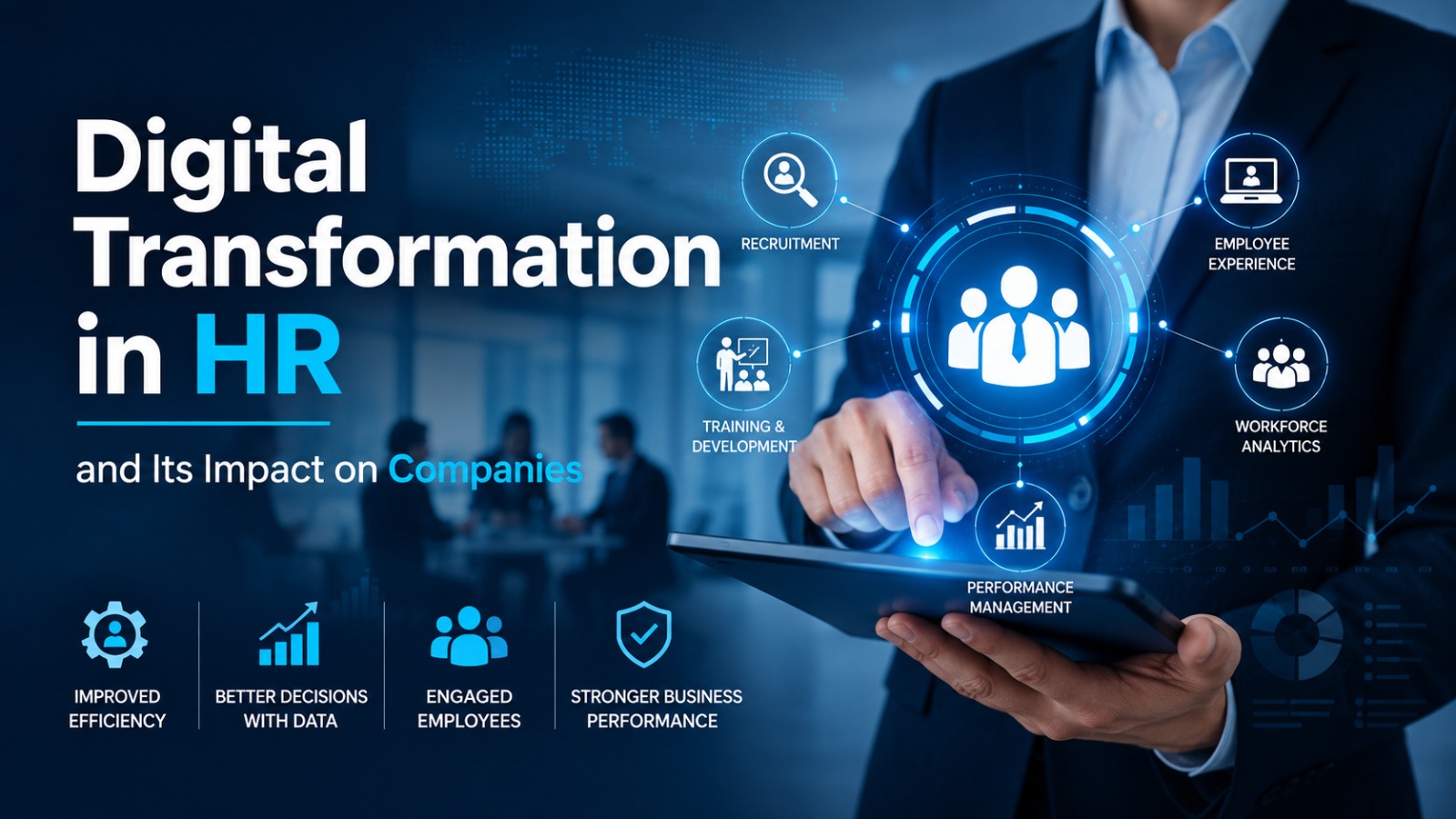
Digital transformation has become a major driving force in reshaping modern business operations, and Human Resources (HR) is no exception. As companies adapt to rapid technological advancements, HR departments are shifting from traditional administrative roles to more strategic, data-driven functions. This evolution allows organizations to improve efficiency, enhance employee experience, and make smarter workforce decisions. Digital tools such as AI, cloud platforms, and automation systems are now essential components in modern HR practices.
DIGITAL TRANSFORMATION IN HR
Digital transformation in HR refers to the integration of digital technologies into all HR processes, including recruitment, onboarding, performance management, payroll, and employee engagement. Companies now rely on Human Resource Management Systems (HRMS) and Artificial Intelligence (AI) to streamline operations and reduce manual workloads. These technologies enable HR teams to focus more on strategic planning rather than repetitive administrative tasks. As a result, HR becomes more agile, responsive, and aligned with organizational goals.
KEY BENEFITS OF DIGITAL HR TRANSFORMATION
One of the most significant benefits of digital transformation in HR is improved efficiency. Automated systems reduce the time spent on manual data entry and paperwork, allowing HR professionals to focus on talent development and employee engagement. Additionally, data analytics helps organizations make informed decisions based on real-time insights, such as employee performance trends and turnover risks.
Another key benefit is enhanced employee experience. Digital platforms allow employees to access HR services anytime, such as leave applications, payroll information, and performance feedback. This convenience leads to higher satisfaction and engagement levels within the workplace. Furthermore, digital HR systems support remote and hybrid work models, making organizations more flexible and competitive in today’s global market.
CHALLENGES AND SOLUTIONS
Despite its advantages, digital transformation in HR also presents several challenges. One major issue is the resistance to change from employees and management who are accustomed to traditional systems. Additionally, data security and privacy concerns have become critical as HR systems store sensitive employee information.
To overcome these challenges, companies must invest in proper training programs to help employees adapt to new technologies. Strong cybersecurity measures, such as encryption and access control, are also essential to protect data. Moreover, organizations should implement digital transformation gradually to ensure smooth transition and minimize disruption.
CONCLUSION
Digital transformation in HR is no longer optional but a necessity for companies aiming to remain competitive in a fast-changing business environment. By leveraging modern technologies, organizations can enhance efficiency, improve employee satisfaction, and make better strategic decisions. Although challenges exist, they can be managed effectively with the right approach and planning. Ultimately, digital HR transformation empowers companies to build a more productive, innovative, and future-ready workforce.
Tentang Penulis
Gusti Ayu Tita
Penulis — Universitas STEKOM
Penulis aktif yang berfokus pada isu-isu akademik, teknologi pendidikan, dan pengembangan sumber daya manusia di lingkungan kampus.



