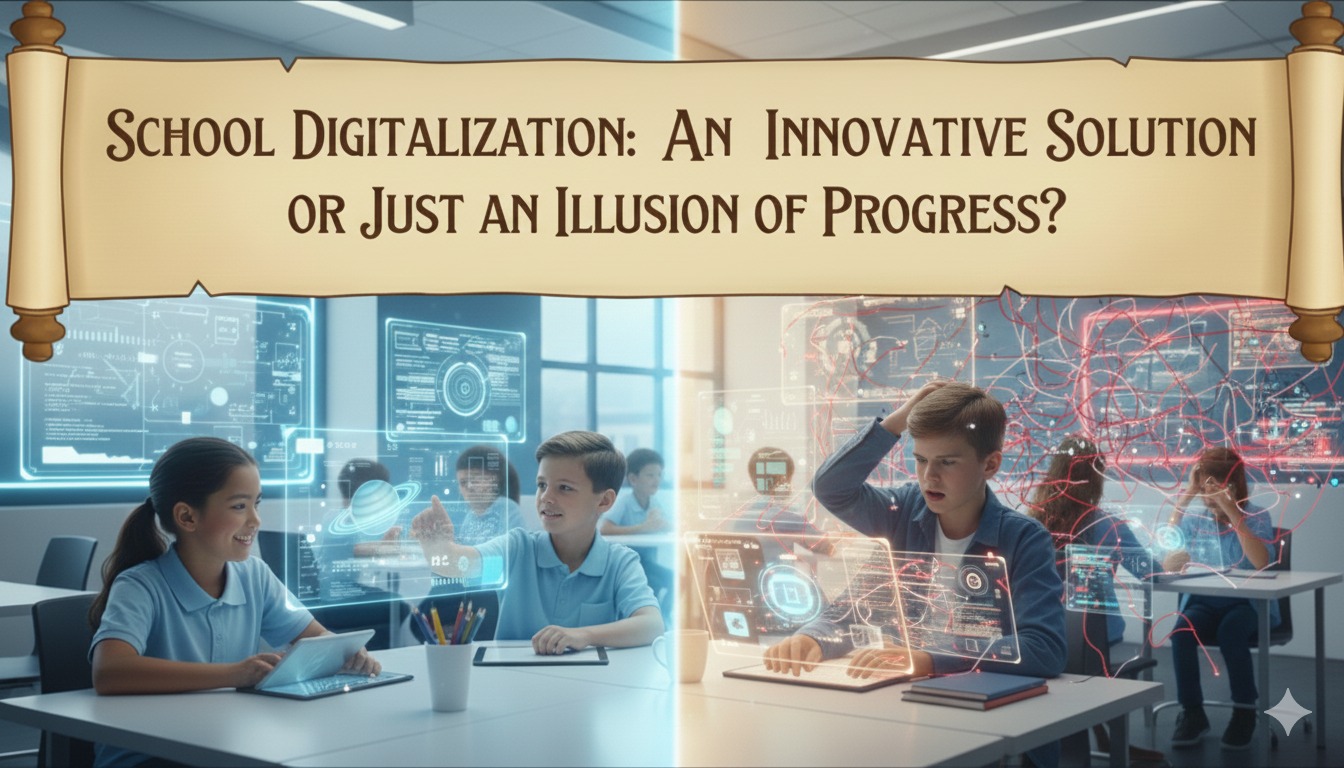
School digitalization has become one of the most widely discussed topics in Indonesia’s education sector. Governments, teachers, and students alike are required to adapt to technology. However, a question is increasingly being raised: is school digitalization truly an innovative solution that improves the quality of education, or is it merely an illusion of progress without real impact?
A NEW ERA OF DIGITAL EDUCATION
Digital transformation in schools has brought many changes. From computer-based examinations and online learning to the use of classroom management applications, all are designed to make teaching and learning more efficient and modern.
Teachers can now use platforms such as Google Classroom or Learning Management Systems (LMS) to monitor assignments and student progress. Meanwhile, students are able to learn independently through educational videos, e-books, and various online resources.
However, not all schools have the same level of readiness to implement these systems.
THE BENEFITS OF SCHOOL DIGITALIZATION
School digitalization offers several advantages that cannot be ignored:
Wider Access to Education
Technology opens learning opportunities beyond the limits of time and location. Students in remote areas can access quality learning materials from anywhere.
More Interactive and Creative Learning
Digital media makes lessons more engaging, encourages collaboration, and stimulates students’ creativity.
Administrative Efficiency
Processes such as grading, attendance, and evaluation are faster and more transparent through digital systems.
Early Development of Digital Literacy
Students are trained to use technology productively and responsibly—an essential skill for the future.
THE DARK SIDE OF DIGITALIZATION: INEQUALITY AND DEPENDENCE
Despite its benefits, school digitalization also presents serious challenges:
* Infrastructure Gaps – Many schools, especially in rural areas, lack stable internet access and adequate devices.
* Low Digital Literacy – Not all teachers and students are able to use technology effectively.
* Risk of Distraction and Gadget Dependence – Students may be distracted by entertainment content during online learning.
* Illusion of Innovation – Without clear direction, digitalization can become a formality that does not improve learning quality.
TOWARD MEANINGFUL DIGITALIZATION
To ensure that school digitalization goes beyond slogans, several important steps are needed:
Providing training for teachers and education staff to adapt to digital learning technologies.
Ensuring equal access to internet connectivity and devices across all regions of Indonesia.
Implementing hybrid learning systems that balance online and face-to-face instruction.
Using technology that is relevant to curriculum goals and students’ actual needs.
CONCLUSION
School digitalization can become an innovative solution if it is implemented with a clear vision and strong support from all stakeholders. However, without proper strategy and infrastructure readiness, it risks becoming an illusion of progress that changes form rather than improving the quality of education.
It is time to ensure that every digital innovation in schools truly delivers inclusive, creative, and impactful learning for the future generation.
Tentang Penulis
Gusti Ayu Tita
Penulis — Universitas STEKOM
Penulis aktif yang berfokus pada isu-isu akademik, teknologi pendidikan, dan pengembangan sumber daya manusia di lingkungan kampus.