
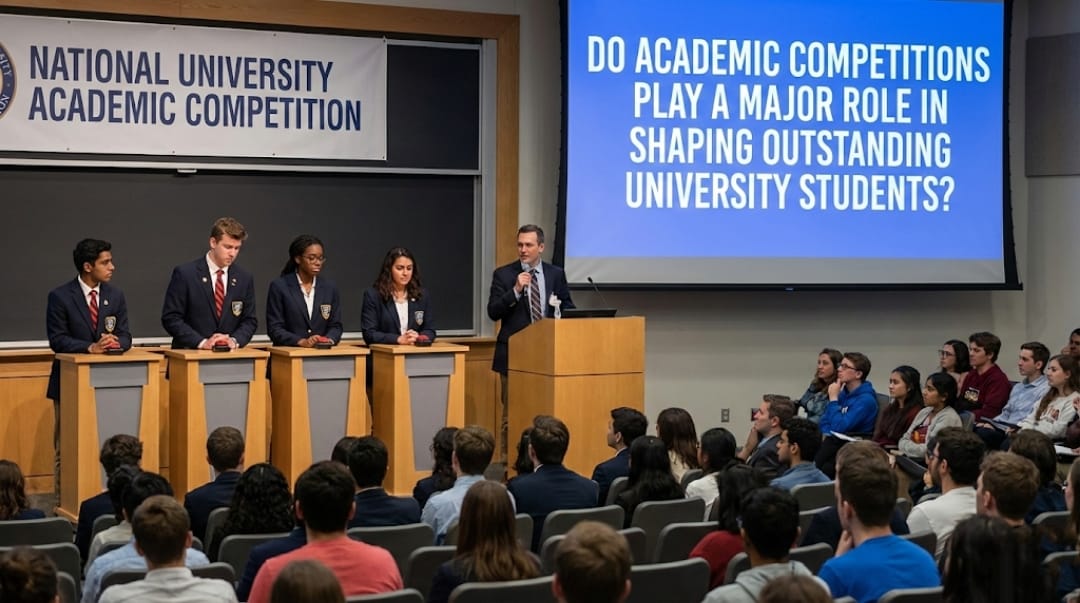
In today’s competitive academic and professional landscape, universities are expected to produce graduates who are not only knowledgeable but also adaptable, analytical, and innovative. Academic competitions have become increasingly popular as platforms that challenge students beyond traditional classroom settings. But do academic competitions truly play a major role in shaping outstanding university students?
This article explores the impact of academic competitions on student development, examining both their benefits and limitations.
UNDERSTANDING ACADEMIC COMPETITIONS
Academic competitions refer to structured contests that assess students’ knowledge, analytical ability, creativity, and problem-solving skills. These may include scientific research contests, debate tournaments, business case competitions, technology innovation challenges, and academic olympiads.
Unlike conventional lectures, competitions require active participation. Students are expected to apply theories, conduct research, and present solutions under time constraints. This dynamic environment often simulates real-world professional situations.
HOW COMPETITIONS CONTRIBUTE TO STUDENT EXCELLENCE
Participation in academic competitions can influence several aspects of student growth.
1. Enhancing Critical Thinking Skills
Competitions typically involve complex problems that demand in-depth analysis. Students must evaluate data, compare alternatives, and justify their conclusions logically.
2. Strengthening Communication Abilities
Many competitions include presentation and defense sessions. Explaining ideas clearly and responding to questions from judges help students refine their public speaking and persuasion skills.
3. Building Resilience and Discipline
Preparing for competitions requires consistent effort and time management. Students learn to cope with pressure and setbacks, which contributes to emotional maturity.
4. Expanding Professional Networks
Competitions often connect students with peers, mentors, and industry professionals. These networks may open opportunities for internships, collaborations, or future employment.
ARE COMPETITIONS THE ONLY PATH TO EXCELLENCE?
While academic competitions provide valuable experiences, they are not the sole determinant of student success. Outstanding students are shaped by multiple factors, including:
* Strong academic foundations
* Supportive learning environments
* Personal motivation and curiosity
* Practical experiences such as internships or research projects
Some students may thrive in research laboratories, community service initiatives, or entrepreneurial ventures rather than competitive settings. Therefore, excellence should not be defined exclusively by competition achievements.
THE ROLE OF UNIVERSITIES
Universities play a crucial role in maximizing the benefits of academic competitions. Institutions can support students by offering mentoring programs, training workshops, and balanced academic policies.
Equally important is fostering a healthy competitive culture - one that encourages growth and collaboration instead of excessive pressure. When managed properly, competitions become learning experiences rather than stress-inducing obligations.
CONCLUSION
Academic competitions can play a significant role in shaping outstanding university students by enhancing critical thinking, communication skills, resilience, and professional exposure. However, they are not a universal formula for excellence.
True student development emerges from a combination of structured learning, practical engagement, and continuous self-improvement. Academic competitions can serve as powerful catalysts - but their impact depends on how students and institutions approach them.
Tentang Penulis
Gusti Ayu Tita
Penulis — Universitas STEKOM
Penulis aktif yang berfokus pada isu-isu akademik, teknologi pendidikan, dan pengembangan sumber daya manusia di lingkungan kampus.



