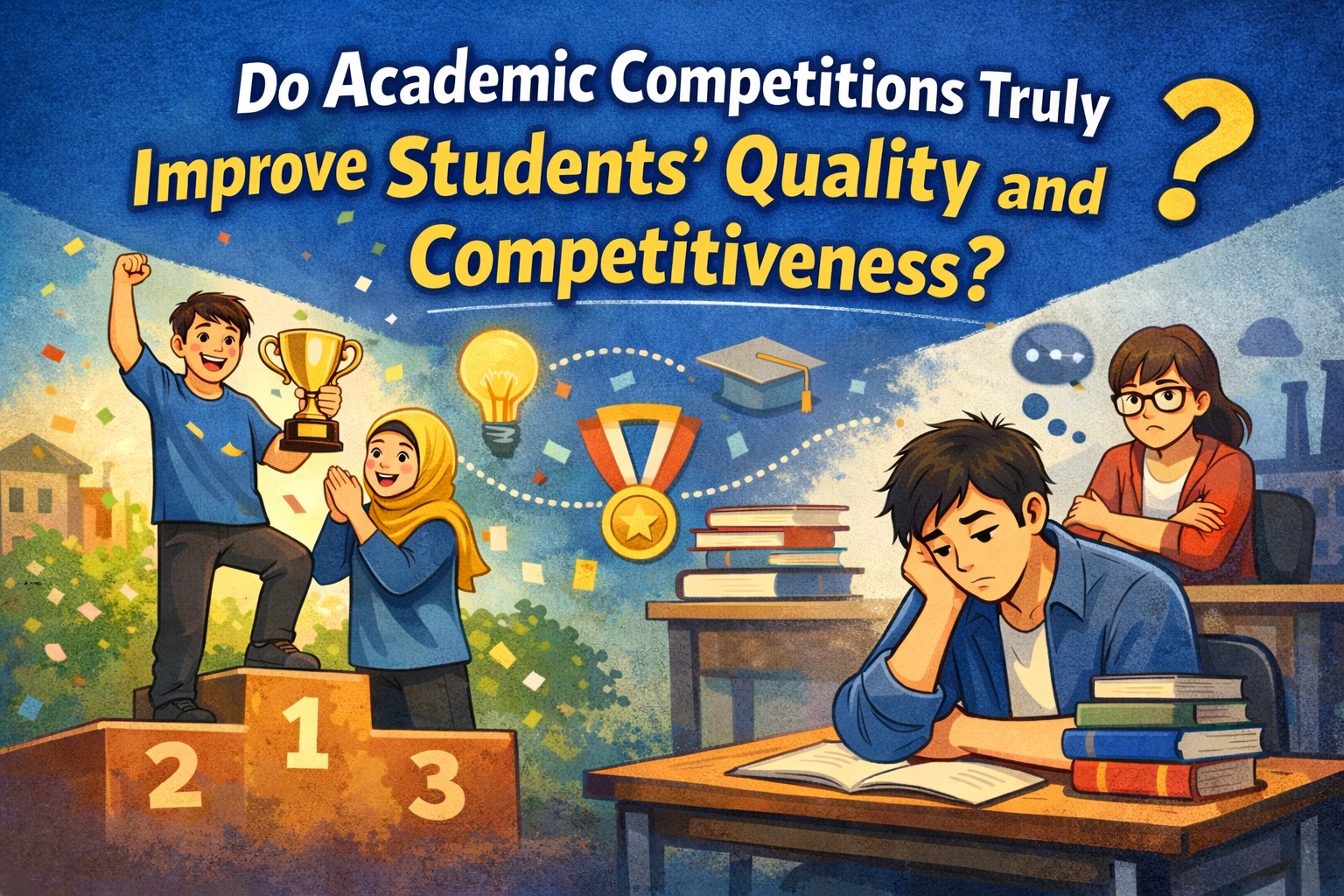
Academic competitions are often viewed as prestigious platforms that produce high-achieving students. From scientific writing contests and debates to national and international Olympiads, these competitions are increasingly common in higher education institutions. However, the key question remains: do academic competitions truly enhance students’ quality and competitiveness in a meaningful way?
This article comprehensively examines the benefits, challenges, and long-term impacts of academic competitions on student development in an era of global competition.
What Are Academic Competitions?
Academic competitions are knowledge-based contests focused on research, innovation, and intellectual ability, organized by educational institutions, governments, or independent organizations. In Indonesia, several well-known competitions are facilitated by the Ministry of Education, Culture, Research, and Technology through various national student programs, as well as events such as the National University Debating Championship (NUDC).
These competitions typically assess analytical thinking, critical reasoning, problem-solving skills, communication ability, and creativity in addressing specific issues.
Benefits of Academic Competitions for Student Quality
1. Enhancing Critical and Analytical Thinking
Students are required to deeply understand problems, conduct systematic research, and construct data-driven arguments. This process directly strengthens critical and analytical skills essential for both professional careers and advanced studies.
2. Developing Both Hard Skills and Soft Skills
Competitions test subject mastery (hard skills) while also improving communication, teamwork, time management, and mental resilience (soft skills). This combination significantly contributes to personal and professional growth.
3. Building Academic Portfolios and Reputation
Achievements in competitions strengthen students’ CVs and portfolios, providing advantages in job applications, scholarship selections, and graduate program admissions. A strong track record reflects dedication, discipline, and perseverance.
4. Expanding Professional Networks
National and international competitions offer networking opportunities with students from other universities, mentors, professional judges, and industry practitioners. These connections may lead to research collaborations or future career opportunities.
Impact on Student Competitiveness
1. Increased Self-Confidence
Students who frequently participate in competitions tend to be more confident in presenting ideas and facing academic or professional challenges.
2. Adaptability to Pressure and Targets
Tight deadlines and high evaluation standards train students to work under pressure, strategize effectively, and remain results-oriented—qualities highly relevant in competitive workplaces.
3. Encouraging a Culture of Achievement on Campus
When more students actively join competitions, campuses are encouraged to foster a productive and innovative academic culture. Competitiveness develops not only at the individual level but also institutionally.
Challenges and Risks
Despite their benefits, academic competitions present challenges:
- Excessive focus on competitions may disrupt academic balance.
- Pressure to constantly win can trigger stress if not well-managed.
- Unequal access to mentorship, funding, and facilities may limit participation.
Conclusion
Academic competitions can indeed enhance student quality and competitiveness—but with the right approach. When treated as learning platforms rather than mere trophy pursuits, competitions become powerful developmental tools.
Tentang Penulis
Gusti Ayu Tita
Penulis — Universitas STEKOM
Penulis aktif yang berfokus pada isu-isu akademik, teknologi pendidikan, dan pengembangan sumber daya manusia di lingkungan kampus.