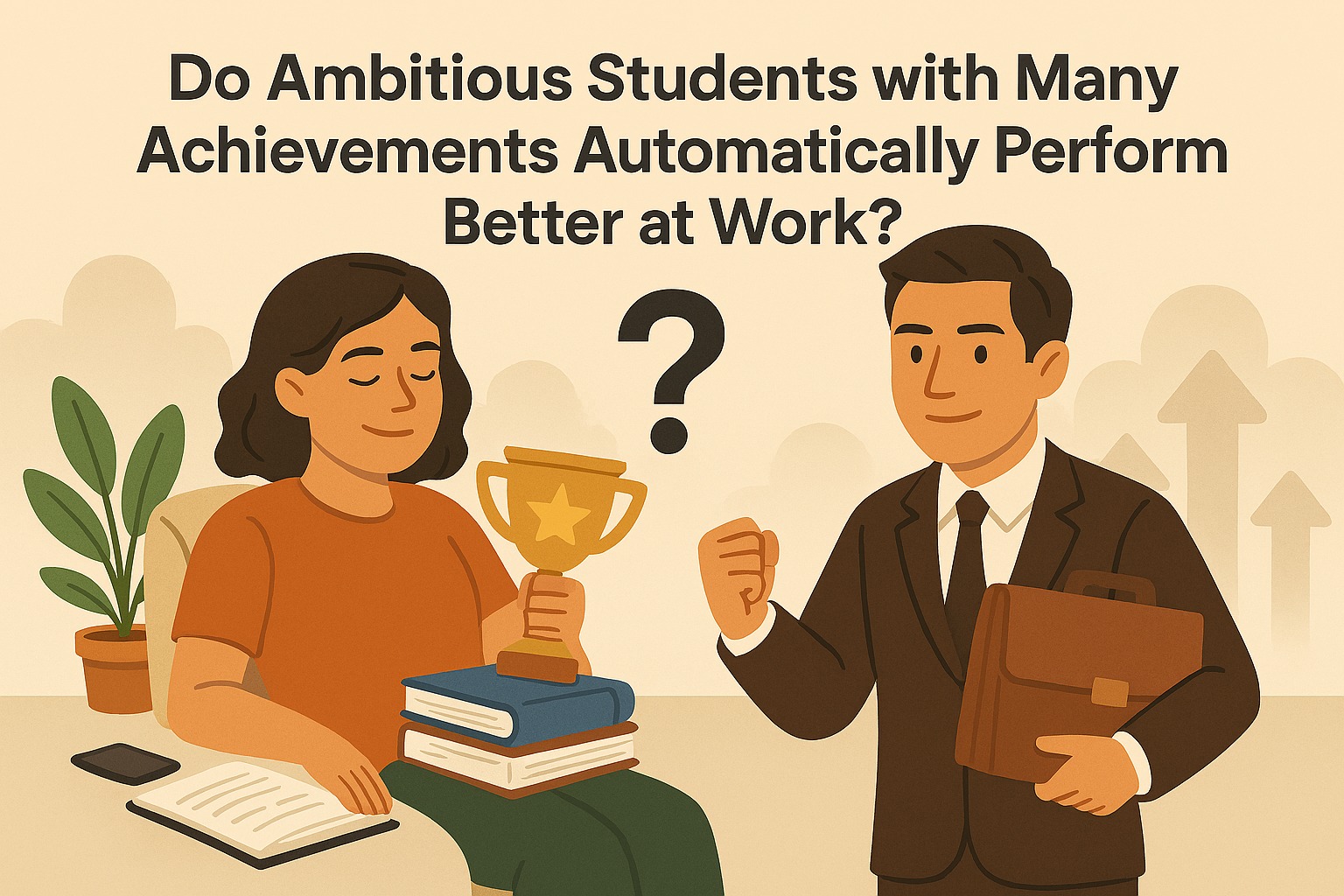
Ambitious students often stand out on campus. With high GPAs, active involvement in organizations, internship experience, and numerous certificates, they appear highly prepared to enter the workforce. However, an important question arises: are ambitious students with numerous achievements necessarily more work-ready than others?
In today’s increasingly competitive career landscape, work readiness is not measured solely by the number of accomplishments. Various other factors determine whether someone is truly prepared to enter the professional world.
THE CHARACTERISTICS OF AMBITIOUS STUDENTS AND THEIR ACHIEVEMENT ORIENTATION
Ambitious students are known for having clear targets and competitive spirit. They are accustomed to setting high standards and striving to achieve them with discipline. Activities such as organizations, competitions, seminars, and independent projects are pursued to enrich their experiences.
This achievement-oriented mindset certainly offers advantages. A strong portfolio builds confidence when applying for jobs. Moreover, managing multiple activities at once trains time management skills and responsibility. However, work readiness is not just about how many experiences one has, but how those experiences shape professional abilities.
ADVANTAGES THAT SUPPORT WORK READINESS
Ambitious students usually possess several strengths relevant to industry needs.
- First, they are accustomed to pressure. Assignment deadlines, competitions, and organizational responsibilities train mental resilience needed in the workplace.
- Second, soft skills such as communication, leadership, and teamwork are often more developed. Organizational experience helps them understand collaboration dynamics.
- Third, proactiveness becomes an added value. The workplace appreciates individuals who do not merely wait for instructions but take initiative.
With these assets, ambitious students indeed have a strong foundation to begin their careers.
FACTORS THAT MUST NOT BE OVERLOOKED
Despite their many achievements, work readiness is also influenced by adaptability and emotional intelligence. The professional world often presents unexpected situations, from policy changes to team conflicts.
Individuals who focus too heavily on personal achievements may need to learn how to adjust to different work rhythms and cultures. Additionally, the ability to accept criticism and learn from failure is an essential part of work readiness.
Academic and organizational achievements are important, but they do not always guarantee maturity in facing professional realities.
THE RISKS OF FOCUSING SOLELY ON ACHIEVEMENT
Excessive focus on accomplishment can create internal pressure. High self-expectations sometimes make it difficult to accept outcomes that fall short of hopes.
In the long term, unmanaged pressure may lead to exhaustion. The workplace requires stable performance, not just momentary achievements. Therefore, balancing ambition with self-management is key to ensuring achievements truly contribute to work readiness.
CONCLUSION
Ambitious students with numerous achievements certainly possess many strengths that support work readiness. Experience, discipline, and the drive to excel provide a strong starting capital when entering the professional world.
However, achievements alone do not automatically guarantee work readiness. Adaptability, emotional intelligence, and consistent performance also play crucial roles. Ultimately, work readiness is not about how many accomplishments were achieved during college, but about how someone manages their potential and continues to grow in a professional environment.
Tentang Penulis
Gusti Ayu Tita
Penulis — Universitas STEKOM
Penulis aktif yang berfokus pada isu-isu akademik, teknologi pendidikan, dan pengembangan sumber daya manusia di lingkungan kampus.