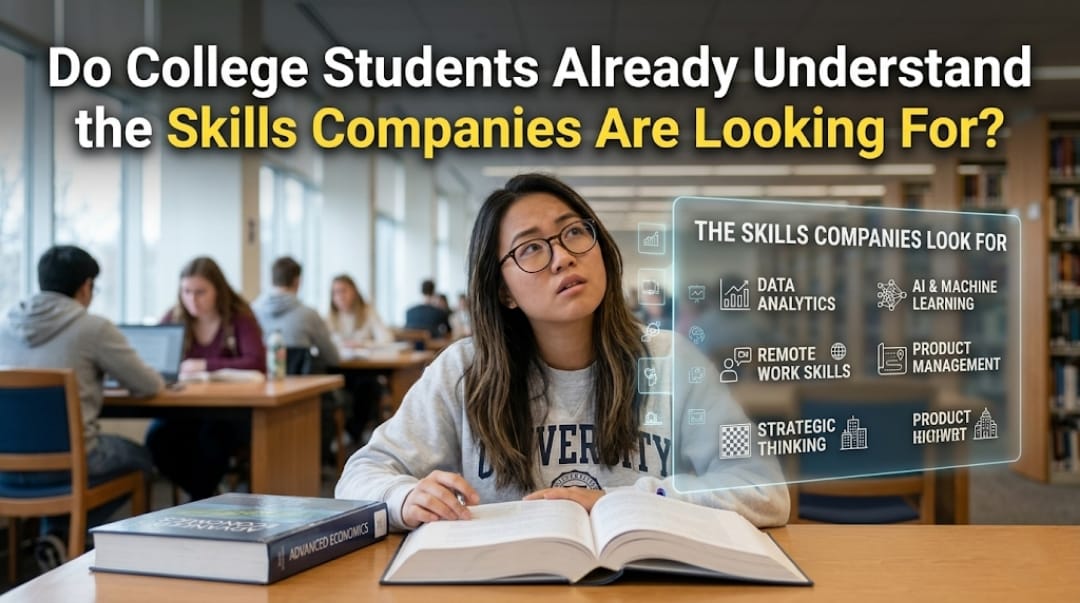
Entering the job market after graduation is an important milestone for many college students. However, the transition from academic life to the professional world often raises an important question. Do college students truly understand the skills companies are looking for?
While universities provide valuable academic knowledge, employers increasingly expect graduates to possess a combination of practical abilities, interpersonal skills, and professional awareness. This shift has made it essential for students to understand what companies actually value in potential employees.
COMPANIES EXPECT MORE THAN ACADEMIC ACHIEVEMENT
Academic performance remains an important part of a student’s profile. A strong academic record reflects discipline, knowledge, and dedication to learning. However, companies rarely rely on academic results alone when evaluating job candidates.
Employers typically look for individuals who can contribute effectively in real workplace situations. Skills such as communication, teamwork, problem solving, and adaptability often play a major role in hiring decisions.
Students who focus only on grades without developing these competencies may find it more difficult to meet employer expectations.
THE IMPORTANCE OF TECHNICAL AND SOFT SKILLS
Modern workplaces require a balance between technical knowledge and soft skills. Technical skills relate to the specific knowledge required for certain professions, such as programming, data analysis, or digital tools.
At the same time, soft skills help individuals collaborate with colleagues and handle workplace challenges. These include communication, leadership, time management, and emotional intelligence.
College students who understand the importance of both types of skills are generally better prepared to enter the professional environment.
EXPERIENCE HELPS STUDENTS UNDERSTAND INDUSTRY NEEDS
One of the most effective ways for students to understand employer expectations is through practical experience. Internships, volunteer programs, research projects, and campus organizations provide opportunities to develop relevant abilities.
These experiences expose students to real professional environments, allowing them to observe how skills are applied in daily work situations. They also help students recognize which competencies are valued most by employers.
Practical experience often bridges the gap between academic learning and workplace demands.
THE ROLE OF CAREER AWARENESS DURING COLLEGE
Career awareness plays a significant role in helping students understand what companies are looking for. Students who actively explore career opportunities tend to have a clearer understanding of industry requirements.
Career seminars, networking events, and discussions with alumni or professionals can provide insights into the expectations of employers. By learning directly from industry professionals, students can better identify the skills they need to develop.
This awareness encourages students to take a more proactive approach to career preparation.
DEVELOPING A PROACTIVE APPROACH TO SKILL BUILDING
Understanding employer expectations is only the first step. Students must also take action to develop the required skills.
Participating in training programs, online courses, and collaborative projects can help strengthen both technical and interpersonal abilities. Students who actively seek opportunities to grow often build stronger professional profiles before graduation.
This proactive approach improves their chances of standing out in a competitive job market.
CONCLUSION
Not all college students fully understand the skills companies are looking for, but awareness of this issue is gradually increasing. Employers today expect graduates to demonstrate more than academic knowledge alone.
By developing both technical and soft skills, gaining practical experience, and building career awareness during college, students can better prepare themselves for the expectations of modern workplaces. This preparation helps bridge the gap between higher education and the professional world.
Tentang Penulis
Gusti Ayu Tita
Penulis — Universitas STEKOM
Penulis aktif yang berfokus pada isu-isu akademik, teknologi pendidikan, dan pengembangan sumber daya manusia di lingkungan kampus.