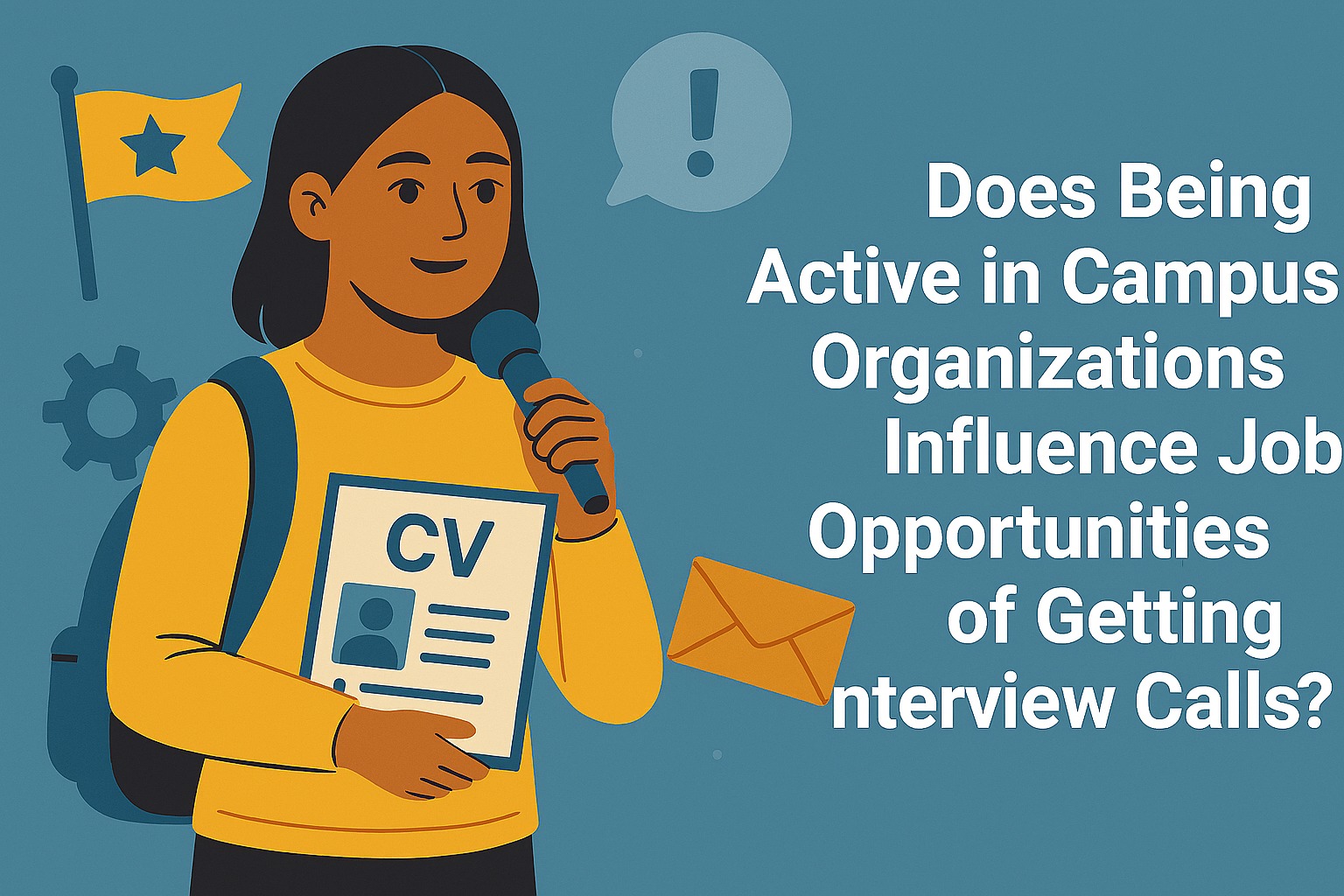
Many students join organizations to find experience or expand their network, but some wonder if it truly affects job prospects. In a competitive world, companies look for non-academic experiences that demonstrate a candidate’s capabilities.
ORGANIZATIONS TRAIN SOFT SKILLS NEEDED BY COMPANIES
Organizations help students learn leadership, time management, teamwork, and problem-solving. These skills are vital as companies seek candidates who can adapt and collaborate in professional environments.
ORGANIZATIONAL EXPERIENCE AS AN ADDED VALUE ON A CV
For those without work history, organizational activity serves as proof of initiative and responsibility. If a student held a leadership position, it demonstrates managerial potential highly valued by firms.
EXPANDING PROFESSIONAL NETWORKS
Campus groups provide chances to meet lecturers, alumni, and industry speakers. These connections can lead to job leads or professional recommendations in the future.
TRAINING RESPONSIBILITY AND WORK ETHIC
Organizational activities involve deadlines and targets, training students to work professionally before they even enter the workforce. Dealing with pressure and managing team conflicts prepares them for real-world challenges.
IS THE ORGANIZATION MORE IMPORTANT THAN ACADEMICS?
No; they should be balanced. Academic grades indicate learning ability, while organizations prove social and leadership skills. A student who maintains a balance between the two usually has the strongest profile.
CONCLUSION
Active participation in campus organizations positively impacts job prospects by developing soft skills, expanding networks, and adding value to a CV. However, students must still maintain academic and professional competencies.
Tentang Penulis
Gusti Ayu Tita P
Penulis — Universitas STEKOM
Penulis aktif yang berfokus pada isu-isu akademik, teknologi pendidikan, dan pengembangan sumber daya manusia di lingkungan kampus.