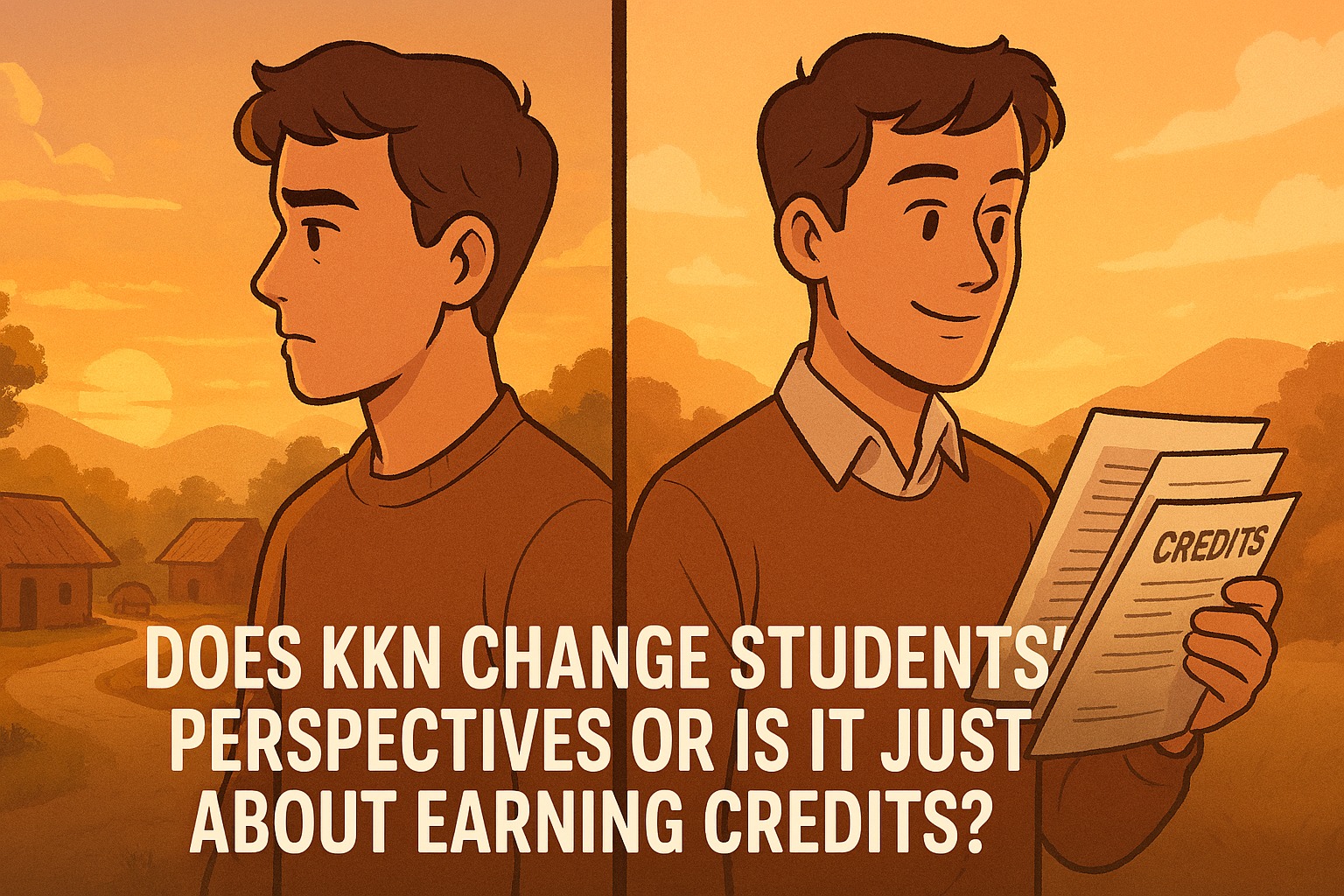
Kuliah Kerja Nyata (KKN), commonly translated as Community Service Program, is a well-known academic requirement in many universities. It places students in communities where they are expected to design and implement programs that address local needs. While KKN is officially part of the curriculum, many students and observers question its true impact. Does KKN genuinely transform students’ perspectives, or is it simply another academic obligation to earn credits? This question invites a deeper exploration of the purpose, process, and outcomes of KKN. Beyond fulfilling graduation requirements, KKN has the potential to shape how students see society, responsibility, and their own roles as educated individuals.
UNDERSTANDING THE PURPOSE OF KKN
At its core, KKN is designed to bridge academic knowledge and real-world application. Universities aim to ensure that students do not remain confined to theoretical learning. Instead, they are encouraged to engage directly with communities, identify problems, and contribute meaningful solutions.
The official objectives of KKN typically include community empowerment, knowledge transfer, and student character development. These goals suggest that KKN is not merely about completing assignments. It is intended to foster social awareness and responsibility.
However, the way students approach KKN significantly influences its impact. If it is seen solely as a compulsory program for earning academic credits, the experience may feel procedural rather than transformative.
THE REALITY OF FIELD EXPERIENCE
When students enter the field, they encounter realities that differ from classroom discussions. Communities may have limited resources, unique cultural values, and complex social dynamics. These conditions require flexibility, empathy, and effective communication.
Students often discover that well-prepared proposals do not always align with community priorities. Adjustments become necessary. This process challenges assumptions and encourages critical thinking. Instead of imposing theoretical solutions, students must listen and collaborate.
Through these interactions, many students begin to view social issues more holistically. Poverty, education gaps, and health concerns are no longer abstract concepts; they become lived experiences observed firsthand. This shift in understanding can significantly influence how students perceive their academic disciplines and future careers.
PERSONAL GROWTH AND CHARACTER DEVELOPMENT
One of the strongest arguments supporting the transformative power of KKN lies in personal development. Living and working in a community environment requires teamwork, leadership, and adaptability. Students must manage time, resolve conflicts, and handle unexpected challenges.
These experiences cultivate resilience and emotional maturity. Students who initially struggle with communication may develop stronger interpersonal skills. Those who are accustomed to structured campus life learn to operate in less predictable settings.
Moreover, KKN often fosters empathy. Direct engagement with community members helps students appreciate diverse perspectives and socio-economic realities. This empathy can shape long-term attitudes toward social responsibility and civic engagement.
Such growth cannot easily be measured through grades alone. It reflects an internal shift that extends beyond academic transcripts.
THE CREDIT-ORIENTED MINDSET
Despite its potential, KKN does not automatically guarantee perspective change. Some students may approach the program with a credit-oriented mindset. In such cases, the primary focus is completing required tasks, documenting activities, and submitting reports on time.
When KKN is treated as a checklist activity, its deeper value may remain untapped. Students might prioritize visible outputs over meaningful engagement. As a result, the experience becomes transactional rather than transformative.
This perspective highlights an important reality: the impact of KKN depends not only on program design but also on student intention. Transformation requires openness, reflection, and active participation.
REFLECTION AS THE KEY TO TRANSFORMATION
The difference between earning credits and gaining perspective often lies in reflection. Students who take time to evaluate their experiences tend to extract more meaningful lessons. Reflecting on challenges, community interactions, and personal reactions allows deeper understanding to emerge.
Through reflection, students may recognize biases they previously held. They may reconsider career goals or develop a stronger commitment to social contribution. KKN becomes a turning point rather than a temporary assignment.
Universities can further support this process by encouraging structured reflection sessions, discussions, and evaluations that emphasize learning rather than merely assessing output.
CONCLUSION
So, does KKN change students’ perspectives or is it just about earning credits? The answer is not absolute. KKN holds the capacity to transform perspectives, enhance empathy, and strengthen character. However, this transformation is not automatic.
When approached with sincerity and openness, KKN becomes a powerful experiential learning platform. It connects theory with practice and nurtures socially responsible graduates. On the other hand, when viewed solely as an academic requirement, its impact may remain limited to credit accumulation.
Ultimately, KKN is what students make of it. The program offers the opportunity for perspective change, but the depth of that change depends on engagement, reflection, and genuine commitment to community service.
Tentang Penulis
Gusti Ayu Tita
Penulis — Universitas STEKOM
Penulis aktif yang berfokus pada isu-isu akademik, teknologi pendidikan, dan pengembangan sumber daya manusia di lingkungan kampus.