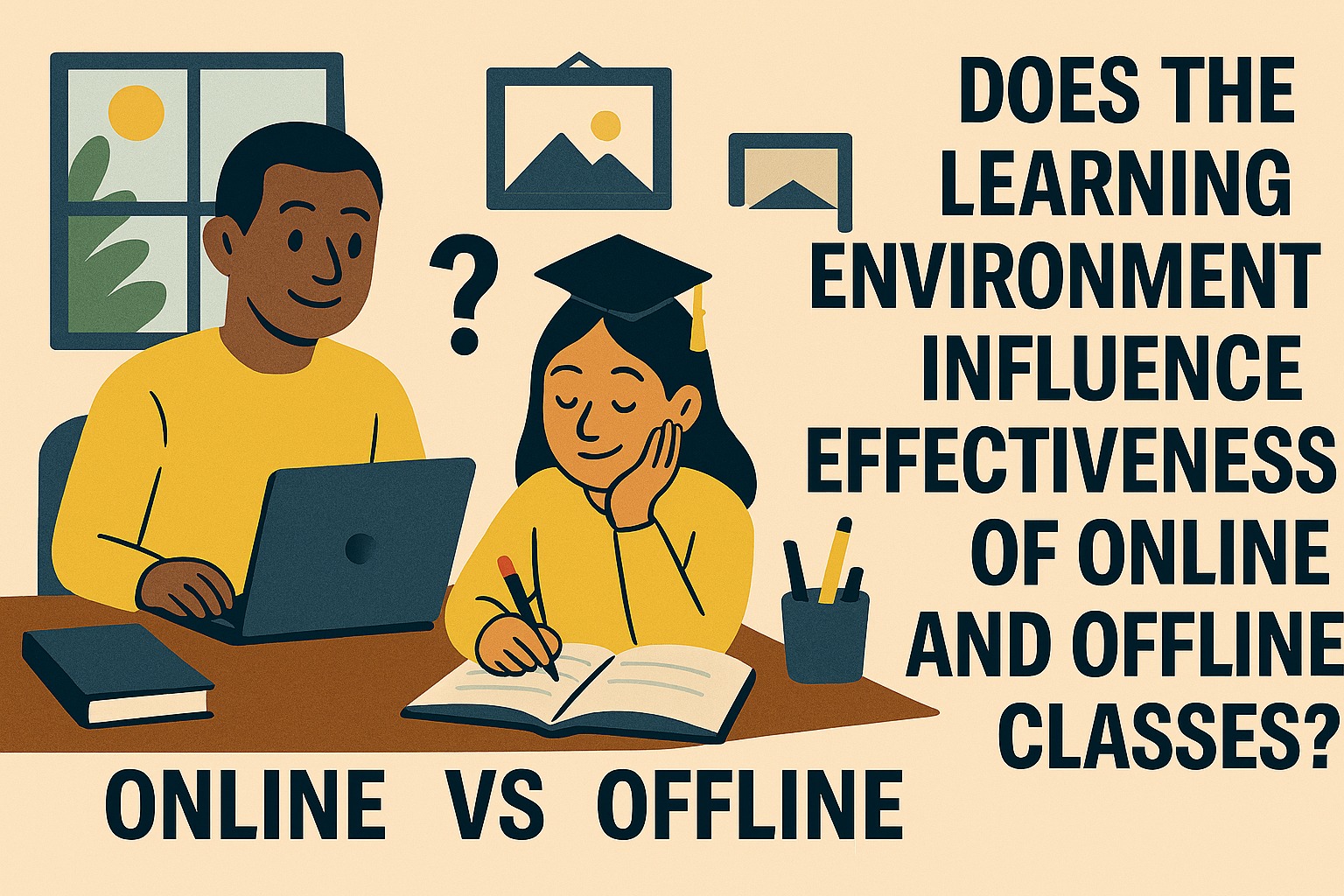
The effectiveness of education is shaped by many factors, including teaching quality, student motivation, and curriculum design. However, one element that is often underestimated is the learning environment itself. Whether classes are conducted online or offline, the surrounding conditions play a critical role in shaping student focus, engagement, and overall academic performance. This leads to an important question: does the learning environment influence the effectiveness of online and offline classes?
Understanding how physical and virtual environments affect learning outcomes can help educators design more productive educational experiences.
PHYSICAL ENVIRONMENT IN OFFLINE CLASSES
In traditional offline classes, the physical environment directly affects student concentration. Classroom layout, lighting, temperature, seating arrangement, and noise levels all contribute to how comfortable and focused students feel. A well-organized classroom with minimal distractions can enhance participation and comprehension.
Face-to-face settings also provide structured learning spaces designed specifically for education. The physical separation from home-related distractions often allows students to concentrate more fully on lessons. Additionally, being surrounded by peers who share similar goals can increase motivation and accountability.
However, if classrooms are overcrowded, poorly ventilated, or noisy, the effectiveness of offline learning may decrease significantly.
DIGITAL ENVIRONMENT IN ONLINE CLASSES
In online classes, the learning environment shifts from a physical classroom to a digital and personal space. Students typically attend classes from home or other locations. The quality of internet connectivity, availability of devices, and digital platform usability greatly influence learning effectiveness.
A stable internet connection and a quiet study area can support productivity and engagement. Online platforms that are user-friendly and interactive also contribute to better comprehension. Features such as screen sharing, digital whiteboards, and recorded sessions allow students to revisit complex material.
On the other hand, home environments may include distractions such as family activities, social media, or entertainment platforms. Without proper self-discipline, these distractions can reduce focus and academic performance.
SOCIAL ATMOSPHERE AND INTERACTION
The learning environment also includes social elements. In offline classes, students interact directly with teachers and classmates. This immediate communication allows for spontaneous discussion, quick clarification of doubts, and stronger emotional connections.
In online classes, interaction depends heavily on digital tools. Video conferencing, chat functions, and discussion forums facilitate communication, but they may not fully replicate the energy of in-person conversations. Some students may feel isolated, which can affect motivation and engagement.
Therefore, the social atmosphere—whether physical or virtual—plays a significant role in determining how effectively students absorb information.
PSYCHOLOGICAL IMPACT OF ENVIRONMENT
Beyond physical and social aspects, the learning environment influences students psychologically. A dedicated study space often signals the brain to focus and concentrate. In offline settings, classrooms naturally serve this purpose.
In online learning, students must create their own structured environment. Those who establish consistent study routines and organized workspaces tend to perform better. Conversely, studying in informal settings such as bedrooms or shared spaces may reduce seriousness and discipline.
Thus, psychological readiness shaped by the environment strongly affects educational outcomes.
CONCLUSION
The learning environment significantly influences the effectiveness of both online and offline classes. In offline settings, physical structure and direct interaction enhance focus and engagement. In online classes, digital infrastructure and personal study spaces determine productivity and comprehension.
Ultimately, neither online nor offline learning is inherently superior. The effectiveness of each method depends largely on how supportive and well-managed the learning environment is. By optimizing physical, digital, social, and psychological conditions, educators and students can maximize academic success in any format.
Tentang Penulis
Gusti Ayu Tita
Penulis — Universitas STEKOM
Penulis aktif yang berfokus pada isu-isu akademik, teknologi pendidikan, dan pengembangan sumber daya manusia di lingkungan kampus.