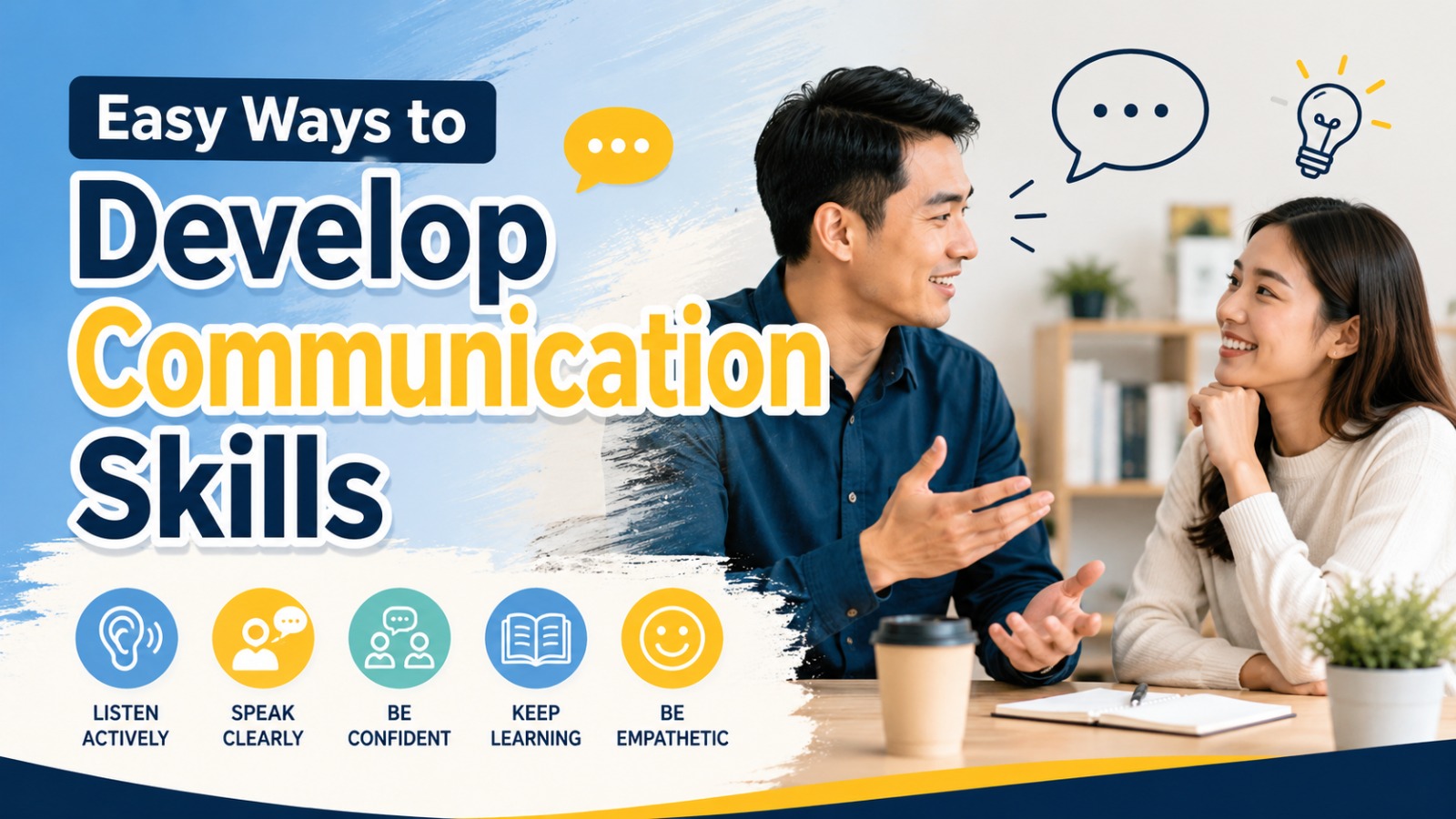
Communication skills play an important role in everyday life. Whether in school, work, business, or social relationships, the ability to communicate clearly can help people express ideas, build confidence, and avoid misunderstandings. Good communication is not only about speaking fluently but also about listening, understanding, and responding appropriately.
Many people believe communication skills are natural talents, but in reality, they can be learned and improved through consistent practice. Developing strong communication abilities can open many opportunities and improve personal and professional relationships.
WHY COMMUNICATION SKILLS MATTER
Communication is the foundation of human interaction. People with good communication skills often find it easier to make friends, work in teams, and solve problems effectively. In professional environments, communication also influences leadership, teamwork, and career growth.
Strong communication skills help individuals:
- Share ideas clearly
- Build trust with others
- Improve confidence
- Avoid conflicts and misunderstandings
- Create better relationships
Without effective communication, even simple conversations can become confusing and unproductive.
PRACTICE ACTIVE LISTENING
One of the easiest ways to improve communication skills is by becoming a better listener. Many people focus too much on what they want to say and forget to pay attention to others.
Active listening means fully concentrating on the speaker, understanding the message, and responding thoughtfully. Good listeners maintain eye contact, avoid interrupting, and show genuine interest during conversations.
By listening carefully, people can understand different perspectives and respond more effectively.
EXPAND YOUR VOCABULARY
A wider vocabulary helps people communicate ideas more clearly and confidently. Learning new words does not mean using complicated language. Instead, it helps individuals express thoughts more accurately.
Reading books, articles, and news regularly can improve vocabulary naturally. Watching educational videos and listening to podcasts can also help develop better language skills.
The more words people understand, the easier it becomes to communicate in various situations.
IMPROVE BODY LANGUAGE
Communication is not only verbal. Body language also plays a major role in delivering messages. Facial expressions, gestures, posture, and eye contact can influence how others understand conversations.
Positive body language can make a person appear more confident and approachable. Simple habits such as smiling, maintaining good posture, and making eye contact can improve communication instantly.
Negative body language, such as crossing arms or avoiding eye contact, may create misunderstandings or reduce trust.
PRACTICE SPEAKING REGULARLY
Like any other skill, communication improves with practice. Speaking regularly helps people become more comfortable expressing ideas and opinions.
Joining discussions, participating in presentations, or simply having conversations with friends can help improve speaking abilities. Practicing in front of a mirror is also useful for building confidence and improving pronunciation.
The more often people speak, the more natural and effective their communication becomes.
LEARN TO SPEAK CLEARLY AND SIMPLY
Effective communication does not require complicated words or long explanations. Speaking clearly and directly helps others understand messages more easily.
Using simple language, organizing thoughts before speaking, and avoiding unnecessary details can improve conversations significantly. Clear communication is especially important in professional and educational environments.
People who speak simply often appear more confident and trustworthy.
DEVELOP CONFIDENCE
Confidence strongly affects communication skills. People who lack confidence may hesitate, speak too softly, or avoid conversations altogether.
Building confidence takes time, but small steps can make a big difference. Preparing before speaking, practicing regularly, and focusing on positive thinking can improve self-confidence.
Mistakes are a normal part of learning. The important thing is to continue practicing and gaining experience.
USE TECHNOLOGY TO IMPROVE COMMUNICATION
Technology provides many opportunities to develop communication skills. Online courses, language learning apps, and educational videos can help people improve speaking and listening abilities.
Social media and online communities also allow individuals to interact with people from different backgrounds and practice communication in various situations.
However, balancing digital communication with face-to-face interaction is important for developing stronger interpersonal skills.
CONCLUSION
Developing communication skills does not happen overnight, but small daily improvements can lead to significant progress over time. Listening actively, practicing speaking, improving body language, and building confidence are simple yet effective ways to become a better communicator.
Strong communication skills can improve relationships, increase career opportunities, and help people feel more confident in everyday interactions. With consistent practice and patience, anyone can become a more effective communicator.
Tentang Penulis
Gusti Ayu Tita
Penulis — Universitas STEKOM
Penulis aktif yang berfokus pada isu-isu akademik, teknologi pendidikan, dan pengembangan sumber daya manusia di lingkungan kampus.