
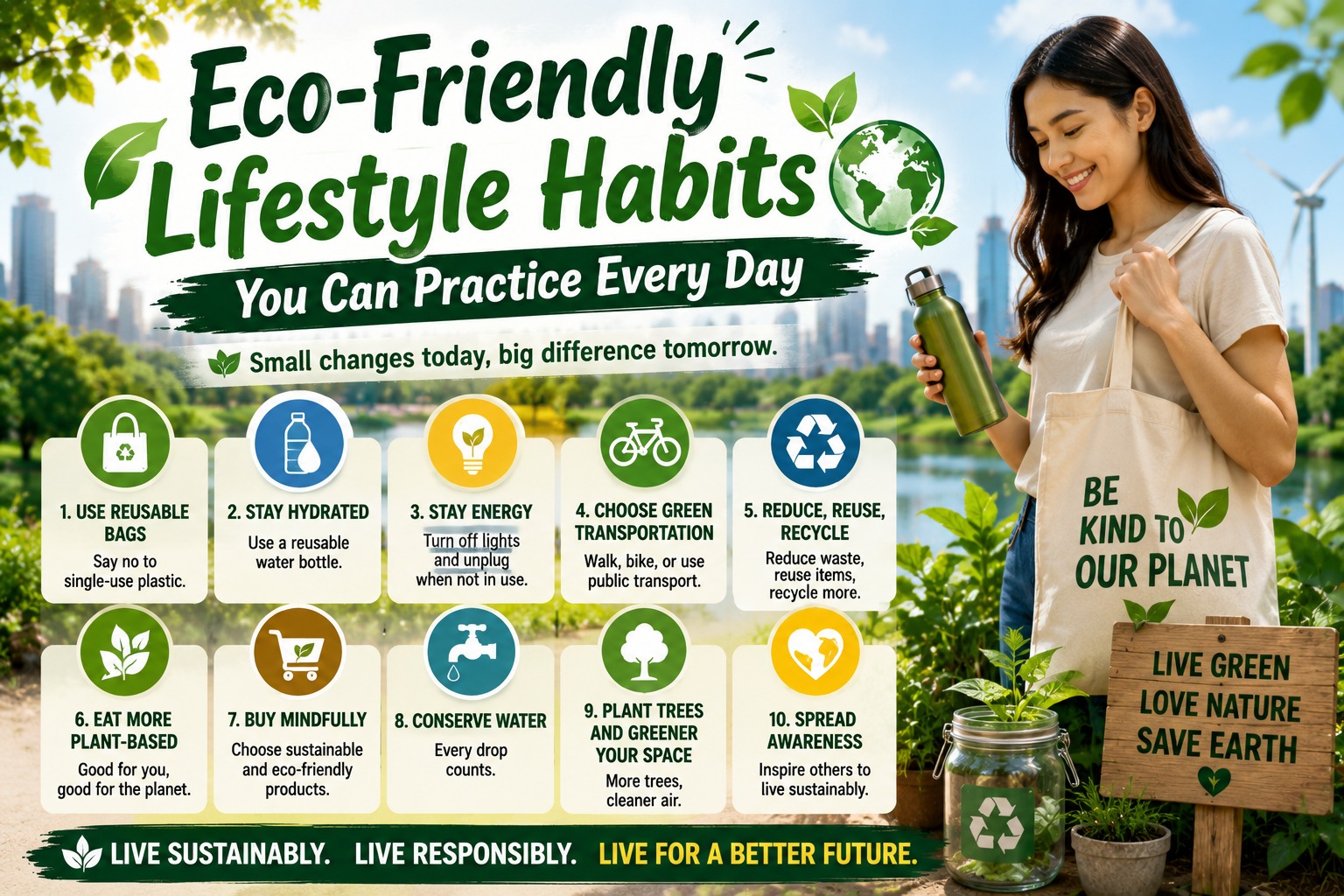
Living an eco-friendly lifestyle has become increasingly important as environmental issues continue to affect the planet. Pollution, climate change, deforestation, and excessive waste are some of the major problems caused by unsustainable human activities. Fortunately, protecting the environment does not always require large-scale actions. Simple daily habits can make a meaningful difference when practiced consistently.
An eco-friendly lifestyle focuses on reducing waste, conserving natural resources, and minimizing environmental impact. By adopting sustainable habits, individuals can contribute to a cleaner, healthier, and greener future.
WHY AN ECO-FRIENDLY LIFESTYLE MATTERS
Environmental damage affects air quality, water resources, ecosystems, and human health. Excessive consumption of plastic, energy, and natural resources increases pollution and accelerates climate change.
Practicing environmentally friendly habits helps reduce carbon emissions, conserve energy, and protect biodiversity. It also encourages responsible consumption and supports long-term sustainability for future generations.
USE REUSABLE PRODUCTS
One of the easiest ways to reduce waste is by replacing disposable items with reusable alternatives. Single-use plastics such as bags, bottles, and straws contribute heavily to environmental pollution.
Using reusable shopping bags, water bottles, lunch containers, and metal straws can significantly decrease plastic waste in daily life.
SAVE WATER WISELY
Water is a valuable natural resource that should not be wasted. Small actions can help conserve water and reduce unnecessary consumption.
Turning off the tap while brushing teeth, fixing leaking pipes, and using water-efficient appliances are effective ways to save water every day.
REDUCE ENERGY CONSUMPTION
Electricity production often depends on fossil fuels that release greenhouse gases into the atmosphere. Saving energy can help lower pollution and reduce environmental damage.
Simple habits such as turning off lights when leaving a room, unplugging unused devices, and using energy-efficient LED bulbs can reduce electricity usage.
CHOOSE ENVIRONMENTALLY FRIENDLY TRANSPORTATION
Transportation is one of the largest contributors to air pollution. Walking, cycling, carpooling, or using public transportation can help reduce carbon emissions.
For longer distances, choosing fuel-efficient or electric vehicles can support cleaner transportation systems.
RECYCLE AND SORT WASTE
Proper waste management is essential for maintaining a clean environment. Separating recyclable materials such as paper, plastic, glass, and metal helps reduce landfill waste.
Composting organic waste can also minimize garbage while creating natural fertilizer for plants.
AVOID EXCESSIVE PLASTIC USE
Plastic pollution harms oceans, wildlife, and ecosystems worldwide. Reducing plastic usage is an important step toward environmental protection.
Choosing products with minimal packaging and supporting businesses that use eco-friendly materials can help reduce plastic waste.
PLANT AND CARE FOR TREES
Trees improve air quality, absorb carbon dioxide, and create healthier surroundings. Planting trees around homes, schools, and communities can help combat climate change naturally.
Taking care of plants and green spaces also contributes to environmental sustainability.
SUPPORT SUSTAINABLE PRODUCTS
Buying environmentally friendly products encourages companies to adopt sustainable practices. Choosing local, organic, or biodegradable products can reduce environmental impact.
Consumers can also support brands that prioritize ethical production and eco-friendly packaging.
EDUCATE OTHERS ABOUT ENVIRONMENTAL AWARENESS
Sharing information about sustainability and environmental care can inspire others to adopt eco-friendly habits. Social media, schools, and community programs can help spread awareness effectively.
When more people participate in environmental protection, the positive impact becomes greater.
CONCLUSION
Practicing an eco-friendly lifestyle does not have to be difficult. Small daily habits such as saving water, reducing plastic use, recycling waste, and conserving energy can create meaningful environmental benefits over time.
By making conscious choices and encouraging sustainable living, individuals can help protect the planet and create a healthier future for generations to come.
Tentang Penulis
Gusti Ayu Tita
Penulis — Universitas STEKOM
Penulis aktif yang berfokus pada isu-isu akademik, teknologi pendidikan, dan pengembangan sumber daya manusia di lingkungan kampus.



