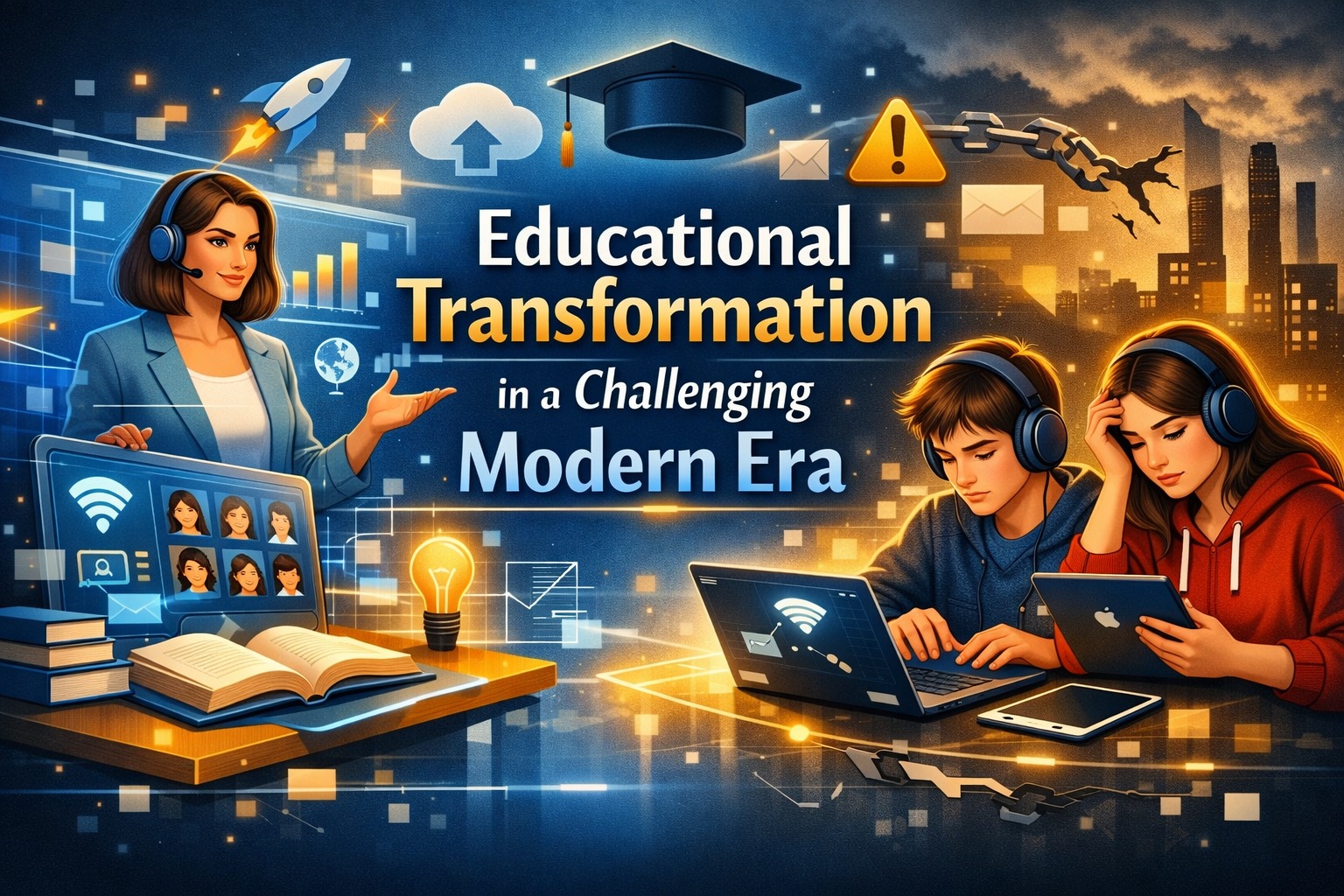
The modern world is changing rapidly due to technological advancement, globalization, and evolving social needs. These changes have greatly influenced the education sector, requiring schools and educational institutions to adapt continuously. Traditional learning methods are no longer enough to prepare students for the demands of the future. As a result, educational innovation has become an important solution for overcoming modern educational challenges.
Educational innovation refers to the development of new ideas, methods, technologies, and strategies that improve the quality and effectiveness of learning. Through innovation, education can become more flexible, inclusive, and relevant to the needs of modern society.
THE EVOLUTION OF MODERN EDUCATION
Education has undergone major transformation over the last few decades. Traditional classrooms that depended heavily on textbooks and lectures are now integrating digital tools, online learning systems, and interactive educational technologies.
Students can access learning materials through smartphones, tablets, and online platforms, while teachers can create more engaging lessons using multimedia presentations and virtual collaboration tools.
This evolution has expanded educational opportunities and improved learning accessibility worldwide.
MODERN CHALLENGES IN EDUCATION
Despite technological progress, education still faces many challenges in the modern era. One of the biggest issues is unequal access to technology and internet connectivity.
Students in rural or low-income communities often struggle to access digital learning resources, creating educational inequality. In addition, rapid technological change requires teachers and schools to continuously adapt to new learning systems.
Another challenge is the increasing distraction caused by social media, online entertainment, and excessive screen time, which can reduce students’ focus and learning motivation.
THE ROLE OF EDUCATIONAL INNOVATION
Educational innovation plays a vital role in addressing these modern challenges. Innovative learning systems can make education more interactive, accessible, and effective for students from different backgrounds.
Technology-based learning methods such as blended learning, virtual classrooms, and digital collaboration platforms allow students to learn more flexibly.
Innovation also helps teachers create creative teaching strategies that improve student engagement, critical thinking, and problem-solving abilities.
TECHNOLOGY AS A TOOL FOR EDUCATIONAL IMPROVEMENT
Technology has become one of the main drivers of educational innovation. Artificial intelligence, cloud learning systems, educational applications, and virtual reality are transforming modern classrooms.
These technologies provide personalized learning experiences that allow students to study according to their own learning pace and needs.
Technology also improves communication between teachers and students through online discussions, video conferences, and digital assessments.
However, technology should be used wisely to ensure that it supports meaningful and balanced learning experiences.
THE IMPORTANCE OF DIGITAL LITERACY
Digital literacy is an essential skill in modern education. Students need the ability to use technology responsibly, evaluate online information critically, and communicate effectively in digital environments.
Without proper digital literacy, students may struggle with misinformation, cyber risks, and unhealthy online behavior.
Schools should integrate digital literacy programs into their curriculum to help students adapt successfully to technological advancements.
THE ROLE OF TEACHERS IN EDUCATIONAL INNOVATION
Teachers remain one of the most important factors in educational success despite rapid technological development. Modern educators must become adaptable, creative, and technologically skilled.
Teachers should use innovative teaching methods that encourage collaboration, creativity, and active participation among students.
Continuous professional development and digital training programs are necessary to help teachers integrate technology effectively into the learning process.
CHARACTER EDUCATION IN THE DIGITAL ERA
Educational innovation should not focus solely on academic achievement and technology. Character education remains crucial for developing responsible and ethical future generations.
Students need values such as discipline, honesty, empathy, and social responsibility to navigate modern society successfully.
Schools and families must work together to ensure that technological advancement is balanced with strong moral and ethical education.
STRATEGIES FOR IMPLEMENTING EDUCATIONAL INNOVATION
Several strategies can help schools successfully implement educational innovation. Governments should improve digital infrastructure and provide equal access to educational technology for all students.
Schools should also adopt flexible learning systems that combine online and offline learning approaches. Investment in teacher training and digital learning resources is equally important.
In addition, collaboration between educational institutions, communities, and private organizations can help create sustainable educational innovation.
THE FUTURE OF EDUCATION
The future of education will continue to be shaped by innovation and technological advancement. Artificial intelligence, personalized learning systems, and virtual learning environments are expected to become increasingly common.
However, education should continue to prioritize human interaction, creativity, communication skills, and emotional intelligence.
A balanced combination of innovation, technology, and character education will create a stronger and more inclusive education system for future generations.
CONCLUSION
Educational innovation is an essential response to the challenges of the modern era. Technology and new learning strategies offer many opportunities to improve educational quality, accessibility, and student engagement.
However, successful educational transformation requires equal access to technology, strong digital literacy, teacher support, and character education. By combining innovation with ethical and inclusive learning approaches, education can better prepare students to face future global challenges.
Tentang Penulis
Gusti Ayu Tita
Penulis — Universitas STEKOM
Penulis aktif yang berfokus pada isu-isu akademik, teknologi pendidikan, dan pengembangan sumber daya manusia di lingkungan kampus.