
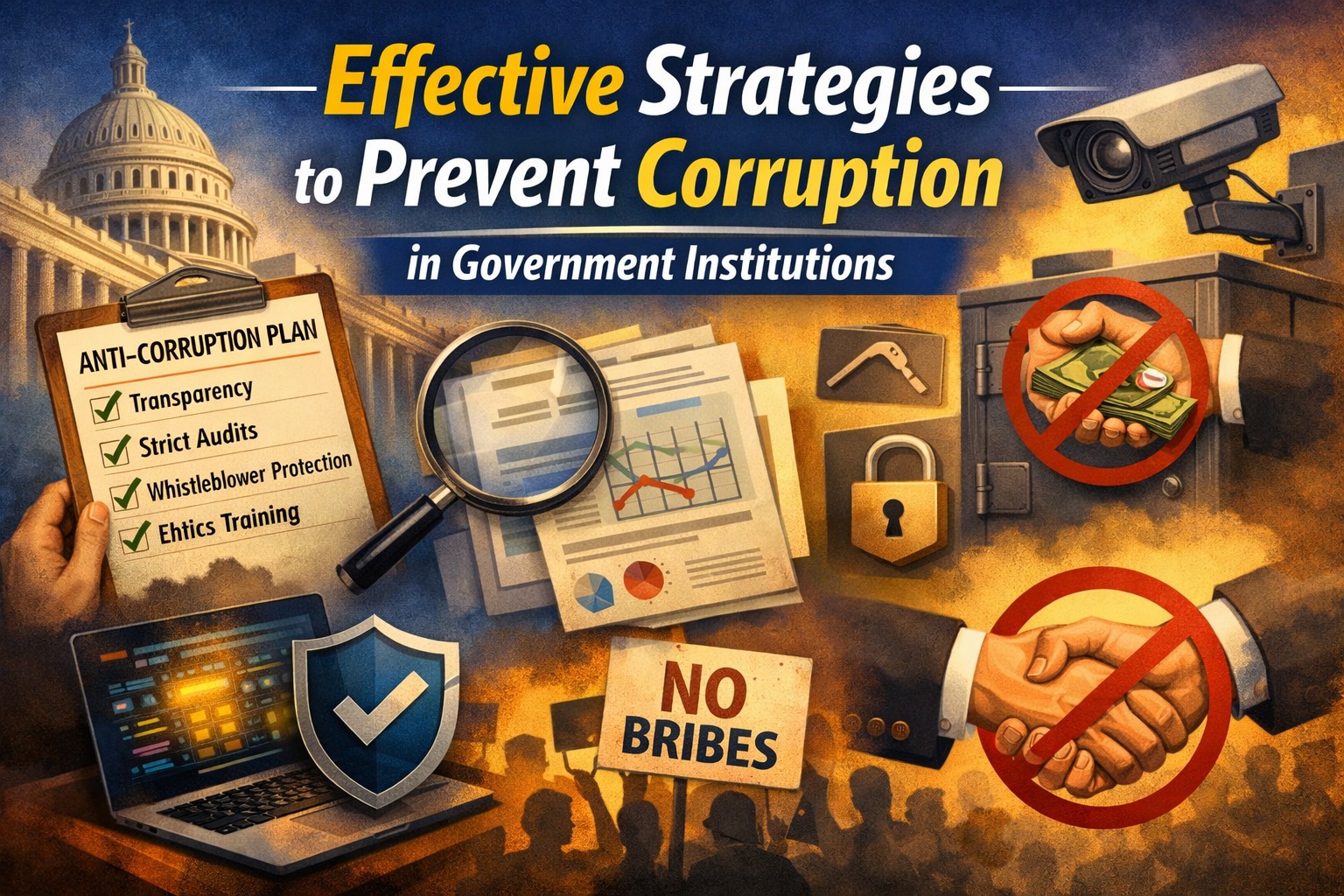
Corruption remains one of the biggest challenges faced by governments around the world. It weakens public trust, slows economic growth, and creates inequality within society. Government institutions that fail to control corruption often experience reduced efficiency, poor public services, and declining confidence from citizens. Therefore, implementing effective anti-corruption strategies is essential for building transparent and accountable governance.
This article discusses several effective strategies that can help prevent corruption in government institutions while promoting integrity and public trust.
UNDERSTANDING THE IMPACT OF CORRUPTION
Corruption affects many aspects of society, including the economy, politics, education, and public welfare. When government officials abuse their power for personal gain, public funds are often misused, resulting in poor infrastructure, inadequate healthcare, and limited educational opportunities.
In addition, corruption discourages foreign investment and damages a country’s international reputation. Citizens may also lose confidence in public institutions when corruption cases continue without proper legal action. Because of these negative consequences, governments must prioritize anti-corruption efforts.
STRENGTHENING TRANSPARENCY IN GOVERNMENT
Transparency is one of the most important tools for preventing corruption. Government institutions should provide open access to information regarding budgets, procurement processes, and public spending. When citizens can easily monitor government activities, opportunities for corruption become more limited.
Digital platforms can also improve transparency by allowing the public to track government projects and financial reports online. E-government systems reduce direct interaction between officials and citizens, minimizing the risk of bribery and illegal transactions.
IMPLEMENTING STRICT LAW ENFORCEMENT
Strong law enforcement is essential in combating corruption. Governments must establish clear regulations and ensure that anti-corruption laws are applied fairly to everyone, regardless of social or political status.
Independent anti-corruption agencies should be empowered to investigate and prosecute corruption cases without interference. Severe penalties for corrupt practices can create a deterrent effect and discourage officials from engaging in illegal activities.
Furthermore, judicial systems must remain impartial and transparent to ensure public trust in the legal process.
IMPROVING ETHICS AND EDUCATION
Education plays a major role in preventing corruption. Government employees should receive regular ethics training to understand the importance of honesty, accountability, and public service values.
Anti-corruption education can also be introduced in schools and universities to build integrity from an early age. When young people understand the harmful effects of corruption, they are more likely to support transparent and ethical behavior in the future.
Creating a culture of integrity within institutions encourages employees to reject unethical practices and report suspicious activities.
ENCOURAGING PUBLIC PARTICIPATION
Public participation is another effective strategy to prevent corruption. Citizens, journalists, and civil society organizations can help monitor government activities and expose corrupt behavior.
Whistleblower protection is especially important because many corruption cases are uncovered through insider reports. Governments should create secure reporting systems that protect individuals who report misconduct.
Free and independent media also play a critical role in investigating corruption cases and raising public awareness about accountability.
USING TECHNOLOGY TO REDUCE CORRUPTION
Modern technology offers many solutions for reducing corruption in government institutions. Digital payment systems, electronic procurement, and blockchain technology can improve accountability and reduce opportunities for fraud.
Artificial intelligence and data analysis can also help detect suspicious financial transactions and irregular government spending patterns. By automating administrative processes, governments can reduce human errors and limit opportunities for bribery.
Technology-based monitoring systems allow institutions to operate more efficiently and transparently.
BUILDING A CULTURE OF ACCOUNTABILITY
Accountability ensures that government officials are responsible for their actions. Regular audits, performance evaluations, and financial inspections can help identify corruption risks before they become larger problems.
Leaders must set positive examples by demonstrating integrity and ethical leadership. Institutions with strong accountability systems are more likely to maintain public trust and prevent abuse of power.
In addition, rewarding honest employees can encourage ethical behavior within government organizations.
CONCLUSION
Preventing corruption in government institutions requires cooperation between governments, citizens, law enforcement agencies, and civil society. Transparency, strong legal systems, ethical education, public participation, and modern technology all play important roles in reducing corrupt practices.
By implementing these effective strategies, governments can create cleaner institutions, improve public services, and strengthen trust among citizens. A corruption-free government not only benefits the economy but also promotes fairness, justice, and long-term national development.
Tentang Penulis
Gusti Ayu Tita
Penulis — Universitas STEKOM
Penulis aktif yang berfokus pada isu-isu akademik, teknologi pendidikan, dan pengembangan sumber daya manusia di lingkungan kampus.



