
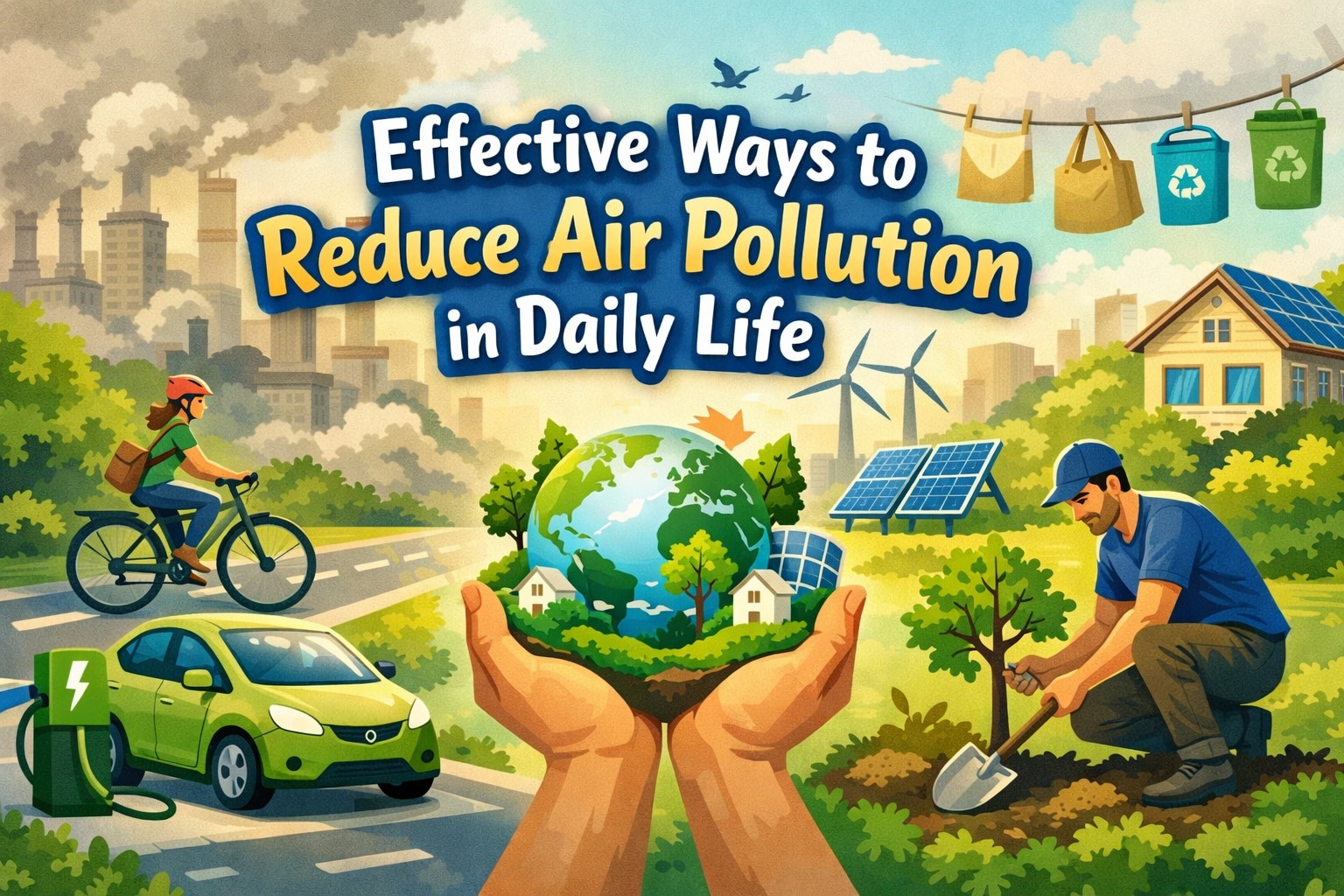
Air pollution has become one of the biggest environmental challenges in modern society. The increasing number of vehicles, industrial activities, and excessive energy consumption contribute significantly to poor air quality. If not controlled, air pollution can harm human health, damage ecosystems, and worsen climate change. Fortunately, everyone can help reduce air pollution by adopting simple habits in daily life.
WHY REDUCING AIR POLLUTION IS IMPORTANT
Clean air is essential for healthy living. Polluted air contains harmful particles and gases that can cause respiratory diseases, heart problems, and allergies. Children and older adults are especially vulnerable to the effects of polluted air. In addition, air pollution negatively impacts plants, animals, and water sources.
Reducing air pollution also helps create a more sustainable environment for future generations. By taking small actions consistently, individuals can contribute to cleaner and healthier surroundings.
USE PUBLIC TRANSPORTATION OR CARPOOLING
One of the most effective ways to reduce air pollution is by minimizing the use of private vehicles. Cars and motorcycles release carbon emissions that contribute to smog and greenhouse gases. Using public transportation, cycling, or walking can significantly reduce air pollution levels.
Carpooling is another practical solution because it decreases the number of vehicles on the road. Fewer vehicles mean lower fuel consumption and reduced harmful emissions.
SAVE ENERGY AT HOME
Electricity production often relies on burning fossil fuels, which generate air pollution. Reducing energy usage at home can help lower pollution levels. Turning off lights when not needed, using energy-efficient appliances, and unplugging unused electronics are simple but effective habits.
Using natural lighting and ventilation during the day can also reduce electricity consumption. These actions not only protect the environment but also lower household expenses.
PLANT MORE TREES AND GREENERY
Trees play an important role in improving air quality because they absorb carbon dioxide and release oxygen. Planting trees around homes, schools, and public spaces can help reduce pollution naturally.
Indoor plants can also improve air quality inside buildings by filtering harmful substances from the air. Green spaces create healthier environments and make cities more comfortable to live in.
REDUCE THE USE OF SINGLE-USE PRODUCTS
Many disposable products create waste that is often burned, producing toxic smoke and air pollution. Using reusable bags, bottles, and containers can reduce waste production and minimize pollution.
Recycling materials such as paper, plastic, and glass also helps reduce industrial emissions because fewer raw materials are needed for manufacturing.
AVOID BURNING TRASH
Burning garbage releases dangerous chemicals into the atmosphere, especially when plastic materials are involved. Instead of burning waste, people should separate recyclable items and dispose of trash properly.
Composting organic waste is another environmentally friendly method that reduces landfill waste and prevents harmful emissions.
SUPPORT ENVIRONMENTALLY FRIENDLY PRODUCTS
Choosing eco-friendly products can contribute to cleaner air. Products labeled as environmentally safe usually produce fewer pollutants during manufacturing and usage. Supporting companies that prioritize sustainability encourages industries to adopt greener practices.
Using electric vehicles, biodegradable products, and renewable energy sources are excellent ways to help reduce pollution in the long term.
CONCLUSION
Reducing air pollution starts with small daily actions that collectively create a big impact. Using public transportation, saving energy, planting trees, reducing waste, and supporting eco-friendly products are practical steps everyone can take. By developing environmentally responsible habits, society can enjoy cleaner air, better health, and a more sustainable future.
Tentang Penulis
Gusti Ayu Tita
Penulis — Universitas STEKOM
Penulis aktif yang berfokus pada isu-isu akademik, teknologi pendidikan, dan pengembangan sumber daya manusia di lingkungan kampus.



