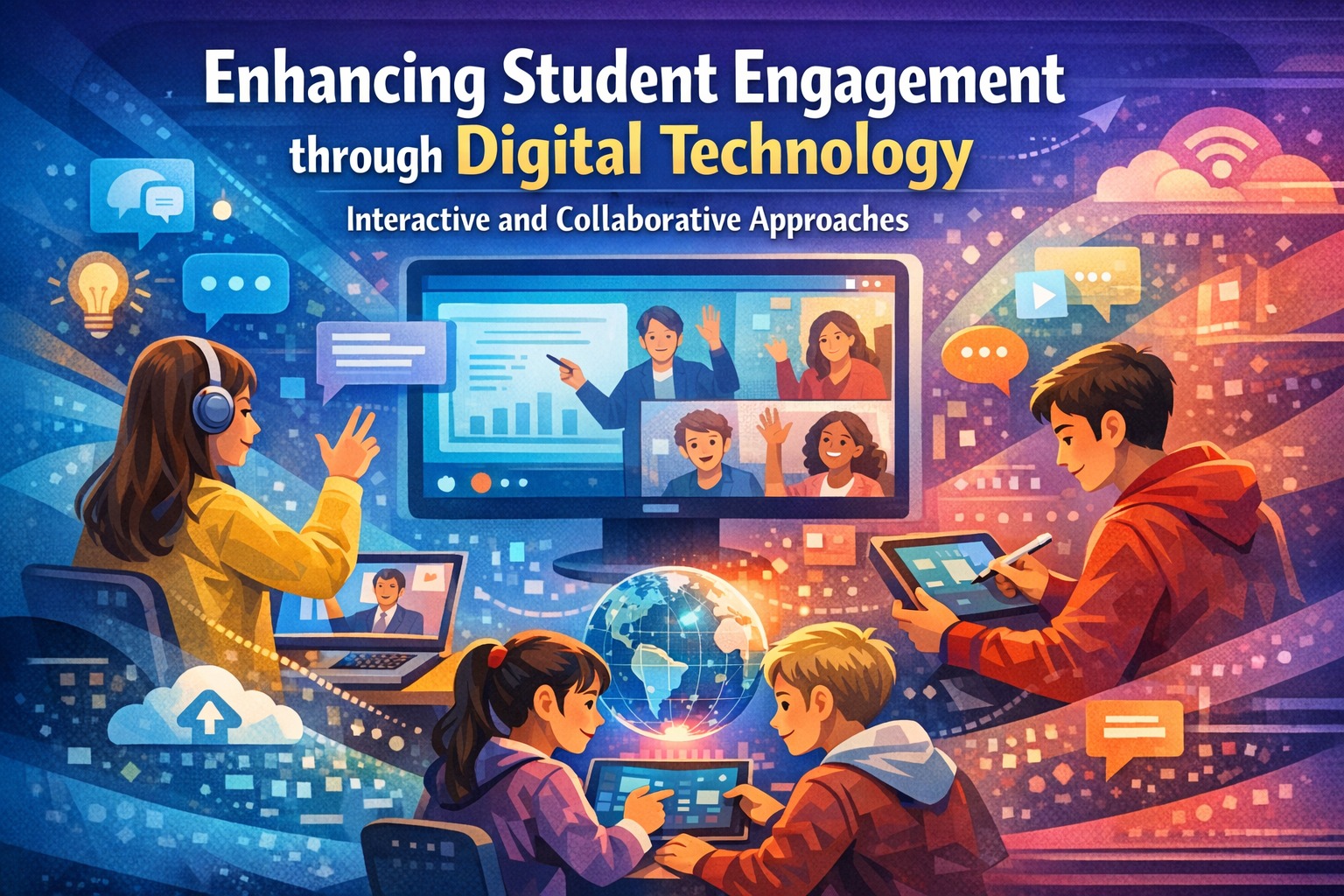
Student engagement is a critical factor in determining the success of learning outcomes in higher education. In the digital era, traditional teaching methods are no longer sufficient to capture students’ attention and maintain their active participation. Digital technology offers new opportunities to create interactive and collaborative learning environments that enhance student engagement and improve academic performance.
THE IMPORTANCE OF STUDENT ENGAGEMENT IN LEARNING
Engaged students are more likely to participate actively in the learning process, demonstrate deeper understanding, and achieve better academic results. Engagement goes beyond attendance and includes emotional, cognitive, and behavioral involvement in learning activities. In higher education, fostering engagement is essential for developing critical thinking, creativity, and lifelong learning skills.
Digital technology plays a significant role in supporting engagement by providing diverse and dynamic learning experiences. It allows students to interact with content in meaningful ways and collaborate with peers regardless of physical location.
INTERACTIVE APPROACHES IN DIGITAL LEARNING
Interactive learning involves the use of digital tools that encourage active participation and immediate feedback. Technologies such as multimedia presentations, virtual simulations, and real-time quizzes enable students to engage directly with the learning material. These tools help transform passive learning into an active process, where students are involved in exploring and applying knowledge.
Interactive approaches also support personalized learning by allowing students to progress at their own pace. This flexibility enhances motivation and helps students build confidence in their abilities.
COLLABORATIVE LEARNING THROUGH TECHNOLOGY
Collaboration is a key component of effective learning, and digital technology facilitates this process in innovative ways. Online discussion forums, group projects, and collaborative platforms enable students to share ideas, solve problems together, and learn from diverse perspectives.
Through collaboration, students develop important skills such as communication, teamwork, and critical thinking. Digital environments also provide opportunities for global collaboration, connecting students from different cultural and academic backgrounds.
CHALLENGES IN IMPLEMENTING DIGITAL ENGAGEMENT STRATEGIES
While digital technology offers numerous benefits, there are challenges in ensuring effective student engagement. Some students may experience digital fatigue, while others may lack the necessary technological skills or access to reliable internet. Additionally, poorly designed digital content can reduce engagement rather than enhance it.
To address these challenges, educators must design engaging and relevant learning activities that align with students’ needs. Institutions should also provide technical support and promote digital literacy to ensure that all students can fully participate.
CONCLUSION
Enhancing student engagement through digital technology requires a thoughtful combination of interactive and collaborative approaches. By leveraging digital tools effectively, higher education institutions can create dynamic and engaging learning environments that support student success. This approach not only improves academic outcomes but also prepares students with the skills needed for the modern world.
Tentang Penulis
Gusti Ayu Tita
Penulis — Universitas STEKOM
Penulis aktif yang berfokus pada isu-isu akademik, teknologi pendidikan, dan pengembangan sumber daya manusia di lingkungan kampus.