
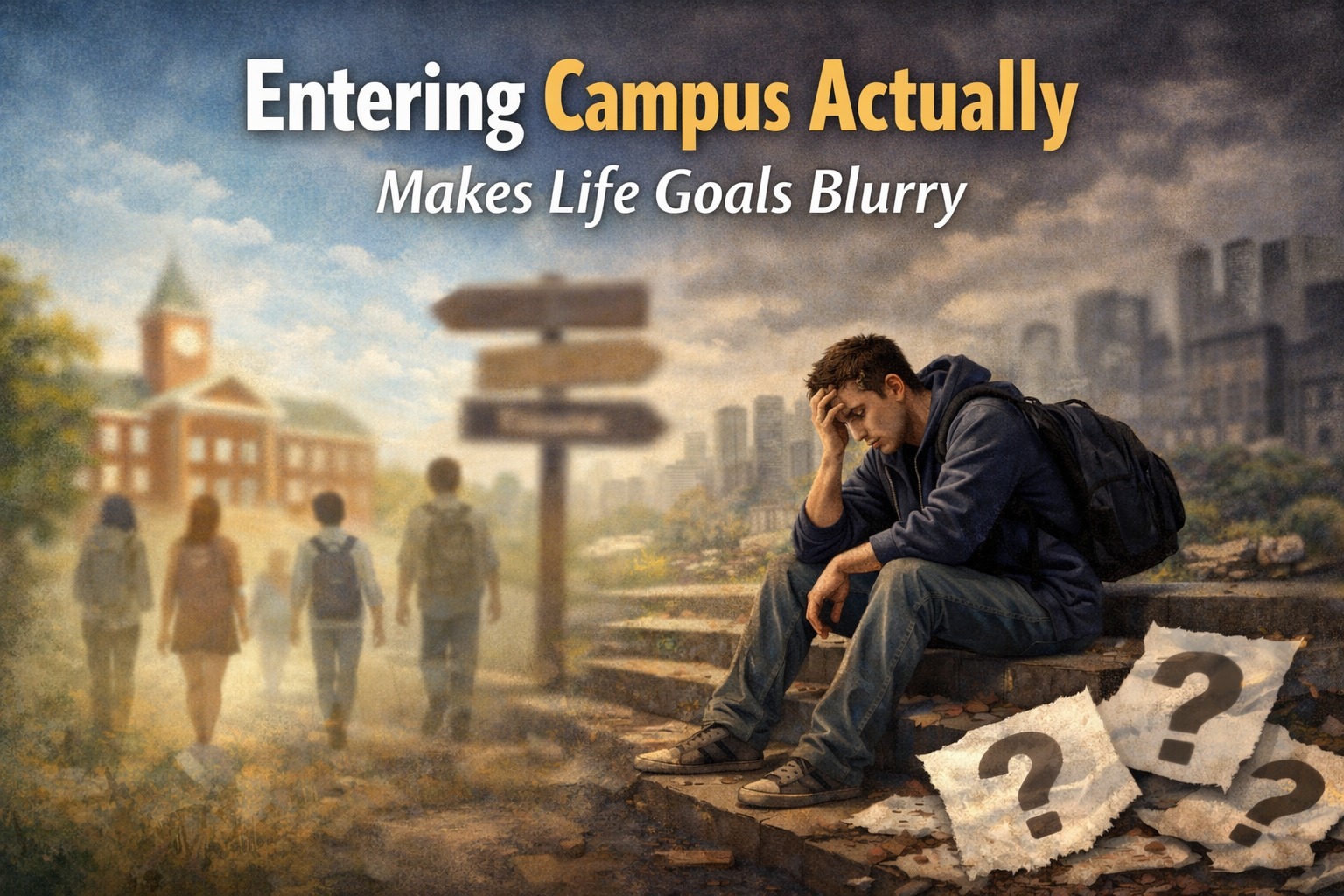
Feeling Lost After Entering College: Why Life Goals Become Unclear
Entering higher education is often seen as a gateway to a clearer future. However, many students experience confusion after officially becoming college students. Instead of discovering their life direction, some feel that their sense of purpose becomes even more blurred once they enter campus life. This phenomenon is real and experienced by students across various academic levels.
A Challenging Transition Phase
The shift from school to college represents a major transition in a person’s life. Students are expected to become more independent, make their own decisions, and begin thinking seriously about their future. Unfortunately, this transition often occurs without sufficient mental preparation.
A lack of readiness during this transition can create pressure and a sense of being lost when expectations clash with reality.
Social Pressure and Self-Comparison
The college environment brings together students with diverse backgrounds, achievements, and ambitions. Social media further intensifies this situation by constantly showcasing peers’ accomplishments. Without realizing it, students begin comparing themselves to others.
Continuous self-comparison can lower self-confidence and trigger deep questions about personal life goals.
Misconceptions About the Meaning of College
Many students enter college believing that higher education is an automatic path to success. When reality reveals that college is merely one part of a long journey, confusion often follows. The unclear connection between academic majors, coursework, and future careers can make students feel lost in academic routines.
Viewing college as an instant solution often leads to disappointment and uncertainty.
When the Major Does Not Align With Personal Interests
Choosing a major based on parental pressure, trends, or imitation is a common source of struggle. When students realize that their field of study does not align with their interests or personal values, motivation declines.
A mismatch between major and personal values strengthens the feeling of losing life direction.
The Importance of Self-Reflection
Confusion is not a sign of failure but a signal that students are in the process of self-discovery. Taking time to reflect, recognize personal strengths, and understand core values can help clarify life goals.
Self-reflection is a crucial step toward building meaningful direction.
Engaging in discussions with academic advisors, joining personal development activities, or exploring experiences outside the classroom can serve as meaningful starting points.
Building Goals Gradually
Life goals do not need to be grand or final from the beginning. Students should understand that goals can be built gradually as experiences accumulate. Focusing on realistic short-term goals can reduce pressure and make the college journey feel more purposeful.
Small, achievable goals help restore a sense of direction and control.
College as a Space for Growth, Not Instant Answers
College is not a place that always provides clear answers about the future. It is a space for learning, experimenting, and even failing. When students accept confusion as part of the growth process, life goals can slowly form in a more authentic and meaningful way.
Accepting uncertainty allows personal purpose to develop naturally.
Conclusion
Feeling a loss of life direction after entering college is a normal and human experience. What truly matters is how students respond to this confusion through reflection, exploration, and the courage to understand themselves more deeply. Through this process, a clearer and more meaningful life direction will emerge over time.
Tentang Penulis
Gusti Ayu Tita
Penulis — Universitas STEKOM
Penulis aktif yang berfokus pada isu-isu akademik, teknologi pendidikan, dan pengembangan sumber daya manusia di lingkungan kampus.



