
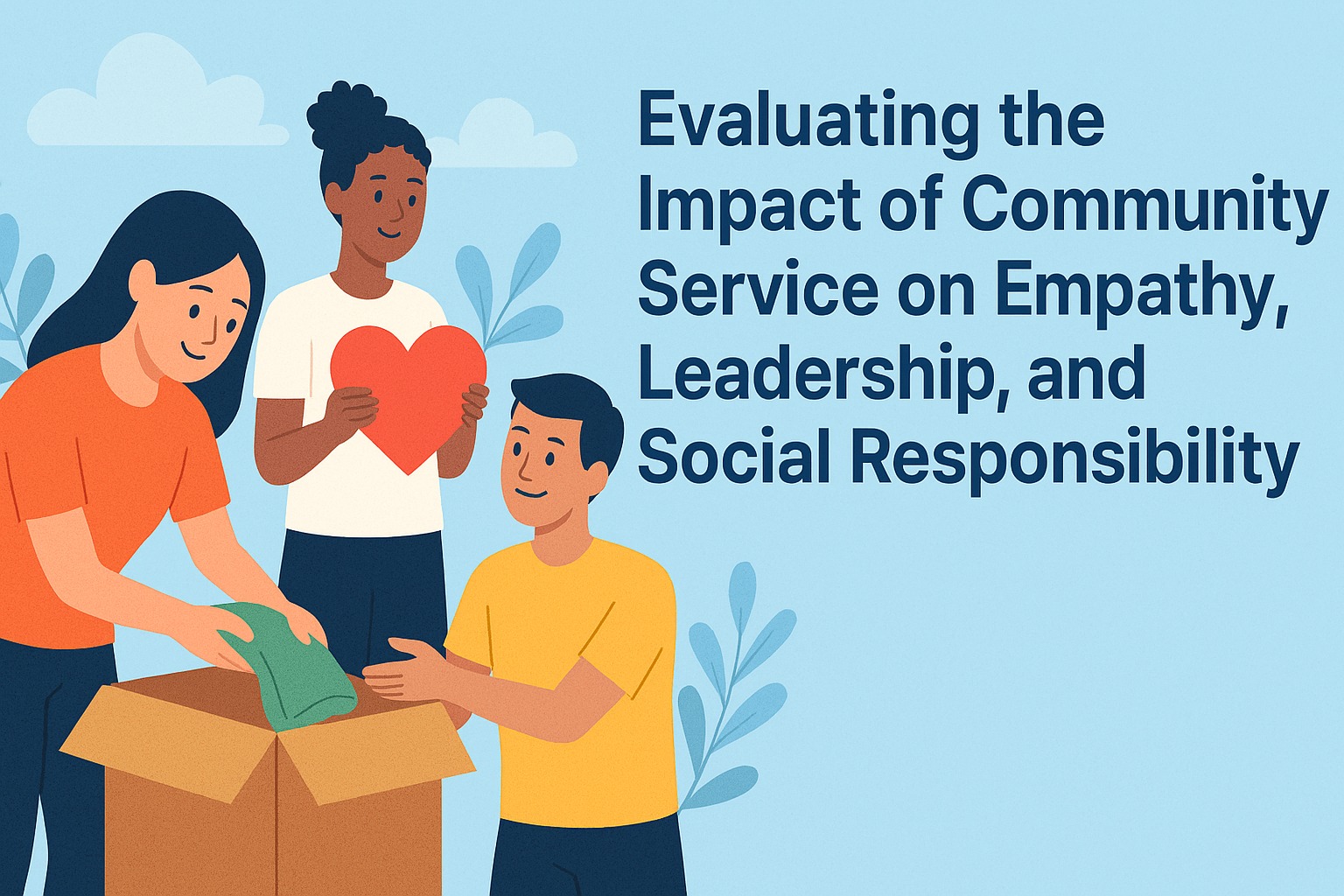
Community service programs are widely recognized as a core component of higher education aimed at bridging academic knowledge with societal realities. Beyond technical skills, universities increasingly emphasize the development of character-based competencies such as empathy, leadership, and social responsibility. This raises an essential question: how significant is the actual impact of community service on shaping these qualities?Evaluating this impact requires examining both measurable outcomes and personal transformation experienced by students during and after participation.
COMMUNITY SERVICE AND THE DEVELOPMENT OF EMPATHY
Empathy is not easily cultivated through textbooks alone. It grows through direct interaction and shared experiences. Community service places students in environments where they encounter real social challenges—poverty, limited access to education, public health concerns, and economic vulnerability.
Through dialogue and collaboration with community members, students begin to understand perspectives different from their own. This process reduces stereotypes and broadens social awareness. Exposure to diverse living conditions encourages students to reflect on privilege, inequality, and systemic barriers.
However, empathy development depends on meaningful engagement. Superficial interaction or brief visits may create awareness but rarely lead to deep emotional understanding. Structured reflection sessions significantly enhance empathetic learning by encouraging critical thinking about social dynamics.
LEADERSHIP SKILLS IN REAL-WORLD CONTEXTS
Community service programs often require students to plan initiatives, coordinate teams, manage limited resources, and communicate with stakeholders. These responsibilities simulate real-world leadership scenarios.
Unlike classroom-based group assignments, community settings involve unpredictability. Students must adapt to unexpected challenges, negotiate differing opinions, and make decisions under pressure. Such experiences strengthen problem-solving abilities and strategic thinking.
Leadership in community service is not limited to authority; it involves collaboration and inclusivity. Effective student leaders learn to listen actively and empower local participants rather than dominate discussions. This participatory leadership style aligns with modern organizational demands.
STRENGTHENING SOCIAL RESPONSIBILITY
One of the primary goals of community service is to foster social responsibility. Students are encouraged to recognize that education is not solely for personal advancement but also for contributing to societal development.
By witnessing social inequalities firsthand, students often develop a heightened sense of civic duty. Many become more engaged in volunteerism, advocacy, or socially oriented careers after completing community programs.
Yet, sustainability remains a key challenge. Social responsibility must extend beyond program duration. Universities can strengthen long-term impact by integrating service-learning into multiple semesters and encouraging ongoing community partnerships.
MEASURING IMPACT EFFECTIVELY
Assessing the true impact of community service requires both qualitative and quantitative approaches. Surveys, reflective essays, and community feedback provide insight into emotional and behavioral changes. Meanwhile, measurable indicators—such as project continuity or community capacity building—demonstrate tangible outcomes.
Without proper evaluation mechanisms, institutions risk overestimating the effectiveness of their programs. Continuous improvement strategies are essential to ensure that empathy, leadership, and social responsibility are not merely stated objectives but observable results.
CONCLUSION
Community service holds significant potential to cultivate empathy, strengthen leadership, and deepen social responsibility among students. Its effectiveness, however, depends on thoughtful program design, active participation, and long-term commitment.
When structured with reflection, collaboration, and measurable goals, community service becomes more than an academic exercise. It evolves into a powerful educational experience that shapes socially conscious and ethically responsible graduates.
Tentang Penulis
Gusti Ayu Tita
Penulis — Universitas STEKOM
Penulis aktif yang berfokus pada isu-isu akademik, teknologi pendidikan, dan pengembangan sumber daya manusia di lingkungan kampus.



