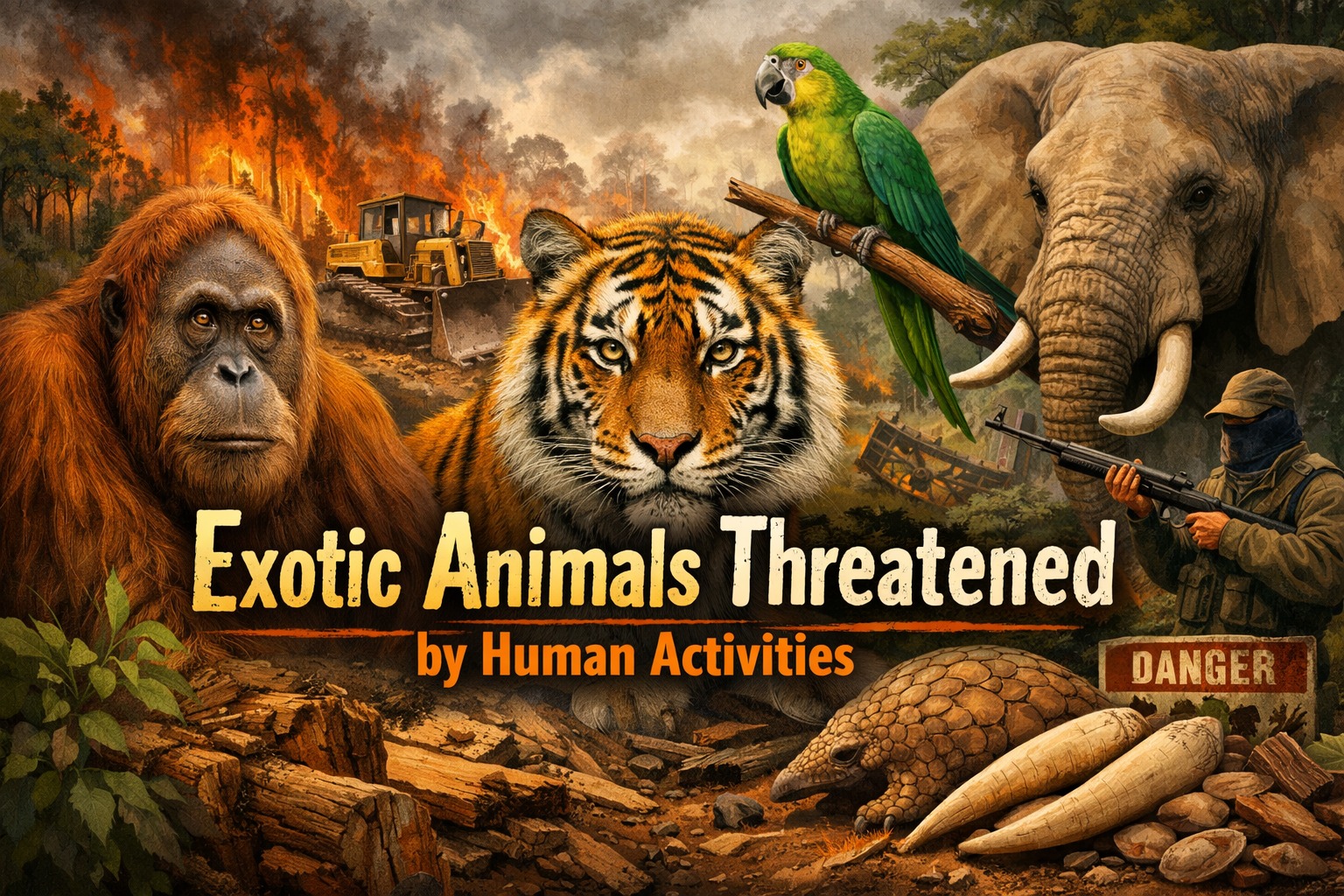
The world is home to thousands of unique and exotic animal species that play important roles in maintaining the balance of nature. Unfortunately, many of these animals are now facing extinction because of increasing human activities. Deforestation, illegal hunting, pollution, and climate change continue to destroy natural habitats and reduce wildlife populations across the globe. Protecting exotic animals is no longer just an environmental issue, but also a responsibility for humanity to preserve biodiversity for future generations.
THE IMPACT OF DEFORESTATION ON EXOTIC ANIMALS
Forests are essential habitats for countless rare species. However, large-scale logging, mining, and land conversion for agriculture have destroyed millions of hectares of forests worldwide. As a result, many animals lose their homes, food sources, and breeding areas.
Species such as orangutans, tigers, and exotic birds are among the most affected by habitat destruction. Tropical rainforests in Asia, Africa, and South America continue to shrink every year, forcing animals to move into unsafe areas where they often come into conflict with humans.
Deforestation also disrupts the food chain and weakens ecosystems. When one species disappears, other species may also suffer because nature is deeply interconnected.
ILLEGAL WILDLIFE TRADE CONTINUES TO GROW
One of the biggest threats to exotic animals is illegal wildlife trafficking. Many rare animals are hunted for their skins, horns, meat, or to be sold as exotic pets. This illegal business generates huge profits and threatens wildlife populations around the world.
Animals such as pangolins, parrots, snakes, and rare monkeys are frequently targeted by wildlife smugglers. In some cases, baby animals are separated from their parents and transported in terrible conditions, causing high death rates before they even reach buyers.
The demand for exotic pets and traditional medicines continues to encourage poaching activities. Without stronger law enforcement and public awareness, many species could disappear forever.
CLIMATE CHANGE CREATES NEW DANGERS
Climate change has become another serious challenge for wildlife survival. Rising global temperatures, melting ice, and changing weather patterns affect ecosystems in many ways. Exotic animals that rely on specific climates often struggle to adapt quickly.
For example, marine animals suffer from rising ocean temperatures and plastic pollution. Coral reefs, which provide shelter and food for many species, are dying due to environmental stress. At the same time, droughts and wildfires destroy habitats on land, leaving animals vulnerable and displaced.
Climate change also affects migration patterns and reproduction cycles. Some species can no longer find enough food or safe areas to survive naturally.
HUMAN POLLUTION HARMS NATURAL ECOSYSTEMS
Pollution from factories, vehicles, and household waste damages ecosystems around the world. Rivers, oceans, and forests are increasingly contaminated with chemicals and plastic waste that threaten wildlife health.
Marine animals often mistake plastic for food, leading to injury or death. Birds and reptiles can become trapped in waste materials, while toxic chemicals pollute water supplies used by both animals and humans.
Noise pollution and urban development also disturb wildlife behavior. Many exotic species become stressed or unable to reproduce because of constant environmental disruption caused by human activities.
THE IMPORTANCE OF WILDLIFE CONSERVATION
Conservation efforts are essential to protect endangered exotic animals from extinction. Governments, environmental organizations, and local communities must work together to preserve natural habitats and stop illegal hunting activities.
Protected forests, wildlife sanctuaries, and breeding programs can help increase animal populations. Education is also important because public awareness encourages people to respect wildlife and reduce harmful activities.
Individuals can contribute by reducing plastic use, supporting eco-friendly products, and refusing to buy illegal wildlife products. Small actions from many people can create a significant positive impact for the environment.
CONCLUSION
Exotic animals are valuable parts of Earth’s biodiversity, but human activities continue to place them in danger. Habitat destruction, illegal trade, pollution, and climate change are pushing many species closer to extinction every year. Protecting wildlife requires global cooperation, stronger environmental policies, and greater public awareness. By taking action today, humanity can help ensure that future generations will still be able to witness the beauty of exotic animals in the wild.
Tentang Penulis
Gusti Ayu Tita
Penulis — Universitas STEKOM
Penulis aktif yang berfokus pada isu-isu akademik, teknologi pendidikan, dan pengembangan sumber daya manusia di lingkungan kampus.