
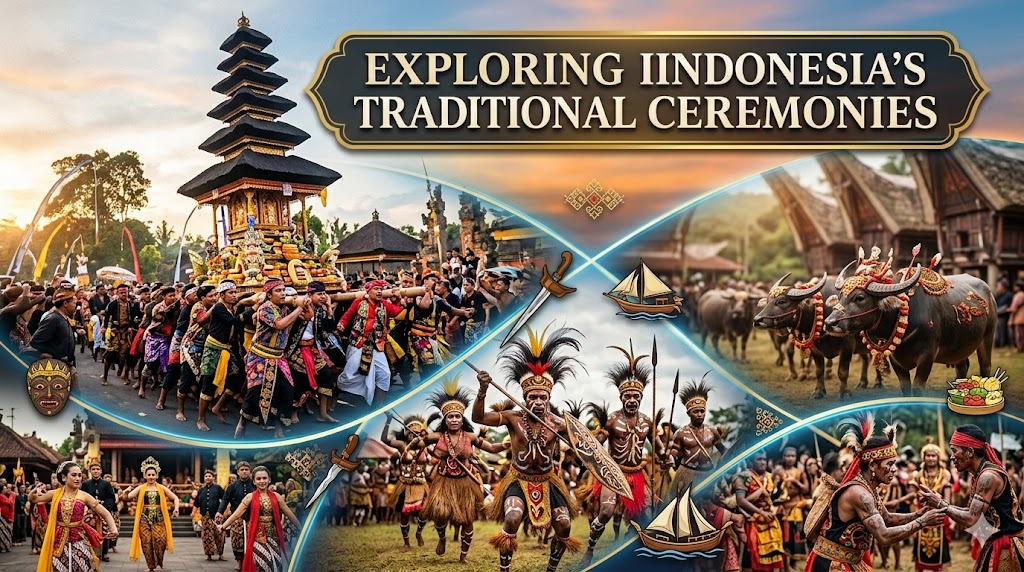
Indonesia is a country rich in cultural diversity, with thousands of islands and hundreds of ethnic groups. Each region preserves unique traditions that reflect history, beliefs, and local values. Among these traditions, traditional ceremonies stand out as powerful symbols of identity and community life. Exploring Indonesia’s traditional ceremonies offers insight into how culture continues to shape modern society.
THE CULTURAL SIGNIFICANCE OF TRADITIONAL CEREMONIES
Traditional ceremonies in Indonesia are more than festive events; they carry deep spiritual and social meaning. Many ceremonies are rooted in ancestral beliefs and are performed to express gratitude, seek blessings, or mark important life milestones.
These rituals strengthen community bonds, maintain cultural continuity, and pass down values from one generation to the next. They also represent harmony between humans, nature, and the spiritual world—an idea deeply embedded in Indonesian culture.
TYPES OF TRADITIONAL CEREMONIES IN INDONESIA
Indonesia’s cultural diversity creates a wide range of ceremonies across regions. Each ceremony reflects local traditions, environments, and social structures.
### LIFE-CYCLE CEREMONIES
Life-cycle ceremonies celebrate important stages of human life such as birth, adulthood, marriage, and death. These rituals emphasize family unity and social responsibility.
For example, wedding ceremonies in Indonesia often combine religious customs with local traditions. They are colorful events filled with symbolic clothing, music, and traditional food that represent hopes for prosperity and harmony.
### HARVEST AND AGRICULTURAL CEREMONIES
Many Indonesian communities depend on agriculture. As a result, harvest ceremonies play an essential role in expressing gratitude for nature’s blessings.
Farmers perform rituals to thank the earth and pray for future prosperity. These ceremonies highlight the importance of sustainability and respect for the environment.
### SPIRITUAL AND RELIGIOUS CEREMONIES
Spiritual ceremonies are deeply connected to faith and ancestral traditions. They often include offerings, prayers, and communal gatherings that bring people together.
These ceremonies emphasize balance between the physical and spiritual world, reinforcing values of humility, gratitude, and respect.
THE ROLE OF TRADITIONAL CEREMONIES IN MODERN SOCIETY
Despite rapid modernization, traditional ceremonies remain relevant today. Many communities continue to practice these rituals while adapting them to contemporary lifestyles.
Traditional ceremonies also play a major role in tourism and cultural preservation. Visitors from around the world travel to Indonesia to witness unique rituals and experience authentic local traditions. This cultural exchange helps increase awareness and appreciation of Indonesia’s heritage.
CHALLENGES IN PRESERVING TRADITIONAL CEREMONIES
Although traditional ceremonies are still practiced, they face several challenges:
* Globalization influences younger generations to adopt foreign lifestyles.
* Urbanization reduces community participation in traditional events.
* Lack of documentation threatens the survival of certain rituals.
Addressing these challenges requires collaboration between communities, educators, and cultural institutions.
HOW YOUNG GENERATIONS CAN HELP PRESERVE TRADITIONS
Young people play a crucial role in keeping traditional ceremonies alive. They can participate in cultural events, learn local history, and share traditions through digital platforms.
By combining technology with tradition, younger generations can introduce Indonesian ceremonies to global audiences while preserving their authenticity.
CONCLUSION
Exploring Indonesia’s traditional ceremonies reveals the richness of the nation’s cultural heritage. These rituals are not only celebrations but also reflections of identity, unity, and respect for nature and spirituality.
Preserving traditional ceremonies ensures that future generations can continue to learn from the wisdom of the past while embracing the opportunities of the modern world.
Tentang Penulis
Gusti Ayu Tita
Penulis — Universitas STEKOM
Penulis aktif yang berfokus pada isu-isu akademik, teknologi pendidikan, dan pengembangan sumber daya manusia di lingkungan kampus.



