The rapid growth of digital technology has transformed almost every aspect of human life, including the education sector. Schools, universities, teachers, and students are now experiencing major changes in how learning is delivered and accessed. Digital disruption has introduced new opportunities for innovation, but it has also created challenges that educational institutions must overcome.
In today’s modern era, education is no longer limited to traditional classrooms. Online learning platforms, artificial intelligence, digital collaboration tools, and virtual classrooms have become an important part of the learning process. Therefore, understanding how to face digital disruption in education is essential for creating a strong and future-ready education system.
THE IMPACT OF DIGITAL TECHNOLOGY ON EDUCATION
Digital technology has changed the educational landscape dramatically. Students can now access information instantly through the internet, online courses, and educational applications. Teachers also use technology to create interactive lessons that improve student engagement.
The use of digital tools allows learning to become more flexible and accessible. Students can study from anywhere and at any time using smartphones, tablets, or laptops.
However, the fast pace of technological change requires schools and educators to continuously adapt to new systems and methods of teaching.
CHALLENGES OF DIGITAL DISRUPTION
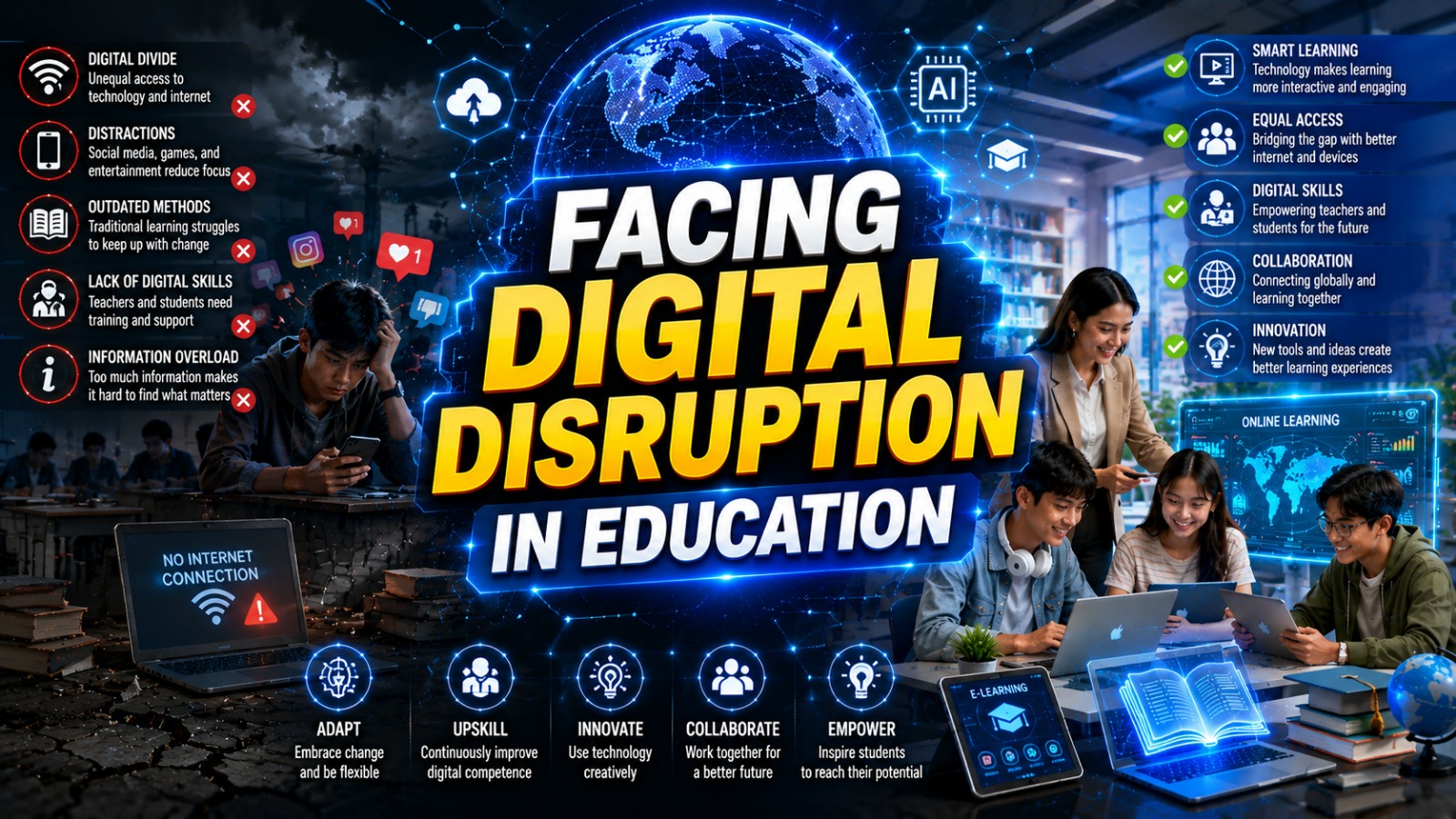
Although technology provides many benefits, digital disruption also creates significant challenges in education. One of the main problems is unequal access to technology and internet connectivity.
Many students, especially in rural areas, still struggle with limited digital resources. This educational gap can affect learning quality and student performance.
Another challenge is the increasing distraction caused by social media, online games, and digital entertainment. Students may lose focus on their studies if technology is not used properly.
Teachers also face difficulties adapting to digital teaching methods, especially those who are not familiar with modern educational technology.
THE ROLE OF TEACHERS IN THE DIGITAL ERA
Teachers remain essential in the digital age despite technological advancements. Technology cannot fully replace the human interaction and guidance provided by educators.
Modern teachers must develop digital skills and adopt creative teaching strategies to keep students motivated. They should also encourage students to think critically, collaborate effectively, and solve problems creatively.
Continuous professional development and technology training are necessary to help teachers face digital disruption successfully.
THE IMPORTANCE OF DIGITAL LITERACY
Digital literacy has become one of the most important skills in modern education. Students must learn how to use technology safely, responsibly, and productively.
Digital literacy helps students identify reliable information, avoid misinformation, and protect themselves from online risks. It also encourages students to use technology for educational and creative purposes.
Schools should integrate digital literacy programs into their curriculum to prepare students for future challenges in the digital world.
CHARACTER EDUCATION IN THE DIGITAL AGE
In addition to academic knowledge, character education remains crucial in the era of digital disruption. Students need strong moral values, discipline, responsibility, and ethical behavior when using technology.
The influence of social media and global culture can negatively affect students if they are not guided properly. Therefore, schools and families must work together to strengthen students’ character development.
Character education helps students balance technological skills with positive attitudes and social responsibility.
STRATEGIES TO FACE DIGITAL DISRUPTION
Educational institutions need effective strategies to deal with digital disruption. One important step is improving technological infrastructure and providing equal access to digital learning resources.
Schools should also adopt innovative learning methods such as blended learning, interactive online classes, and project-based learning. These approaches can make education more engaging and effective.
Teacher training programs should be strengthened to improve digital teaching competence. In addition, governments and communities should collaborate to support educational transformation.
THE FUTURE OF EDUCATION
The future of education will continue to be shaped by technological innovation. Artificial intelligence, virtual reality, and personalized learning systems are expected to become more common in schools and universities.
Despite these advancements, education must still focus on human values, creativity, and emotional intelligence. Technology should serve as a tool to improve learning rather than replace meaningful educational experiences.
A balanced combination of technology and character education will create a more effective and sustainable education system for future generations.
CONCLUSION
Facing digital disruption in education requires adaptation, innovation, and collaboration from all stakeholders. Technology offers many opportunities to improve learning quality, but it also presents challenges such as digital inequality and technological distractions.
By strengthening digital literacy, improving teacher competence, and promoting character education, schools can better prepare students for the future. With the right strategies, education can successfully adapt to the digital era while maintaining its core values and purpose.
Tentang Penulis
Gusti Ayu Tita
Penulis — Universitas STEKOM
Penulis aktif yang berfokus pada isu-isu akademik, teknologi pendidikan, dan pengembangan sumber daya manusia di lingkungan kampus.