
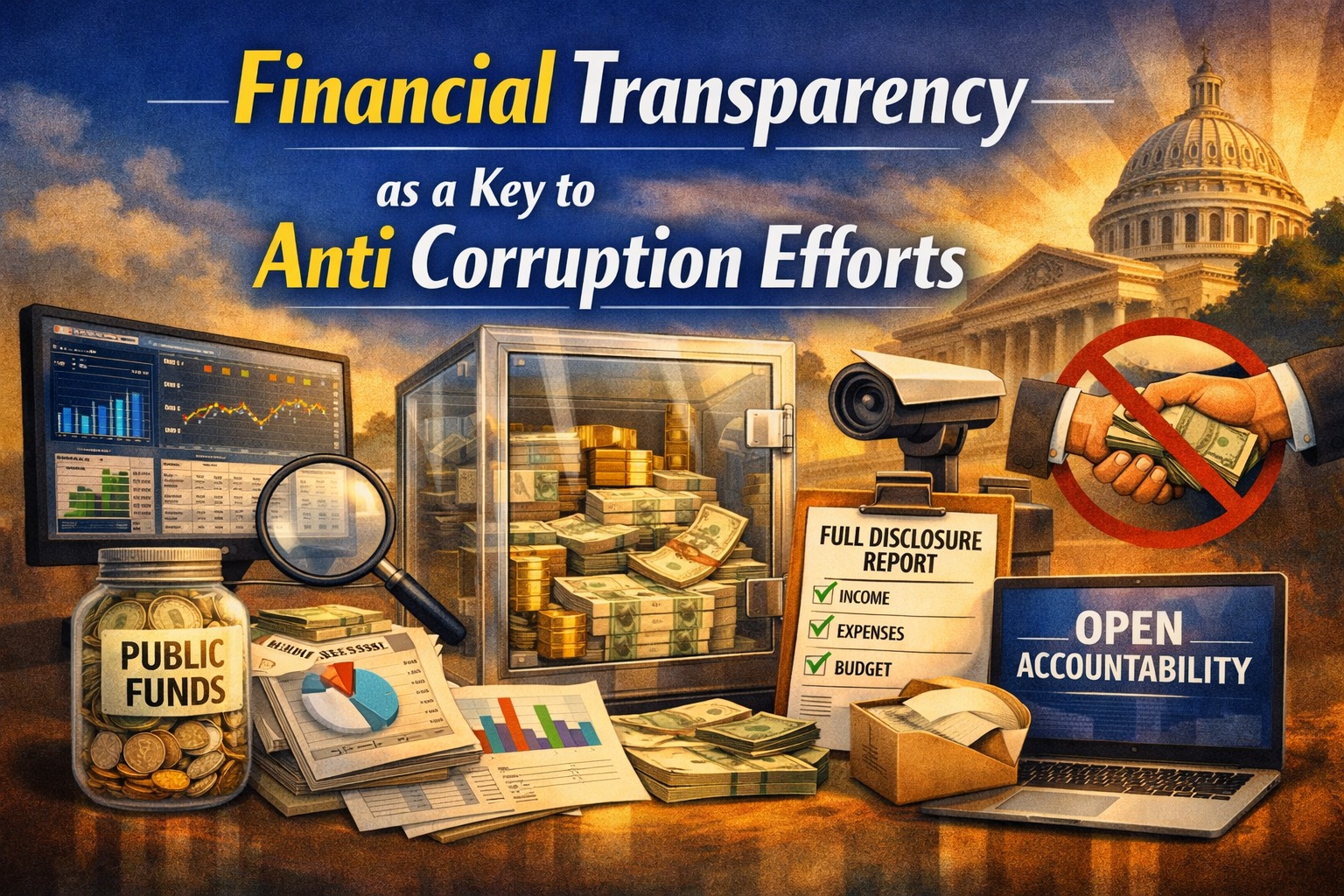
Corruption remains one of the biggest challenges faced by many countries around the world. It weakens economic growth, reduces public trust, and creates inequality within society. One of the most effective ways to combat corruption is through financial transparency. By ensuring that financial activities are open, accountable, and accessible to the public, governments and organizations can significantly reduce opportunities for dishonest practices.
UNDERSTANDING FINANCIAL TRANSPARENCY
Financial transparency refers to the openness and clarity of financial information related to government institutions, companies, and public organizations. It includes clear reporting of budgets, spending, taxes, procurement processes, and public funds. Transparency allows citizens, journalists, and oversight institutions to monitor how money is managed.
When financial systems operate transparently, it becomes harder for individuals to misuse public resources for personal gain. This creates a culture of accountability and integrity in both the public and private sectors.
THE CONNECTION BETWEEN TRANSPARENCY AND ANTI CORRUPTION
Corruption often occurs in environments where financial information is hidden or difficult to access. Lack of transparency allows illegal activities such as bribery, embezzlement, and misuse of funds to happen without detection.
Financial transparency helps prevent corruption in several important ways:
Increasing Public Oversight
Open financial records enable the public to monitor government spending and policies. Citizens can question suspicious transactions and demand accountability from officials.
Strengthening Institutional Accountability
Transparent financial systems require organizations to follow clear rules and procedures. This reduces the possibility of manipulation or unauthorized spending.
Encouraging Ethical Leadership
Leaders who know their financial decisions are visible to the public are more likely to act responsibly and ethically.
Supporting Fair Business Practices
Transparent procurement and budgeting systems create fair competition among businesses and reduce favoritism or illegal partnerships.
THE ROLE OF TECHNOLOGY IN FINANCIAL TRANSPARENCY
Modern technology plays a major role in improving financial transparency. Digital systems allow governments and organizations to publish financial reports quickly and accurately. Online platforms also make it easier for the public to access information anytime.
Several technologies support anti corruption efforts, including:
- Digital payment systems
- E-procurement platforms
- Blockchain technology
- Open data portals
- Online auditing systems
These innovations reduce manual processes that are often vulnerable to corruption and fraud.
BENEFITS OF FINANCIAL TRANSPARENCY FOR SOCIETY
Financial transparency provides long-term benefits for society and national development. Some of the most important advantages include:
Building Public Trust
People are more likely to trust institutions that openly share financial information and demonstrate accountability.
Improving Economic Stability
Transparent financial systems attract investors because they reduce uncertainty and financial risks.
Enhancing Government Performance
Governments with transparent budgeting systems can allocate resources more effectively and improve public services.
Reducing Poverty and Inequality
When public funds are managed properly, more resources can be directed toward education, healthcare, and infrastructure for communities.
CHALLENGES IN IMPLEMENTING FINANCIAL TRANSPARENCY
Although financial transparency offers many benefits, implementing it is not always easy. Some institutions may resist transparency because it threatens existing corrupt practices. Limited technological infrastructure and weak law enforcement can also become obstacles.
In some countries, low public awareness about financial accountability makes corruption difficult to challenge. Therefore, education and community participation are essential parts of anti corruption movements.
HOW SOCIETY CAN SUPPORT TRANSPARENCY
Every member of society can contribute to promoting financial transparency. Citizens can support anti corruption efforts by:
- Monitoring public spending
- Reporting suspicious financial activities
- Supporting independent media
- Participating in public discussions
- Encouraging ethical behavior in daily life
Collective awareness and active participation are important to create a transparent and corruption free environment.
CONCLUSION
Financial transparency is a powerful tool in the fight against corruption. Open financial systems encourage accountability, strengthen public trust, and reduce opportunities for abuse of power. By combining transparent governance, modern technology, and active public participation, societies can create stronger anti corruption systems and support sustainable development for future generations.
Tentang Penulis
Gusti Ayu Tita
Penulis — Universitas STEKOM
Penulis aktif yang berfokus pada isu-isu akademik, teknologi pendidikan, dan pengembangan sumber daya manusia di lingkungan kampus.



