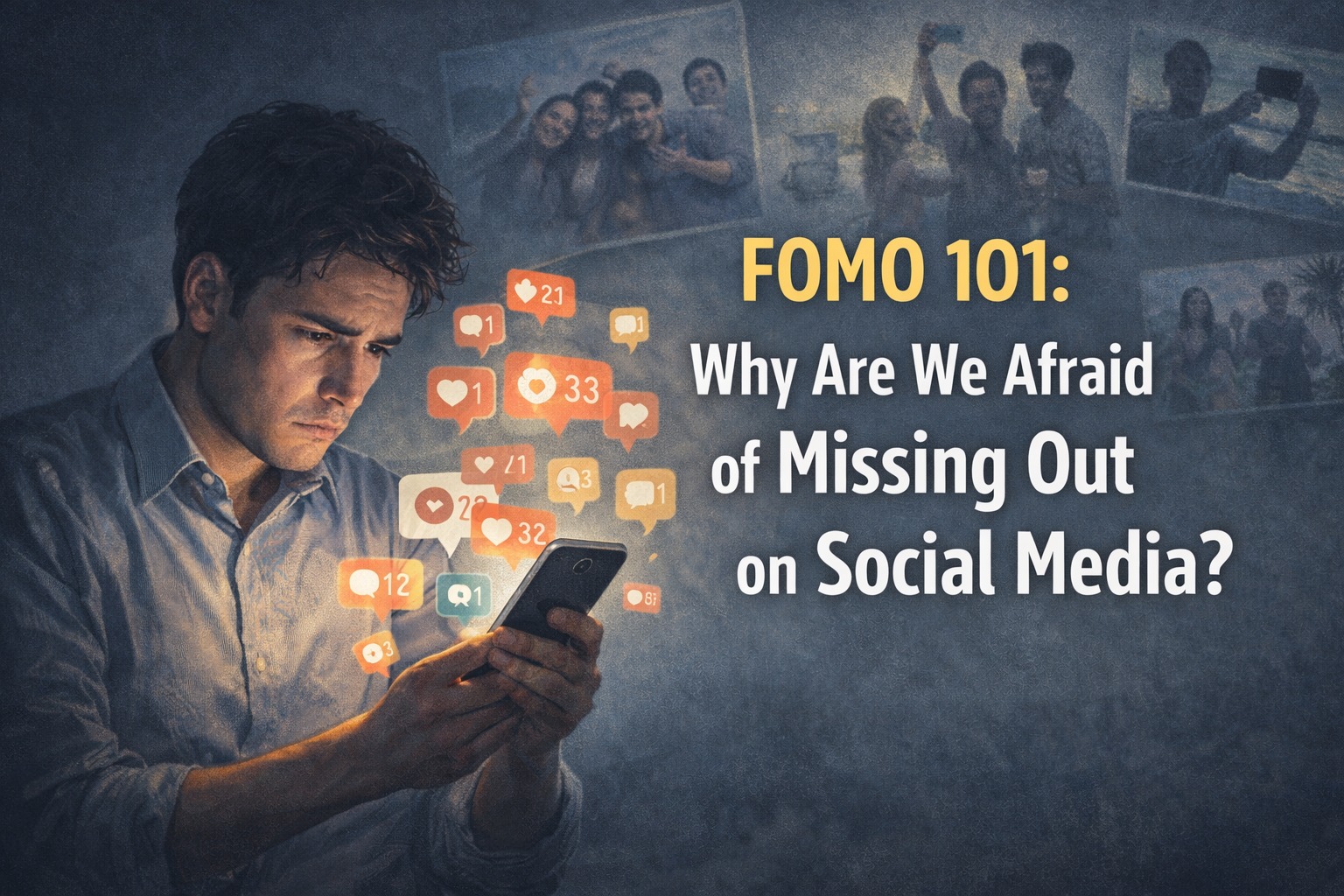
The development of social media has transformed the way people interact, access information, and view life. Behind this convenience, a psychological phenomenon has increasingly been experienced by many people: FOMO (Fear of Missing Out). This term describes the fear of being left behind from experiences, information, or moments that others seem to be enjoying.
FOMO is not only experienced by teenagers, but also by adults, professionals, and students. Social media is the main trigger, as it presents other people’s lives quickly, visually, and in ways that appear perfect.
WHAT IS FOMO AND HOW DOES IT OCCUR?
FOMO is a psychological condition in which a person feels anxious or uncomfortable because they believe others are experiencing something more interesting or meaningful. This feeling usually arises when viewing social media posts such as achievements, vacations, social activities, or certain lifestyles.
Psychologically, humans have a basic need to feel accepted and recognized. Social media amplifies this need through likes, comments, and views, which are often used as benchmarks for self-worth.
THE ROLE OF SOCIAL MEDIA IN TRIGGERING FOMO
Social media operates using algorithms that display the most popular and engaging content. As a result, users are more frequently exposed to the “best versions” of other people’s lives. This creates the illusion that everyone else is constantly happy, successful, and productive.
The endless stream of content makes it difficult for the brain to rest. Users feel compelled to stay online so they do not miss trends, news, or important moments.
THE IMPACT OF FOMO ON DAILY BEHAVIOR
FOMO can influence daily habits, such as:
- Constantly checking one’s phone
- Difficulty enjoying the present moment
- Feeling that one’s life is lacking compared to others
- Experiencing mild to severe anxiety
If left unaddressed, FOMO can disrupt mental health and overall quality of life.
CONCLUSION
FOMO is a real phenomenon in the digital era. Understanding what FOMO is and how social media contributes to it is the first step toward building a healthier relationship with technology.
Tentang Penulis
Gusti Ayu Tita
Penulis — Universitas STEKOM
Penulis aktif yang berfokus pada isu-isu akademik, teknologi pendidikan, dan pengembangan sumber daya manusia di lingkungan kampus.