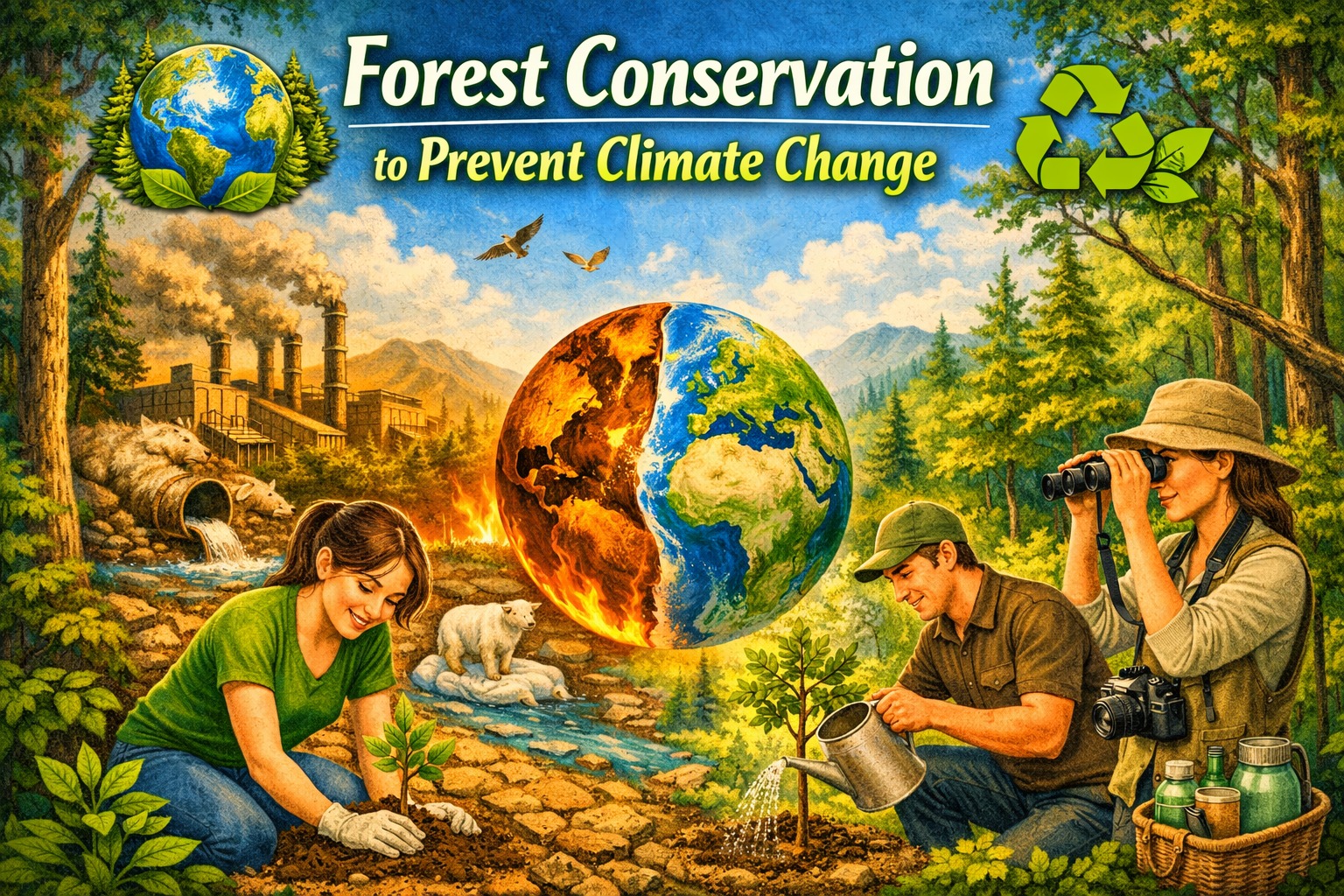
Forests are one of the planet’s most powerful natural defenses against climate change. They absorb carbon dioxide, regulate temperatures, protect biodiversity, and support millions of livelihoods. However, global deforestation continues at an alarming rate, accelerating the climate crisis. Forest conservation is no longer optional—it is a critical strategy for protecting Earth’s future.
WHY FORESTS MATTER FOR THE CLIMATE
Forests act as massive carbon sinks. Trees absorb carbon dioxide through photosynthesis and store it in their trunks, branches, roots, and surrounding soil. This process helps reduce the amount of greenhouse gases in the atmosphere, slowing global warming.
When forests are destroyed, the stored carbon is released back into the air. This not only increases emissions but also removes a key natural system that helps regulate climate patterns. Without healthy forests, the planet loses one of its strongest climate stabilizers.
Forests also help regulate rainfall and temperature. They maintain humidity levels, prevent soil erosion, and protect water cycles that communities depend on. Losing forests disrupts these systems and makes extreme weather events more frequent.
THE IMPACT OF DEFORESTATION ON GLOBAL WARMING
Deforestation contributes significantly to global greenhouse gas emissions. Cutting down trees for agriculture, mining, or urban expansion releases billions of tons of carbon every year. In fact, deforestation accounts for a large portion of global emissions.
Beyond carbon emissions, forest loss causes:
* Increased temperatures due to reduced shade and moisture
* Loss of biodiversity and wildlife habitats
* Higher risk of floods and landslides
* Reduced air and water quality
Every hectare of forest lost weakens the planet’s ability to fight climate change.
BENEFITS OF FOREST CONSERVATION
Protecting forests brings environmental, economic, and social benefits.
1. Environmental Benefits
* Reduces carbon emissions and slows climate change
* Protects biodiversity and endangered species
* Maintains soil fertility and water cycles
2. Economic Benefits
* Supports sustainable industries such as eco-tourism and forestry
* Provides long-term income for local communities
* Reduces disaster recovery costs
3. Social Benefits
* Protects indigenous cultures and livelihoods
* Improves public health through cleaner air and water
* Strengthens food security in forest-dependent regions
Forest conservation is not just about saving trees—it is about safeguarding life systems that support humanity.
STRATEGIES TO PROTECT FORESTS
Effective forest conservation requires collaboration between governments, organizations, and individuals. Key strategies include:
1. REFORESTATION AND AFFORESTATION
Planting new trees helps restore degraded land and increase carbon absorption. Large-scale tree planting programs can rebuild ecosystems and reverse damage.
2. SUSTAINABLE FORESTRY PRACTICES
Responsible logging and forest management reduce environmental impact while meeting economic needs. Certification systems encourage businesses to adopt sustainable practices.
3.PROTECTING INDIGENOUS LAND RIGHTS
Indigenous communities play a vital role in protecting forests. Studies show that forests managed by indigenous groups experience lower deforestation rates.
4. REDUCING PAPER AND WOOD WASTE
Using recycled products and minimizing waste reduces demand for raw forest materials. Small changes in consumption can create large-scale impact.
HOW INDIVIDUAL ACTIONS CAN HELP
Everyone can contribute to forest conservation. Simple lifestyle changes can collectively make a difference:
* Use recycled paper and eco-friendly products
* Support brands committed to sustainability
* Reduce meat consumption linked to deforestation
* Participate in tree planting programs
* Spread awareness about forest protection
Individual choices, when multiplied across millions of people, can drive meaningful change.
THE FUTURE DEPENDS ON FOREST PROTECTION
Climate change is a global challenge that demands urgent action. Forest conservation offers one of the most cost-effective and natural solutions available. By protecting forests today, we secure cleaner air, stable climates, and healthier ecosystems for future generations.
Saving forests means saving the planet.
Tentang Penulis
Gusti Ayu Tita
Penulis — Universitas STEKOM
Penulis aktif yang berfokus pada isu-isu akademik, teknologi pendidikan, dan pengembangan sumber daya manusia di lingkungan kampus.