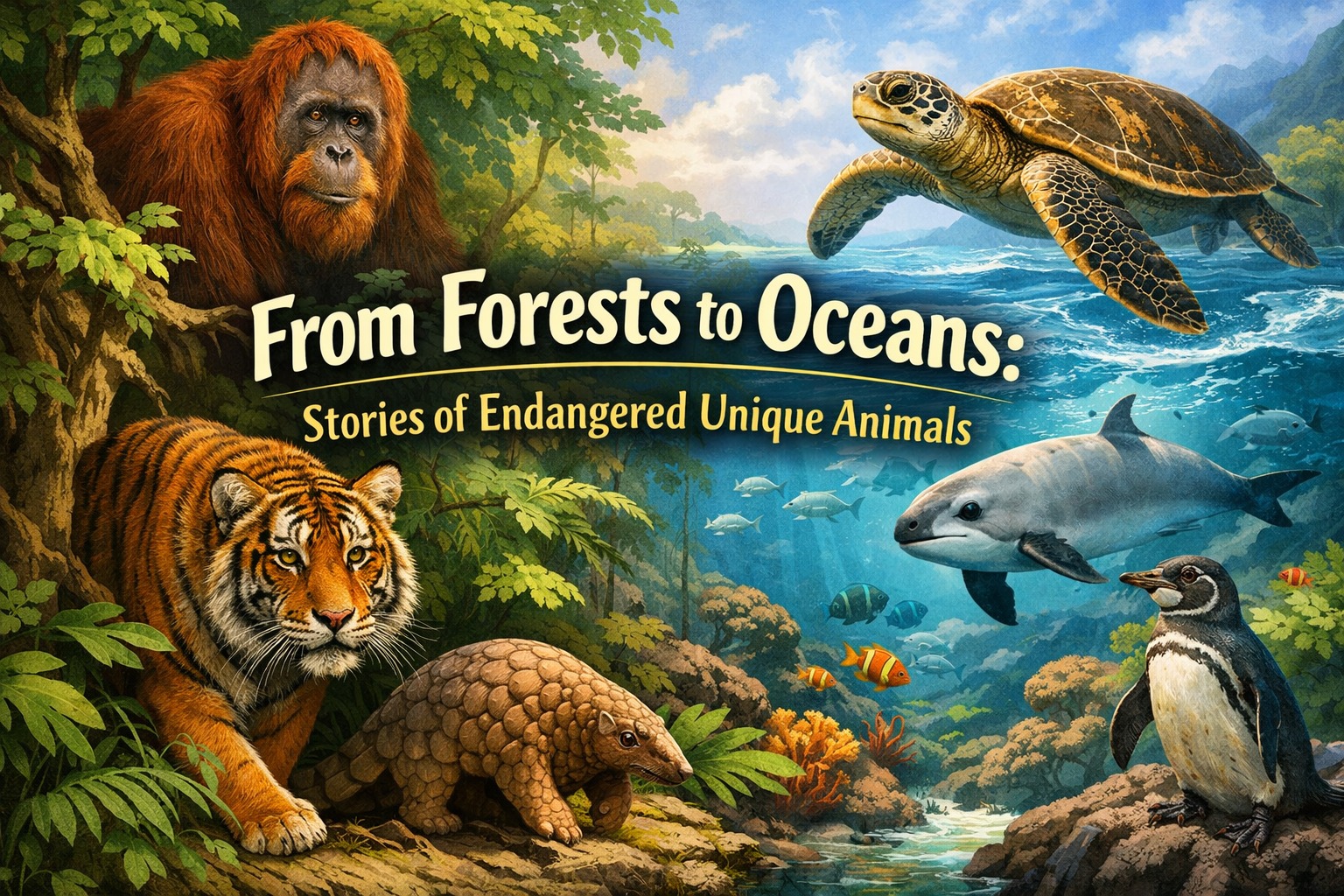
The Earth is home to millions of animal species, each playing an important role in maintaining the balance of nature. However, many unique animals are now facing extinction due to habitat destruction, climate change, illegal hunting, and pollution. From dense tropical forests to the deep blue oceans, endangered animals continue to struggle for survival. Their stories remind us of the importance of protecting wildlife before it is too late.
THE IMPORTANCE OF BIODIVERSITY
Biodiversity is essential for healthy ecosystems. Every species contributes to food chains, environmental stability, and natural processes. When one species disappears, it can affect many others. Endangered animals are not only valuable because of their uniqueness, but also because they help preserve the balance of forests, rivers, and oceans.
Human activities have become the biggest threat to biodiversity. Deforestation, industrial expansion, and overfishing have reduced the natural habitats of many rare animals. Conservation efforts are now more important than ever to protect these creatures for future generations.
THE ORANGUTAN: THE FOREST GENTLE GIANT
Orangutans are among the most intelligent primates in the world. They live mainly in the rainforests of Indonesia and Malaysia. Sadly, rapid deforestation caused by palm oil plantations and illegal logging has destroyed much of their habitat.
These gentle animals spend most of their lives in trees and play a crucial role in spreading seeds throughout the forest. Without orangutans, rainforest ecosystems could suffer significant damage. Conservation centers and wildlife organizations continue to rescue and rehabilitate injured orangutans, but the threat to their survival remains serious.
THE VAQUITA: THE RAREST MARINE MAMMAL
In the waters of the Gulf of California lives the vaquita, a small porpoise considered the rarest marine mammal on Earth. The vaquita population has dramatically declined because of illegal fishing practices and fishing nets that accidentally trap them.
Scientists estimate that only a few vaquitas remain in the wild. Despite international efforts to ban harmful fishing methods, the species remains critically endangered. The vaquita’s story highlights the urgent need for stronger marine conservation policies and sustainable fishing practices.
THE SNOW LEOPARD: THE GHOST OF THE MOUNTAINS
The snow leopard is one of the most mysterious big cats in the world. Found in the mountains of Central and South Asia, this beautiful predator is known for its thick fur and incredible climbing abilities.
Climate change and habitat loss have reduced the snow leopard’s territory, while illegal hunting continues to threaten its population. Conservation groups are working with local communities to protect these animals and reduce human-wildlife conflict.
THE SEA TURTLE: AN ANCIENT OCEAN TRAVELER
Sea turtles have existed for more than 100 million years, yet today they face numerous dangers. Plastic pollution, coastal development, and illegal egg harvesting have pushed several sea turtle species toward extinction.
Many turtles mistake plastic waste for food, causing severe health problems or death. Around the world, volunteers and environmental organizations are cleaning beaches, protecting nesting sites, and educating communities about marine conservation.
WHY CONSERVATION MATTERS
Protecting endangered animals is not only about saving individual species. It is also about preserving ecosystems that support life on Earth. Forests absorb carbon dioxide, oceans regulate climate, and wildlife contributes to ecological balance.
Governments, environmental organizations, and individuals all have roles to play in conservation. Simple actions such as reducing plastic use, supporting eco-friendly products, and protecting natural habitats can make a significant difference.
HOW PEOPLE CAN HELP ENDANGERED ANIMALS
There are many ways individuals can support wildlife conservation efforts:
- Reduce the use of single-use plastics.
- Support organizations focused on wildlife protection.
- Avoid buying products made from endangered animals.
- Participate in environmental campaigns and tree planting programs.
- Spread awareness about endangered species through education and social media.
Even small actions can help create a safer future for wildlife around the world.
CONCLUSION
From forests filled with orangutans to oceans inhabited by rare vaquitas and ancient sea turtles, endangered animals tell powerful stories about the fragile state of our planet. Their survival depends on global awareness, stronger environmental protection, and responsible human behavior.
Protecting wildlife means protecting the future of Earth itself. By working together, humanity can help ensure that these extraordinary creatures continue to live and thrive for generations to come.
Tentang Penulis
Gusti Ayu Tita
Penulis — Universitas STEKOM
Penulis aktif yang berfokus pada isu-isu akademik, teknologi pendidikan, dan pengembangan sumber daya manusia di lingkungan kampus.