
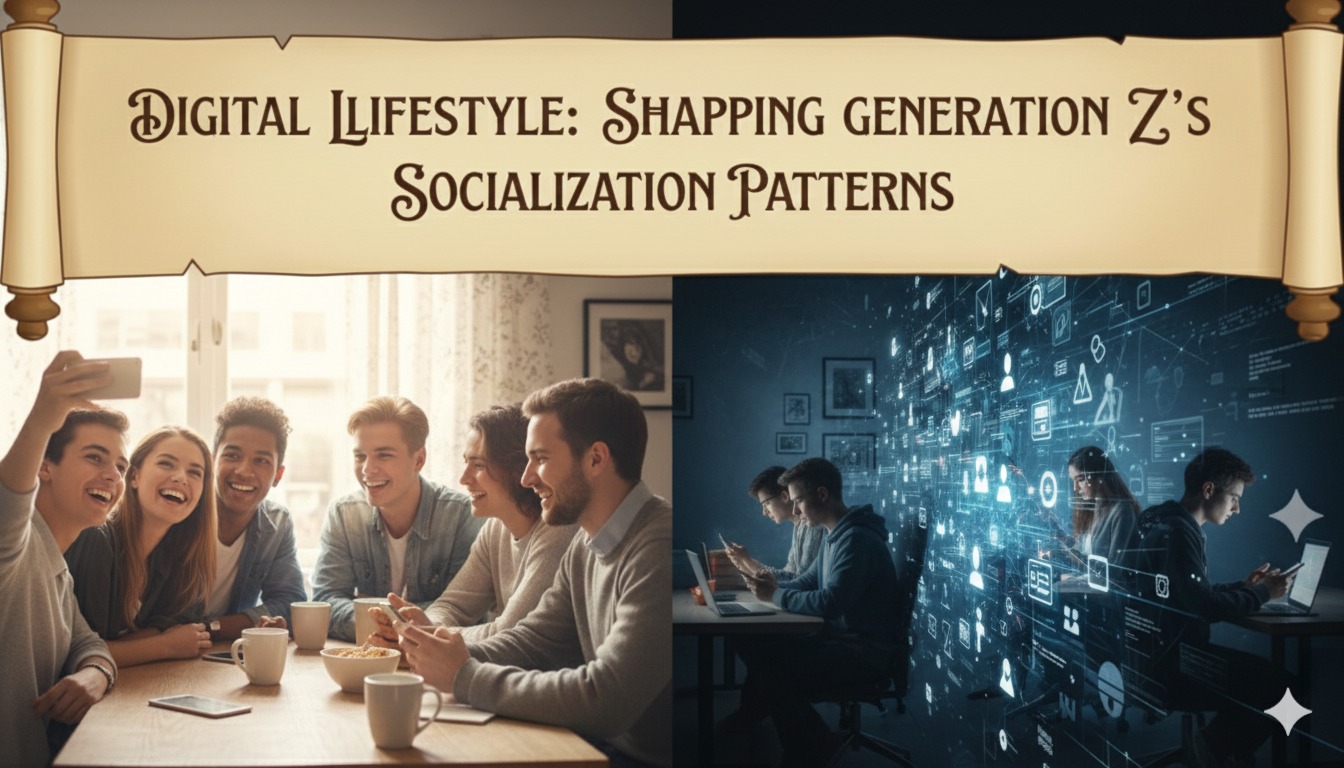
Generation Z is known as a generation that has grown up amid the rapid development of digital technology. They are accustomed to fast internet access, social media, and various online communication platforms. This condition not only influences the way they interact, but also shapes new patterns of socialization that differ from those of previous generations.
CHARACTERISTICS OF GENERATION Z’S DIGITAL LIFESTYLE
Generation Z shows a strong tendency toward the use of technology in everyday life. They are active on various social media platforms such as Instagram, TikTok, and X (Twitter). For them, the digital world is not merely a communication tool, but also a space to express themselves, seek information, and build social identity.
However, this habit has also reduced face-to-face interactions. Many of them feel more comfortable communicating through text messages or video calls rather than meeting in person.
POSITIVE IMPACTS OF DIGITAL SOCIALIZATION
A digital lifestyle offers many positive opportunities for Generation Z. They can easily build relationships across regions and countries, broaden their perspectives, and develop wide social networks. The digital world also provides space for creativity, such as creating content, running online businesses, or participating in beneficial educational trends.
In addition, digital interaction helps them become more open to differences and able to adapt quickly to social changes.
CHALLENGES IN DIGITAL SOCIALIZATION PATTERNS
Despite its many opportunities, a digital lifestyle also brings challenges. One of them is the feeling of loneliness, even when someone appears socially active online. Excessive virtual interaction can reduce empathy and direct communication skills. Moreover, social pressure from digital media—such as the need to always appear perfect—can cause stress and anxiety among young people.
MAINTAINING BALANCE IN THE DIGITAL ERA
To keep a digital lifestyle healthy, Generation Z needs to balance online and offline interactions. Social media should be used for positive purposes, unnecessary social comparisons should be avoided, and time should be allocated for meeting friends or family in person. In this way, technology can become a supportive tool rather than a replacement for genuine human interaction.
CONCLUSION
The digital lifestyle has shaped new patterns of socialization for Generation Z. They are more open, creative, and adaptive to the changing times. However, maintaining real-world social relationships remains essential to preserve emotional balance and empathy. The digital world should be a space for growth, not a place to become trapped.
Tentang Penulis
Gusti Ayu Tita
Penulis — Universitas STEKOM
Penulis aktif yang berfokus pada isu-isu akademik, teknologi pendidikan, dan pengembangan sumber daya manusia di lingkungan kampus.



