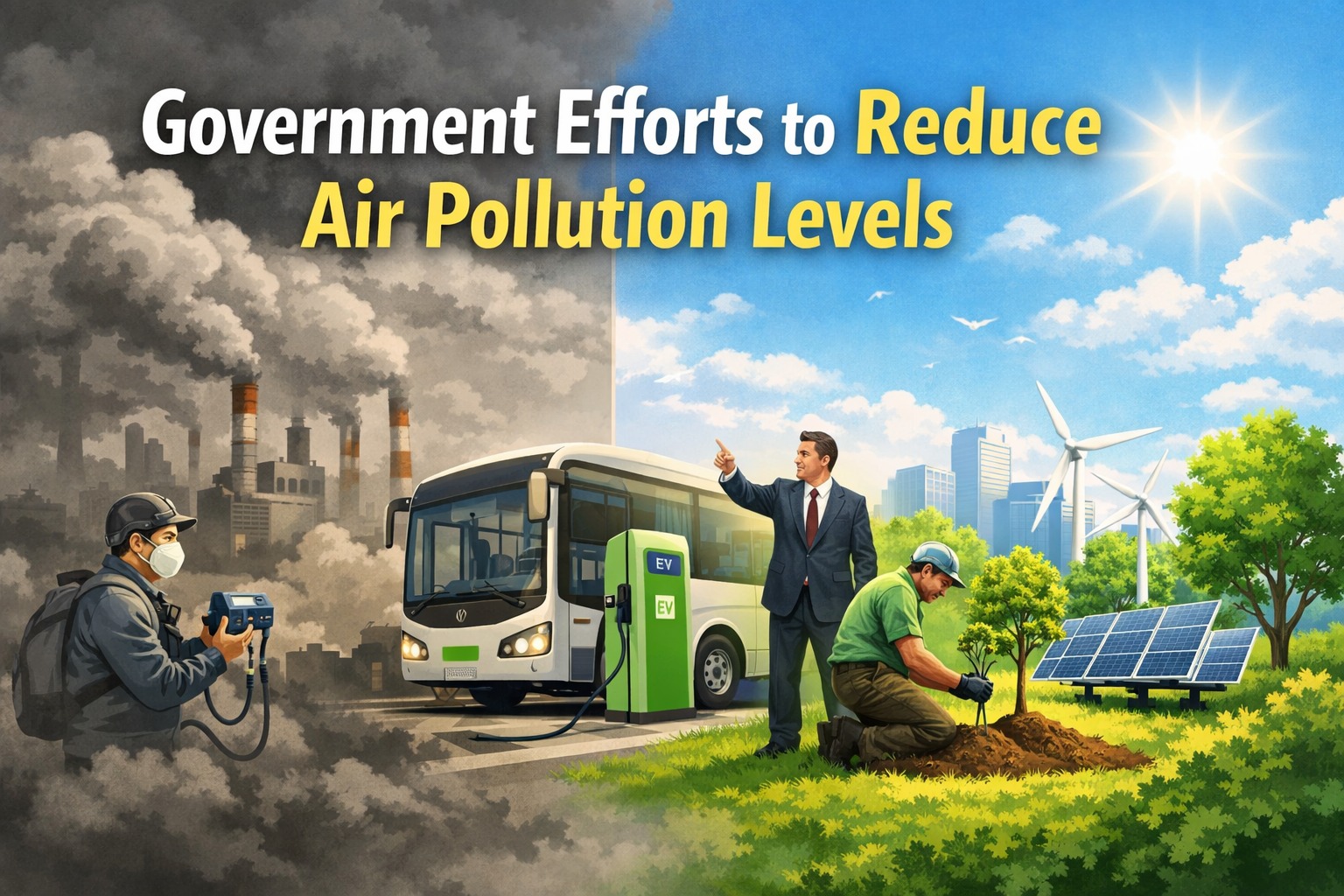
Air pollution has become one of the biggest environmental challenges faced by many countries around the world. Rapid industrial growth, increasing vehicle emissions, and deforestation contribute significantly to declining air quality. Poor air conditions not only damage the environment but also threaten public health. To overcome this issue, governments in many nations have implemented various strategies and policies to reduce air pollution levels and create a healthier future.
THE IMPORTANCE OF CONTROLLING AIR POLLUTION
Air pollution can cause serious health problems such as asthma, lung infections, heart disease, and respiratory disorders. In addition, polluted air negatively impacts ecosystems, agriculture, and climate stability. Governments understand that reducing pollution is essential to protect citizens and maintain environmental sustainability.
By implementing strict regulations and encouraging eco-friendly practices, governments aim to improve air quality and reduce long-term environmental damage.
IMPLEMENTING STRICT EMISSION REGULATIONS
One of the main government efforts to reduce air pollution is enforcing stricter emission standards for industries and vehicles. Factories are required to install filtration systems and limit harmful gas emissions. Meanwhile, vehicle manufacturers must produce engines with lower carbon emissions.
Many governments also conduct regular emission tests for motor vehicles. Cars and motorcycles that fail to meet environmental standards may face penalties or restrictions. These regulations help reduce harmful pollutants released into the atmosphere.
PROMOTING PUBLIC TRANSPORTATION
Governments encourage people to use public transportation instead of private vehicles. Public transport systems such as buses, trains, and subways help reduce traffic congestion and lower fuel consumption.
Several countries have invested heavily in environmentally friendly transportation, including electric buses and railway systems powered by renewable energy. Affordable and efficient public transportation can significantly decrease air pollution in urban areas.
SUPPORTING RENEWABLE ENERGY
Another important effort is reducing dependence on fossil fuels. Governments promote renewable energy sources such as solar power, wind energy, and hydropower to replace coal and oil-based energy production.
Many governments provide incentives, tax reductions, and subsidies for companies and households that adopt clean energy technology. Transitioning to renewable energy helps lower greenhouse gas emissions and improves overall air quality.
CONDUCTING TREE-PLANTING PROGRAMS
Trees play an important role in absorbing carbon dioxide and producing oxygen. Governments often organize reforestation and urban greening programs to increase green spaces in cities and rural areas.
Planting more trees can help reduce pollution, lower urban temperatures, and create healthier living environments. Public participation in these programs also raises awareness about environmental protection.
RAISING PUBLIC AWARENESS
Government campaigns and environmental education programs are essential in reducing air pollution. Citizens are encouraged to adopt environmentally friendly habits such as reducing plastic waste, conserving energy, and using bicycles for short-distance travel.
Schools, communities, and media platforms are often involved in spreading information about the dangers of pollution and the importance of maintaining clean air.
CONCLUSION
Government efforts to reduce air pollution levels are crucial for protecting public health and preserving the environment. Through stricter regulations, renewable energy development, public transportation improvements, tree-planting programs, and public education, pollution levels can gradually decrease.
However, solving air pollution problems requires cooperation between governments, industries, and society. By working together, people can create cleaner air and a healthier planet for future generations.
Tentang Penulis
Gusti Ayu Tita
Penulis — Universitas STEKOM
Penulis aktif yang berfokus pada isu-isu akademik, teknologi pendidikan, dan pengembangan sumber daya manusia di lingkungan kampus.