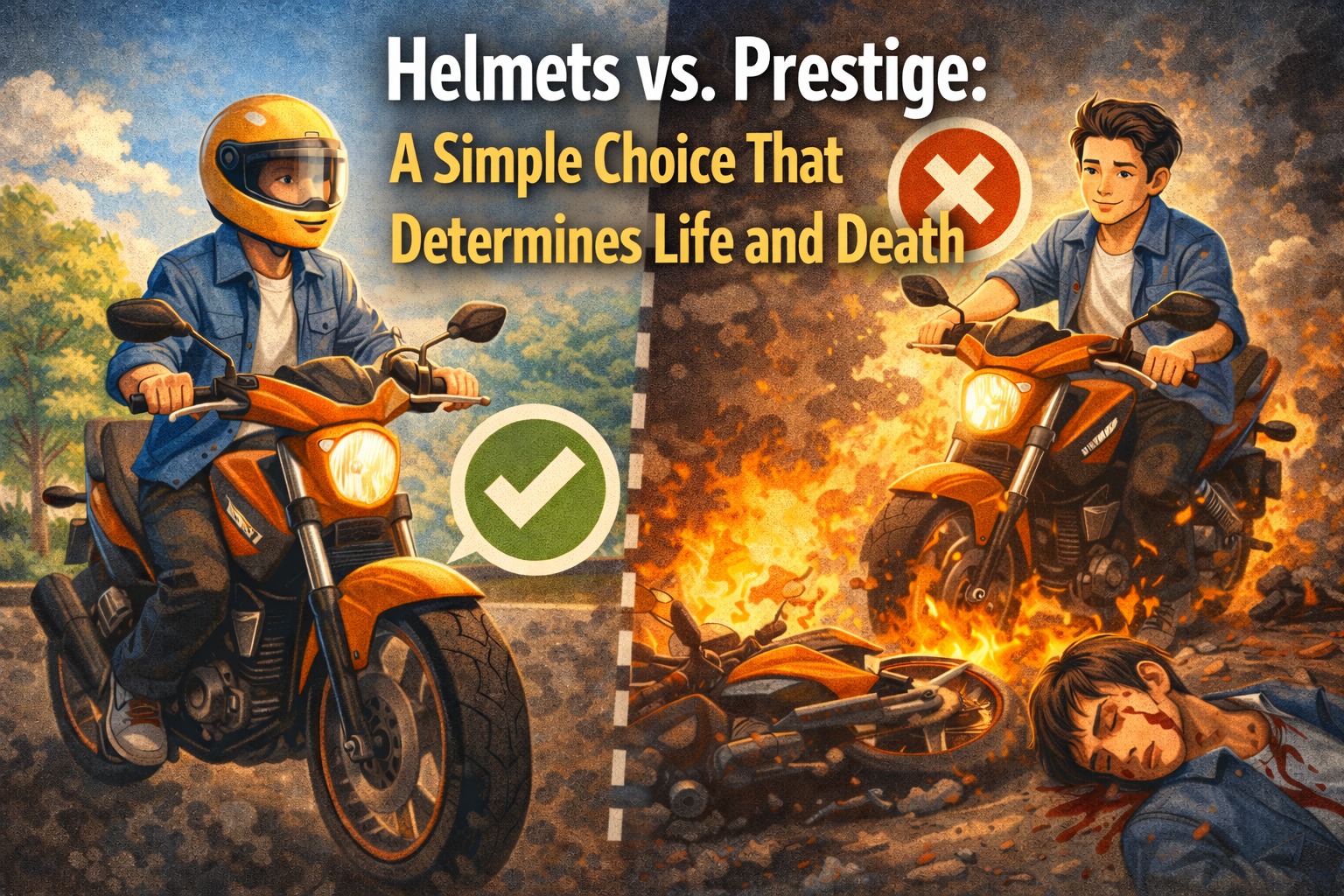
Road safety is often seen as a trivial matter, especially among motorcycle riders. On the streets, it is still easy to find riders who choose not to wear helmets for various reasons, ranging from short distances to concerns about appearance. In fact, behind this seemingly simple choice lies a major risk that can determine life or death. A helmet is not merely an accessory but a primary protective device designed to save lives.
Ironically, pride and image are often prioritized over safety. There is a common belief that wearing certain helmets ruins appearance or looks excessive. This mindset needs to be questioned, because safety should never be compromised by self-image. This article explores in depth the conflict between helmets and pride, and its impact on riders’ lives.
HELMETS AS THE PRIMARY HEAD PROTECTION
The head is the most vital part of the human body. Head injuries can be fatal, even in low-speed accidents. Helmets are designed to absorb impact and reduce the risk of serious brain injury. This function cannot be replaced by any other equipment.
Before understanding their benefits in detail, it is important to realize that accidents do not always occur due to personal mistakes. Factors such as road conditions, other road users, or weather can trigger accidents at any time. Therefore, maximum protection is an absolute necessity.
Some key helmet functions that are often overlooked include:
1. Protecting the brain from direct impact
Head impacts can cause concussions or even death. Helmets act as shock absorbers, reducing the force transmitted to the brain.
2. Reducing the risk of fatal injuries
Without a helmet, the head directly hits asphalt or hard objects. Helmets help prevent open wounds, skull fractures, and severe bleeding.
3. Maintaining stability during accidents
Helmet design helps keep the head stable, reducing extreme movements that can damage the neck and spine.
4. Protecting against environmental factors
Beyond accidents, helmets shield riders from dust, gravel, and insects that can disrupt concentration while riding.
PRIDE AND A CULTURE OF SAFETY NEGLIGENCE
Pride is often the main reason people refuse to wear helmets. Some feel helmets ruin their hairstyle, while others believe helmets are only necessary for long trips. This mindset grows from a deeply rooted culture of safety negligence.
Before examining its effects, it must be understood that pride is a social construct with no value when lives are at stake. Looking “cool” should never be more important than personal and public safety.
Common forms of pride seen on the road include:
1. Believing short distances are harmless
Many accidents occur close to home. Short distances do not guarantee safety.
2. Fear of appearing excessive
Some feel that wearing full protective gear looks excessive, even though maximum protection reflects responsibility.
3. Prioritizing appearance
Hairstyles or looks are often used as excuses, even though appearance means nothing when safety is threatened.
4. Following unsafe social norms
Unsafe environments discourage individuals from standing out, even though safe behavior can set a positive example.
5. Underestimating traffic regulations
Pride can also manifest as disregard for traffic laws, despite the fact that these rules exist to protect everyone.
THE FATAL CONSEQUENCES OF NOT WEARING A HELMET
Not wearing a helmet is not only a legal violation, but also a high-risk decision. The consequences may not be immediately visible, but when an accident occurs, the impact can be permanent.
It is important to emphasize that a single accident is enough to change a person’s life forever. Head injuries often cause long-term physical and psychological effects.
Some fatal consequences of not wearing a helmet include:
1. Permanent brain injury
Brain damage can result in cognitive impairment, memory loss, and inability to perform daily activities.
2. Sudden death
Many motorcycle fatalities are caused by head impacts that could have been minimized with proper helmet use.
3. Psychological burden on families
Fatal accidents leave trauma and emotional suffering for loved ones.
4. Economic loss
Medical treatment for head injuries is extremely costly and can severely strain family finances.
CHOOSING HELMETS AS A FORM OF RESPONSIBILITY
Wearing a helmet is not just about obeying the law, but also about taking responsibility for oneself and others. This choice reflects awareness of the value of life.
Before concluding, it is essential to understand that safety is a conscious decision. A certified helmet, worn properly and consistently, can make the difference between survival and tragedy.
Simple steps to prioritize helmet use include:
1. Choosing nationally certified helmets
Ensure the helmet meets official safety standards and is in good condition.
2. Wearing helmets on every ride
Regardless of distance, helmets should always be used.
3. Setting an example for others
Small actions can encourage others to care more about safety.
4. Changing the mindset about pride
Safety is a form of self-care, not a sign of fear.
CONCLUSION
Helmets versus pride is not merely a matter of style, but a life-and-death decision. Helmets protect the head from fatal risks, while pride is only a temporary perception with no value when lives are at stake. A culture of safety negligence must be changed through awareness that every journey carries risk. Wearing a helmet is a simple action, yet its impact is immense. When safety becomes a priority, life has a far greater chance to continue.
Tentang Penulis
Gusti Ayu Tita
Penulis — Universitas STEKOM
Penulis aktif yang berfokus pada isu-isu akademik, teknologi pendidikan, dan pengembangan sumber daya manusia di lingkungan kampus.