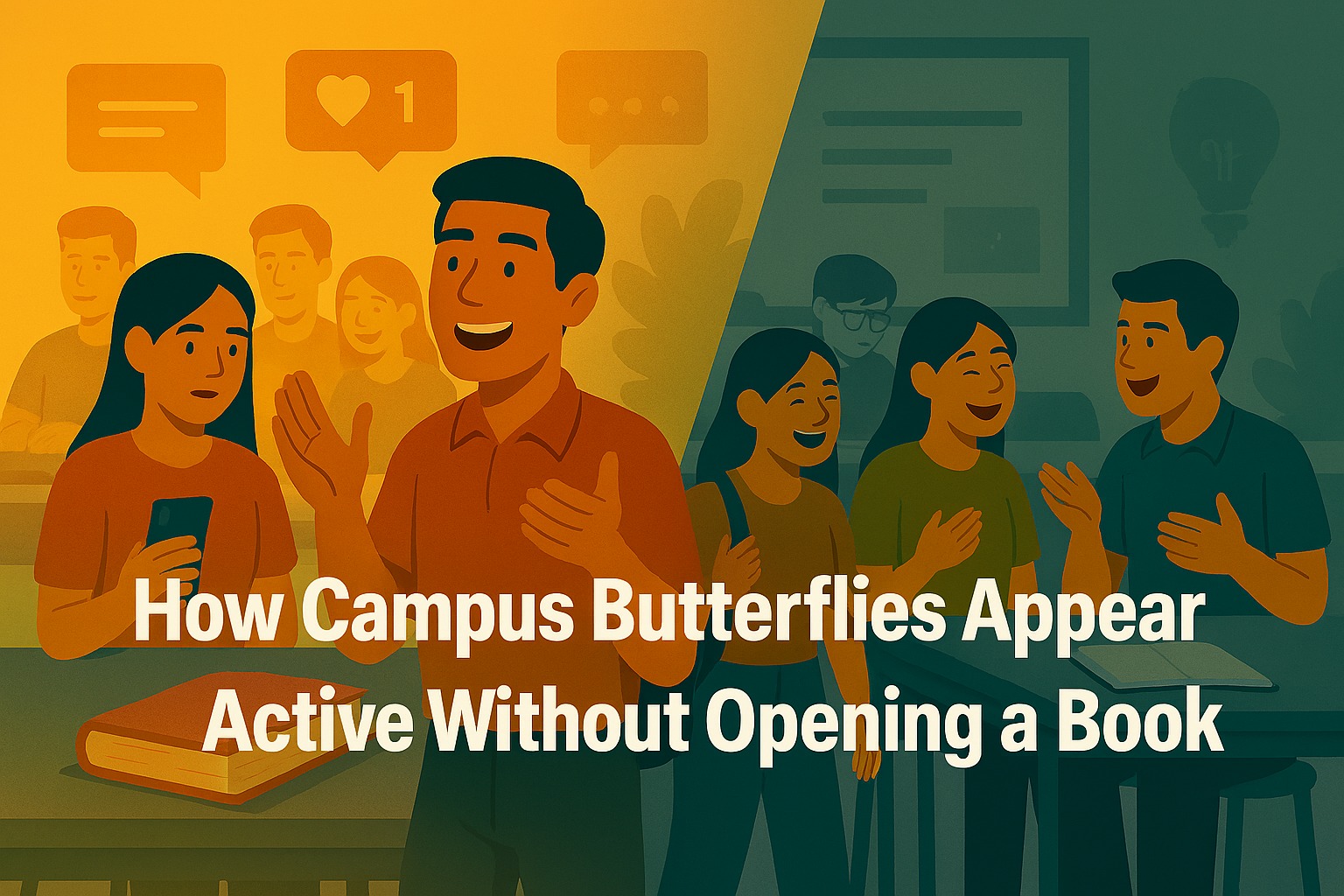
In modern university culture, being active does not always mean being academically engaged. Some students, often called campus butterflies, seem constantly involved in activities, conversations, and events. They are visible, socially connected, and updated on everything happening around campus. Yet surprisingly, they may rarely open a book.
How do campus butterflies appear productive and engaged without deep academic focus? This article explores the strategies, psychology, and consequences behind this growing student lifestyle trend.
THE ILLUSION OF PRODUCTIVITY
Campus butterflies often master the art of looking busy. They move between discussion groups, attend events, participate in student communities, and maintain strong digital presence. From the outside, their schedules seem full and impressive.
However, visible activity is not always equal to academic progress. Attending meetings or posting about campus initiatives can create an image of involvement. Meanwhile, reading assignments, reviewing lecture materials, or studying independently may receive less attention.
This creates an illusion of productivity where movement replaces mastery.
SOCIAL INTELLIGENCE AS A SURVIVAL TOOL
One reason campus butterflies can appear academically capable without intensive studying is social intelligence. They stay connected through group chats, peer networks, and informal study circles. Instead of reading full chapters, they rely on shared summaries and collective notes.
By asking strategic questions or listening carefully during discussions, they gather essential information efficiently. This allows them to keep up with deadlines and exams without investing as much time in independent reading.
While this method can work in the short term, it often limits deeper understanding.
DIGITAL PRESENCE AS ACADEMIC SIGNAL
In the digital era, visibility often substitutes for effort. Posting about assignments, sharing photos in libraries, or commenting in academic forums can signal seriousness. Even if study time is minimal, consistent online updates create the impression of commitment.
Campus butterflies understand that perception matters. They build an identity of being engaged students, even when their interaction with textbooks is limited.
This strategy relies heavily on appearance rather than substance.
THE SHORT TERM BENEFITS
There are certain advantages to this approach. Campus butterflies typically develop strong communication skills and wide social networks. They are comfortable speaking in public and adapting quickly to different groups.
Because they gather information socially, they may perform adequately in collaborative tasks or group projects. Their flexibility allows them to respond quickly when deadlines approach.
However, surviving academically is not the same as excelling academically.
THE LONG TERM RISKS
Over time, avoiding deep study can create knowledge gaps. Surface-level understanding may be enough for passing exams, but it becomes problematic when advanced courses require strong foundations.
Professional environments demand analytical thinking, discipline, and subject mastery. Without consistent reading and reflection, these skills may remain underdeveloped.
Appearing active without opening a book may sustain an image, but it cannot replace genuine competence.
FROM APPEARANCE TO AUTHENTIC ENGAGEMENT
The solution is not abandoning social involvement. Campus life is meant to be dynamic and interactive. The challenge is integrating academic depth with social energy.
Opening a book, reviewing materials independently, and reflecting critically can strengthen the foundation that social skills alone cannot provide. When campus butterflies combine visibility with genuine study habits, they transform from performers into prepared professionals.
In the end, activity should reflect growth, not just appearance. True academic success begins when engagement moves beyond perception and into real understanding.
Tentang Penulis
Gusti Ayu Tita
Penulis — Universitas STEKOM
Penulis aktif yang berfokus pada isu-isu akademik, teknologi pendidikan, dan pengembangan sumber daya manusia di lingkungan kampus.