
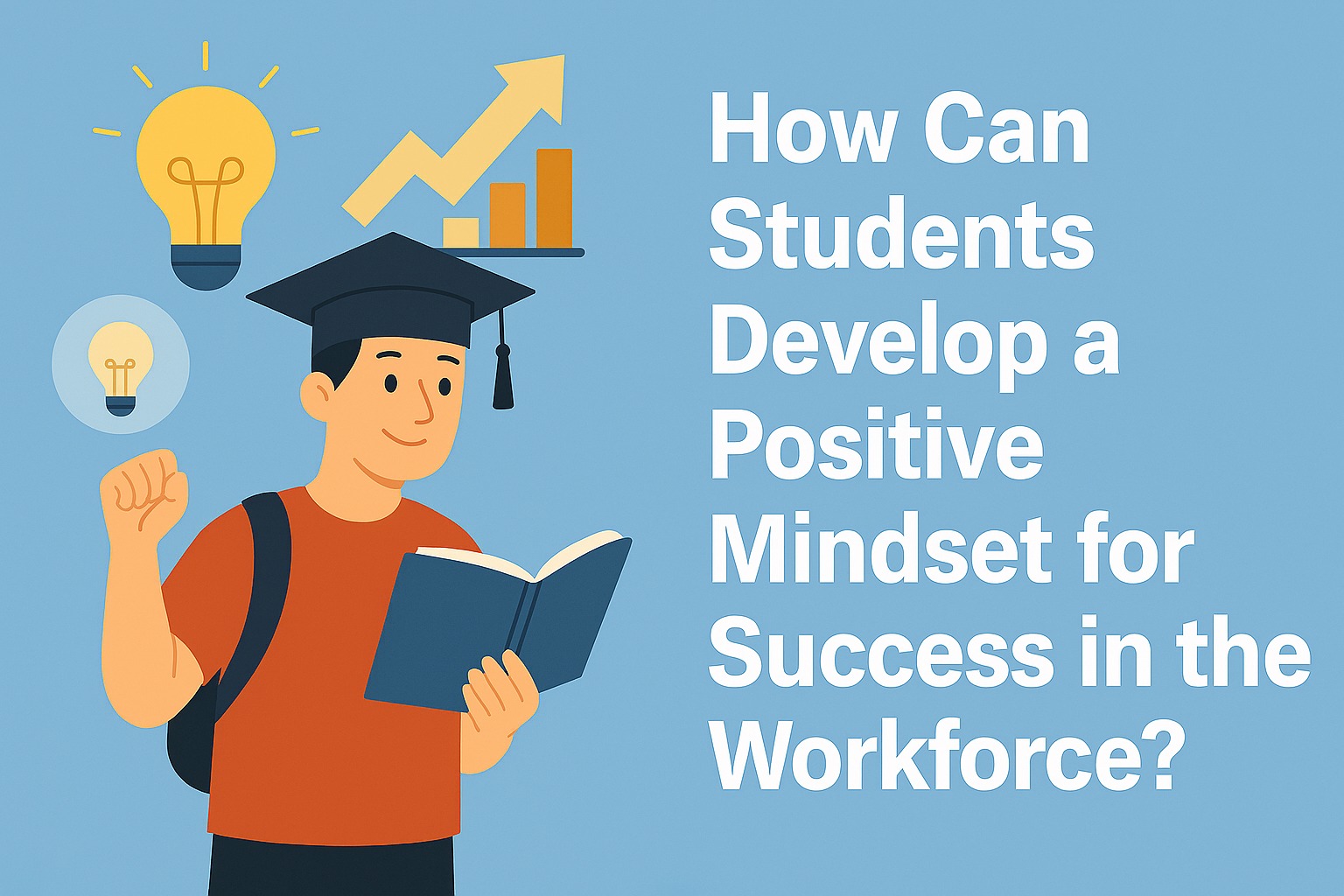
The increasingly competitive job market requires individuals, including students, to possess the right skills, competencies, and attitudes. One of the key factors for success in the workplace is a positive mindset . For students, building this positive mindset is not only about facing exams or university assignments but also preparing for the significant challenges that lie ahead after graduation. So, how can students build a positive mindset that will help them succeed in the workforce?
THE IMPORTANCE OF A POSITIVE MINDSET
A positive mindset is not just about viewing the world optimistically, but about thinking in a way that helps someone stay motivated, confident, and resilient when facing various obstacles. For students, having a positive mindset means being ready to face uncertainties and challenges in their career journey.
For example, students with a positive mindset tend to be more open to new opportunities, more patient in overcoming failures, and more willing to take calculated risks. This will greatly help them when entering the workforce, which is filled with competition and uncertainty.
BEING A LIFELONG LEARNER
One way to build a positive mindset is by adopting the mentality of being a lifelong learner. The ever-evolving job market requires us to continuously adapt and improve our skills. Students who have the mindset to keep learning, whether through their studies, extracurricular experiences, or additional training, will be better prepared for the workforce.
Students should realize that formal education alone is not enough. They need to develop non-technical skills such as communication, time management, and leadership. With a lifelong learning mindset, students will find it easier to adapt to the demands of the job market.
DEVELOPING EMOTIONAL INTELLIGENCE
A positive mindset is closely related to emotional intelligence (EQ) . Students need to learn how to manage their emotions, both positive and negative. In the workplace, the ability to stay calm and rational in stressful or conflict situations is essential.
Developing emotional intelligence can start with recognizing one's own feelings and those of others, and responding to situations constructively. Students with good EQ will find it easier to interact with colleagues, supervisors, or clients, and work more productively and harmoniously.
HAVING A SUCCESS MINDSET
A student with a positive mindset also needs to develop a success mentality. This does not mean focusing solely on material achievements or degrees but on the process of reaching those goals. Students with this mentality will focus more on how they can grow, learn from mistakes, and continually strive to improve.
It is crucial for students to believe that they can overcome difficulties and achieve their dreams. With a success mentality, they will not give up easily when facing challenges or failures.
THINKING SOLUTIVELY, NOT PROBLEMATICALLY
Students who want to succeed in the workforce must learn to think solution-oriented , not just complain about problems. The workplace is full of challenges and obstacles that must be addressed with the right approach. Instead of focusing on the problems, students need to learn to find solutions and new opportunities.
With a solution-oriented mindset, students will become more creative in finding ways to overcome existing barriers. They will not easily become discouraged but will continue to find the best possible solutions.
DEVELOPING COLLABORATIVE SKILLS
In the workplace, the ability to work well with others is essential. Therefore, students need to develop a collaborative mindset , which values teamwork and synergy in achieving common goals. With this mindset, students will find it easier to adapt to a work environment that often involves individuals with diverse backgrounds and characteristics.
Practicing teamwork during university, whether through group projects, organizations, or social activities, will help students build effective collaboration skills. The better their ability to collaborate, the more seamlessly they will integrate into teams and work environments.
MAINTAINING LIFE BALANCE
A positive mindset is also related to the ability to maintain a balance between work and personal life. Students with this mindset do not solely focus on career achievements but also ensure their mental and physical well-being. In a fast-paced work environment, the ability to maintain balance is crucial to avoid burnout.
With a life balance mindset, students can stay productive without neglecting their personal needs. This will help them stay focused, creative, and maintain enthusiasm in their work.
CONCLUSION
Building a positive mindset is crucial for students to achieve success in the workforce. By becoming lifelong learners, developing emotional intelligence, having a success mindset, thinking solution-oriented, collaborating effectively, and maintaining life balance, students will be better prepared to face the challenges that come after graduation.
The increasingly competitive job market requires students who not only have technical skills but also a mindset that supports long-term success. Therefore, students who want to succeed must start building a positive mindset early on to face any challenge with confidence and optimism.
Tentang Penulis
Gusti Ayu Tita
Penulis — Universitas STEKOM
Penulis aktif yang berfokus pada isu-isu akademik, teknologi pendidikan, dan pengembangan sumber daya manusia di lingkungan kampus.



