
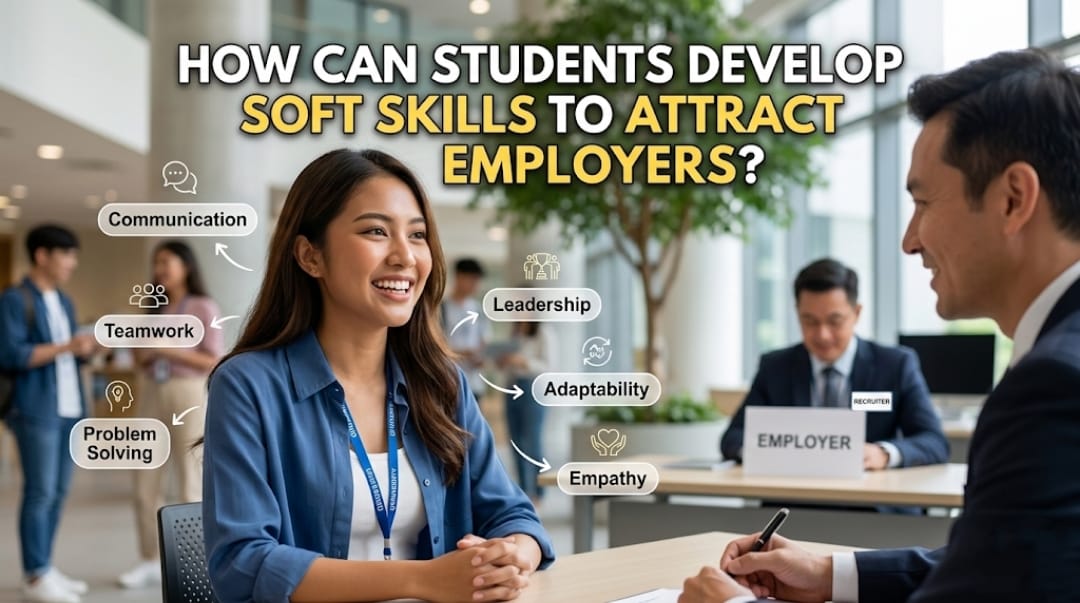
In today’s competitive job market, academic knowledge alone is often not enough to secure a promising career. Employers increasingly look for candidates who possess strong soft skills, such as communication, teamwork, and adaptability. These abilities help individuals perform effectively in dynamic workplace environments.
For students preparing to enter the professional world, developing soft skills during university years can significantly improve their employability. The question is how students can build these essential abilities while still focusing on their academic responsibilities.
Understanding practical ways to develop soft skills can help students become more attractive candidates for future employers.
UNDERSTANDING THE IMPORTANCE OF SOFT SKILLS
Soft skills refer to personal and interpersonal abilities that influence how individuals interact with others and handle workplace situations. Unlike technical skills, soft skills are related to behavior, communication, and attitude.
Employers value these abilities because they contribute to a productive and collaborative work environment. A candidate may have strong technical knowledge, but without good communication or teamwork, it can be difficult to succeed in many professional roles.
For students, developing soft skills early helps build confidence and prepares them for the expectations of modern workplaces.
GAINING EXPERIENCE THROUGH INTERNSHIPS
Internships allow students to experience real workplace environments before graduating. This exposure helps them understand professional expectations and develop practical soft skills.
During internships, students often learn how to:
- Communicate with supervisors and colleagues
- Manage tasks and deadlines
- Adapt to workplace culture
- Solve problems in real situations
These experiences are valuable because they provide insight into how soft skills are applied in professional settings.
DEVELOPING TIME MANAGEMENT AND RESPONSIBILITY
Another essential soft skill is time management. Employers appreciate individuals who can manage multiple tasks efficiently while meeting deadlines.
Students can develop this skill by balancing academic work, extracurricular activities, and personal responsibilities. Creating schedules, prioritizing tasks, and setting clear goals are practical ways to improve time management.
Learning to manage responsibilities during university life can prepare students for the demands of professional careers.
CONCLUSION
Soft skills play a crucial role in shaping a student’s readiness for the professional world. Employers increasingly seek individuals who can communicate effectively, collaborate with others, and adapt to changing situations.
Students can develop these abilities through campus organizations, internships, communication practice, and responsible time management. These experiences help build confidence and strengthen professional behavior.
By combining strong academic knowledge with well developed soft skills, students can significantly increase their chances of attracting employers and succeeding in their careers.
Tentang Penulis
Gusti Ayu Tita
Penulis — Universitas STEKOM
Penulis aktif yang berfokus pada isu-isu akademik, teknologi pendidikan, dan pengembangan sumber daya manusia di lingkungan kampus.



