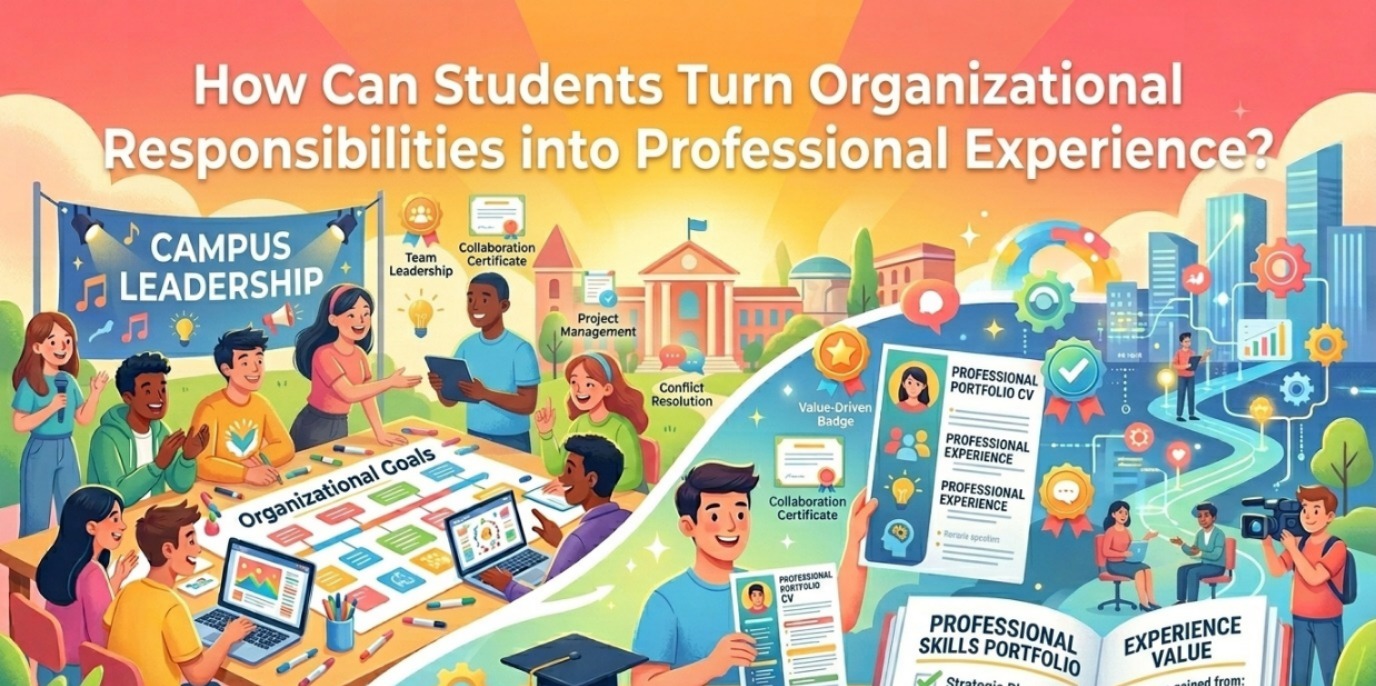
For many students, involvement in campus organizations is often seen as an extracurricular activity rather than a form of professional preparation. However, organizational responsibilities can actually provide valuable experiences that resemble real workplace situations. When understood and presented correctly, these responsibilities can become meaningful professional experience.
Students who actively participate in campus organizations often develop skills that employers value, such as leadership, teamwork, communication, and problem-solving. The key is knowing how to transform these experiences into professional assets that strengthen a career profile.
UNDERSTANDING THE VALUE OF ORGANIZATIONAL RESPONSIBILITIES
The first step in turning organizational responsibilities into professional experience is recognizing their value. Many organizational tasks require planning, coordination, and collaboration, which are also essential in professional environments.
For example, students who manage projects or coordinate events are practicing skills similar to project management in the workplace. These experiences demonstrate that students are capable of handling structured responsibilities and working toward shared goals.
Recognizing this connection helps students appreciate the professional relevance of their campus involvement.
IDENTIFYING TRANSFERABLE SKILLS
Organizational roles often develop transferable skills that can be applied in various careers. Skills such as communication, teamwork, leadership, and time management are highly valued across industries.
For instance, leading a committee may strengthen leadership abilities, while organizing an event can improve planning and coordination skills. These competencies are not limited to campus activities but can also be applied in professional roles.
Students who identify these transferable skills can better highlight them in job applications and interviews.
DOCUMENTING RESPONSIBILITIES AND ACHIEVEMENTS
To transform organizational experience into professional value, students should carefully document their responsibilities and achievements. Instead of simply listing the name of an organization, it is more effective to describe the role held and the contributions made.
For example, students can explain how they managed a team, organized a large event, or solved challenges during a project. Including measurable results—such as the number of participants in an event or successful completion of a program—adds credibility to the experience.
Clear documentation helps employers understand the impact of the student’s involvement.
CONNECTING EXPERIENCE TO CAREER GOALS
Another important step is linking organizational responsibilities to career goals. Students should reflect on how their organizational roles relate to the skills required in their desired profession.
For instance, a student interested in marketing can highlight experience promoting campus events or managing social media for an organization. By making this connection clear, students can show that their campus involvement supports their professional development.
This alignment makes organizational experience more meaningful in the eyes of recruiters.
PRESENTING THE EXPERIENCE PROFESSIONALLY
Finally, students should present their organizational experience in a professional manner. This includes writing clear descriptions in a CV, creating a portfolio of projects, and confidently explaining their roles during job interviews.
Employers often appreciate candidates who can describe their experiences in terms of responsibilities, challenges, and outcomes. When students communicate their contributions effectively, organizational activities can be viewed as real professional preparation.
CONCLUSION
Organizational responsibilities can become valuable professional experience when students understand their significance and present them effectively. Through campus organizations, students develop transferable skills, handle real responsibilities, and gain experiences that mirror professional environments.
By documenting achievements, identifying relevant skills, and connecting experiences to career goals, students can transform their organizational involvement into a strong advantage when entering the job market.
Tentang Penulis
Gusti Ayu Tita
Penulis — Universitas STEKOM
Penulis aktif yang berfokus pada isu-isu akademik, teknologi pendidikan, dan pengembangan sumber daya manusia di lingkungan kampus.