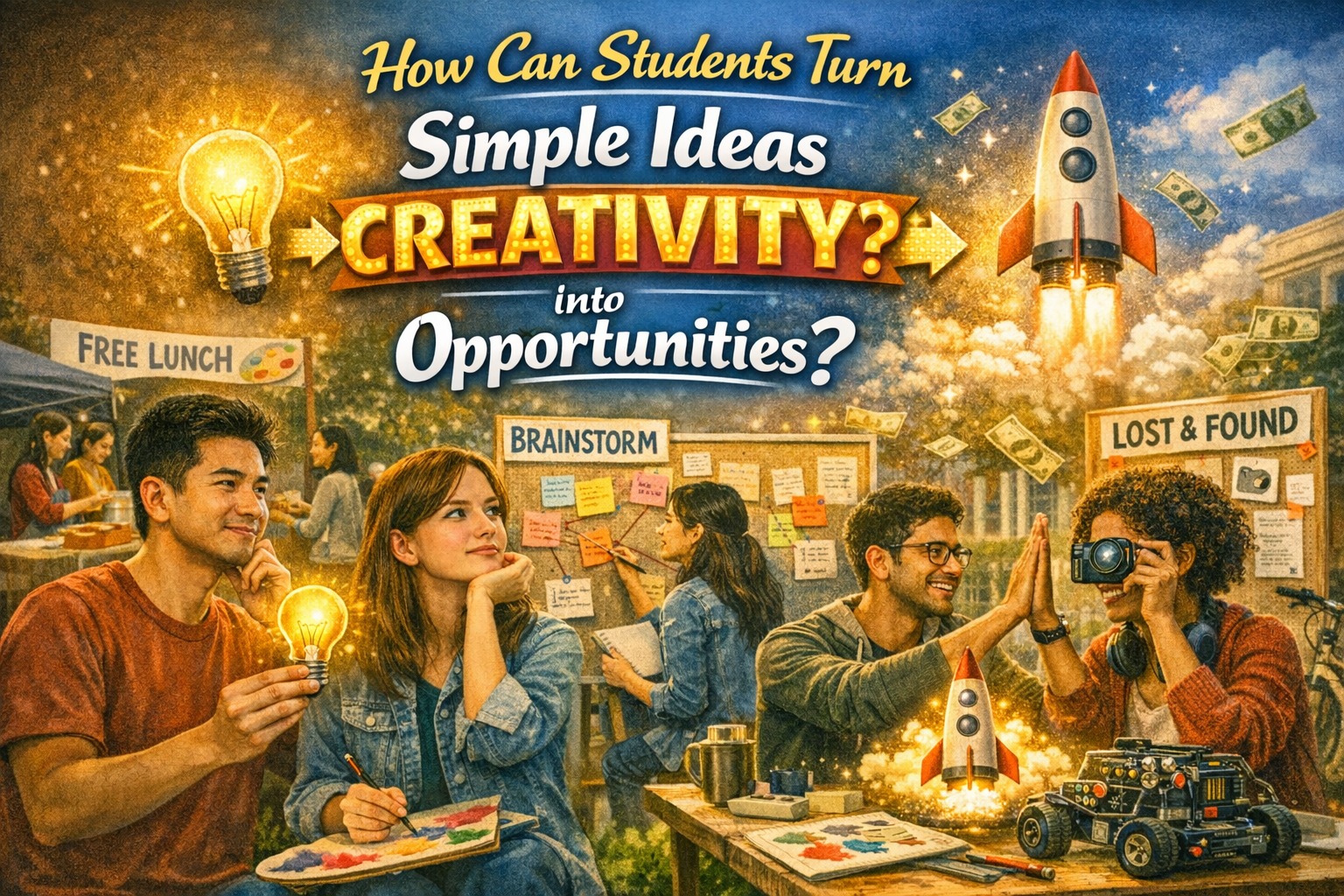
University life is a period filled with exploration, creativity, and personal development. During these years, students encounter various situations that can inspire new ideas. Sometimes these ideas appear very simple, such as noticing a problem in daily campus life or thinking about a better way to complete a task. However, simple ideas should never be underestimated because they can become valuable opportunities when developed with the right mindset and effort. Many successful innovations and initiatives start from basic observations or small thoughts. The key difference lies in how individuals respond to those ideas. Students who are able to nurture and develop their ideas often transform them into meaningful projects, collaborations, or even future career opportunities. By learning how to recognize the potential within simple ideas, students can maximize their creativity and actively shape their university experience.
RECOGNIZING THE VALUE OF SIMPLE IDEAS
The first step in turning ideas into opportunities is recognizing that even the simplest thoughts can have value. Many students tend to ignore their ideas because they believe they are too small or not significant enough. In reality, great concepts often begin with basic observations about everyday situations.
For example, a student might notice that many classmates struggle with managing study schedules or accessing learning resources. This simple observation could inspire the creation of a study group, a digital platform, or a collaborative learning program. When students learn to appreciate the potential of their ideas, they become more confident in exploring and developing them further.
Recognizing the value of simple ideas also encourages students to remain curious about their surroundings. Curiosity helps them observe patterns, identify problems, and think about possible improvements. This awareness forms the foundation for creative thinking and opportunity development.
DEVELOPING IDEAS THROUGH CRITICAL AND CREATIVE THINKING
Once students recognize the potential of an idea, the next step is developing it through critical and creative thinking. Critical thinking allows students to analyze whether an idea is practical, useful, or relevant to a particular situation. At the same time, creative thinking helps them explore different ways of improving and expanding the idea.
For instance, a simple concept for a campus discussion forum can evolve into a larger initiative that includes workshops, guest speakers, and collaborative research projects. Through continuous evaluation and brainstorming, students can refine their ideas until they become more structured and impactful.
This development process often involves experimentation and adjustment. Not every idea will succeed immediately, but each attempt provides valuable learning experiences that help students strengthen their problem-solving skills.
COLLABORATING WITH OTHERS TO EXPAND IDEAS
Collaboration plays a significant role in transforming ideas into opportunities. When students share their ideas with peers, lecturers, or campus communities, they receive feedback that helps them improve their concepts. Different perspectives often reveal new possibilities that the original thinker may not have considered.
Working with others also allows students to combine different skills and knowledge. For example, one student may have creative design abilities while another has strong organizational skills. Together, they can develop a project that is more effective and impactful than if they worked individually.
The campus environment is ideal for collaboration because it brings together individuals from various academic disciplines and backgrounds. By engaging in teamwork and open discussions, students can expand their ideas and turn them into initiatives that benefit a wider community.
TAKING INITIATIVE TO IMPLEMENT IDEAS
Ideas only become opportunities when students are willing to take action. Implementation is often the most challenging stage because it requires effort, commitment, and sometimes the courage to step outside one’s comfort zone. However, taking initiative is essential for transforming ideas into real outcomes.
Students can begin by taking small steps, such as organizing a meeting, presenting their ideas to a student organization, or starting a pilot project. These actions allow them to test their concepts and gather feedback from others. Over time, these initial efforts can grow into larger programs or initiatives.
Taking initiative also helps students develop important skills such as leadership, communication, and project management. These skills are valuable not only during university years but also in future professional environments.
CONCLUSION
Turning simple ideas into opportunities is a skill that students can develop through awareness, creativity, collaboration, and initiative. By recognizing the value of their ideas, students begin to see everyday situations as potential sources of innovation and improvement.
Through critical and creative thinking, students can refine their ideas and transform them into meaningful concepts. Collaboration with others further expands these ideas, while initiative ensures that they move from imagination to real action.
Ultimately, the ability to transform simple ideas into opportunities empowers students to make the most of their university experience. It encourages them to become proactive thinkers who contribute positively to their campus environment while preparing themselves for future challenges and possibilities.
Tentang Penulis
Gusti Ayu Tita
Penulis — Universitas STEKOM
Penulis aktif yang berfokus pada isu-isu akademik, teknologi pendidikan, dan pengembangan sumber daya manusia di lingkungan kampus.