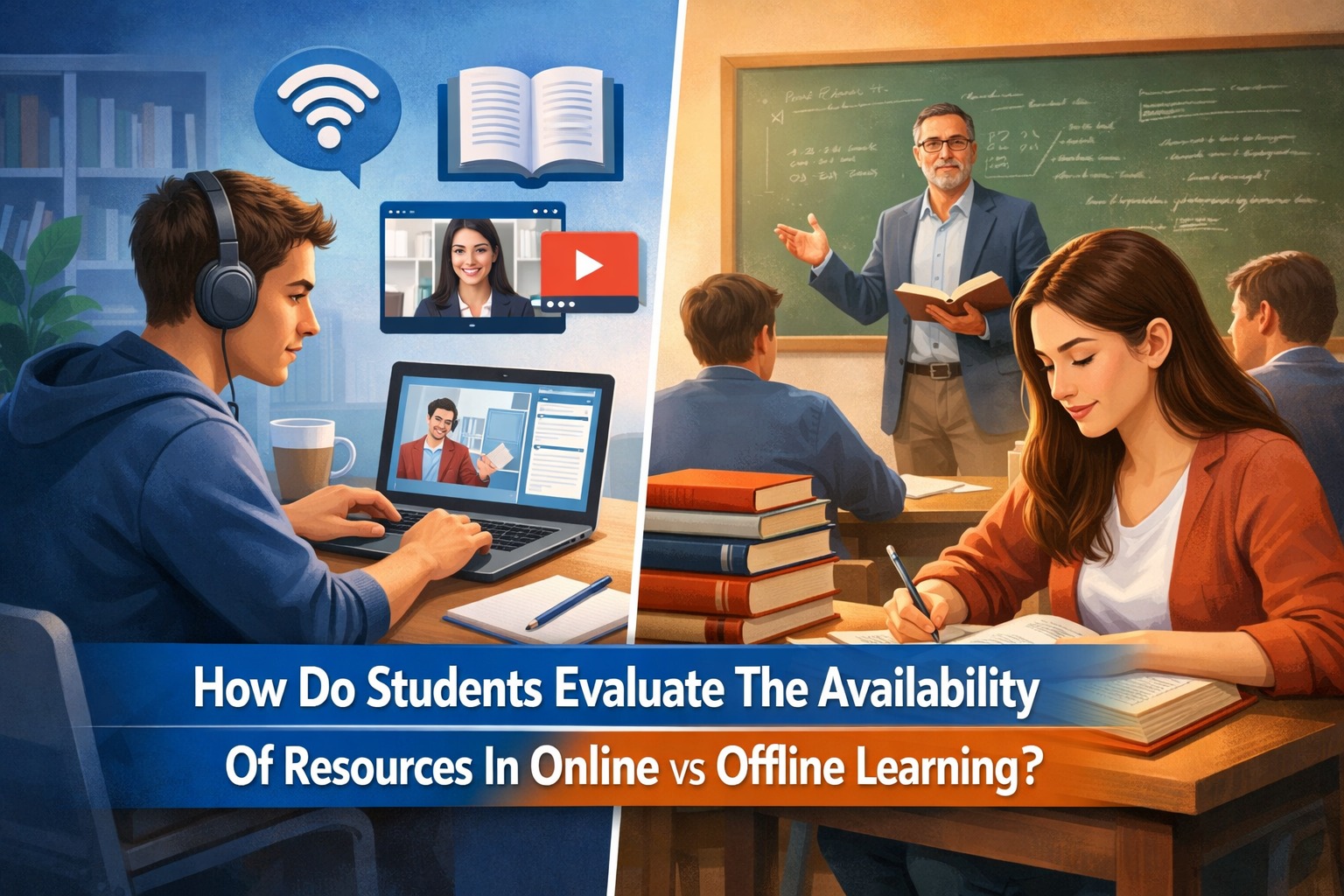
In modern education, students have more learning options than ever before. With the rise of digital platforms and traditional classroom systems, one important question emerges: How do students evaluate the availability of resources in online vs offline learning?
Learning resources play a critical role in academic success. They influence understanding, research ability, assignment quality, and overall performance. To fully understand this comparison, we must explore how students assess access, quality, variety, and usability of resources in both learning modes.
What Are Learning Resources?
Learning resources include all materials and tools that support the educational process, such as:
- Textbooks and printed materials
- E-books and digital libraries
- Lecture recordings
- Research journals
- Laboratory equipment
- Academic support services
Students often evaluate resources based on accessibility, convenience, completeness, and reliability.
Accessibility And Convenience In Online Learning
Online learning offers instant access to a wide range of digital resources. Students can download e-books, watch recorded lectures, access global research journals, and use online databases anytime.
One of the biggest advantages is 24/7 availability. Learners are not limited by library opening hours or campus access. This flexibility makes it easier to conduct research and review materials repeatedly.
However, students also consider internet stability and device availability. Without proper technology, online resources become difficult to access.
Physical Resources In Offline Learning
Offline learning provides access to physical libraries, printed textbooks, laboratories, and campus facilities.
Many students value:
- Quiet study spaces
- Direct access to physical books
- Laboratory tools and equipment
- Face-to-face academic consultations
Physical resources can sometimes offer deeper focus and fewer digital distractions. In subjects requiring experiments or hands-on practice, offline facilities may provide stronger support.
Quality And Reliability Of Resources
Students also evaluate the credibility of resources. Online learning often provides access to international journals and updated materials, which increases the variety of references.
However, the internet also contains unreliable information. Students must have strong critical thinking skills to evaluate digital sources properly.
Offline institutions usually curate their library collections carefully, ensuring academic reliability. This structured resource system increases trust in the materials provided.
Support Services And Academic Guidance
Another factor students consider is academic support. In offline learning, students can visit lecturers during office hours, consult librarians, or join tutoring sessions directly.
Online learning platforms often offer discussion forums, email communication, and virtual consultations. While convenient, some students may feel that digital communication lacks personal connection.
Therefore, students evaluate not only the quantity of resources but also the quality of academic support available.
Overall Student Evaluation
When comparing online vs offline learning, students typically evaluate resources based on:
- Ease of access
- Variety of materials
- Reliability of information
- Availability of academic support
- Suitability for practical needs
Online learning excels in accessibility and variety, while offline learning often provides stronger physical facilities and structured academic support.
Final Conclusion
So, how do students evaluate the availability of resources in online vs offline learning? Most students appreciate the flexibility and extensive digital access offered by online education. At the same time, they value the reliability and hands-on facilities provided by offline learning.
Ultimately, both systems offer unique advantages. The most effective learning experience may come from combining digital accessibility with structured offline support.
Tentang Penulis
Gusti Ayu Tita
Penulis — Universitas STEKOM
Penulis aktif yang berfokus pada isu-isu akademik, teknologi pendidikan, dan pengembangan sumber daya manusia di lingkungan kampus.