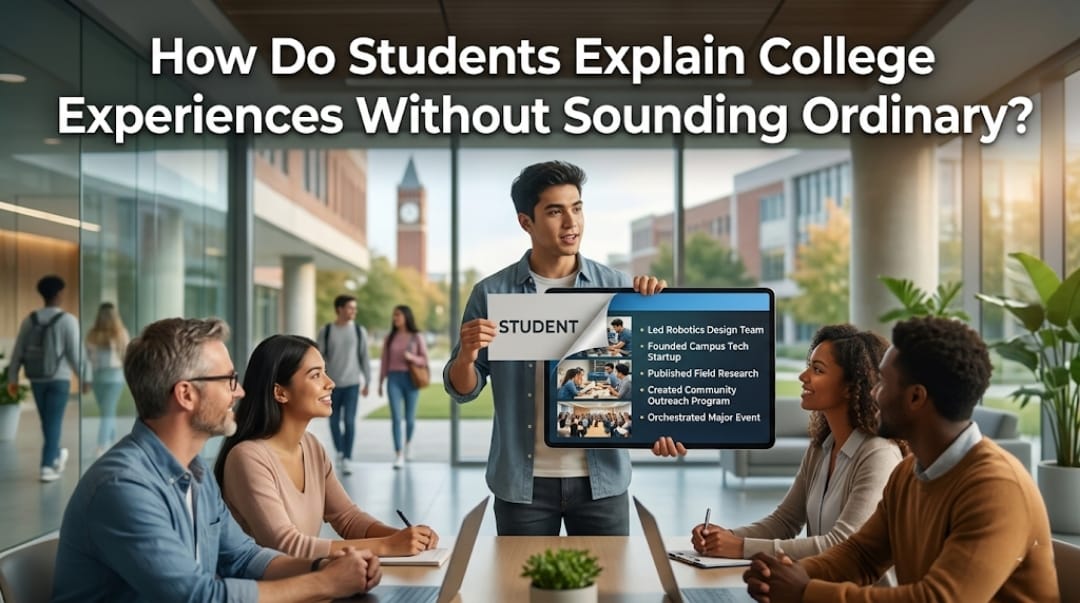
For many students and fresh graduates, college experiences become the main examples discussed during job interviews. These experiences may include academic projects, organizational involvement, research assignments, or presentations. However, some candidates worry that these stories may sound too ordinary when explained to recruiters.
In reality, college experiences can become meaningful and memorable when presented effectively. The key is not the number of activities a student has completed, but how those experiences are explained. By focusing on contribution, challenges, and results, students can turn simple academic experiences into valuable professional stories.
Learning how to communicate these experiences clearly can help candidates stand out during interviews.
FOCUS ON MEANINGFUL EXPERIENCES
Not every college activity needs to be discussed during an interview. It is better to choose experiences that involved responsibility, learning, or problem solving.
For example, a complex project, an organizational role, or a challenging academic task can provide stronger stories than routine activities. Experiences that involve decision making or teamwork often offer more interesting insights.
Selecting the right example helps make your explanation more engaging.
EXPLAIN YOUR PERSONAL CONTRIBUTION
One common reason experiences sound ordinary is because they are described too generally. Candidates sometimes talk about group activities without explaining their individual role.
To avoid this, clearly describe what responsibilities you handled and what actions you took. This might include conducting research, coordinating with team members, preparing reports, or leading discussions.
Highlighting personal contributions allows interviewers to understand your specific strengths.
DISCUSS CHALLENGES AND HOW YOU SOLVED THEM
Stories become more interesting when they include challenges. In college, difficulties might involve tight deadlines, limited resources, or disagreements within a group.
Explain how you approached these situations and what steps you took to resolve them. This demonstrates problem solving, adaptability, and critical thinking.
Employers often appreciate candidates who can remain effective when facing obstacles.
HIGHLIGHT RESULTS OR IMPACT
After explaining the process, mention the outcomes of the experience. This could include successful project completion, positive feedback from lecturers, or improvements made through your contribution.
Results show that your efforts led to something meaningful. Even small outcomes can strengthen your story when presented clearly.
Interviewers often remember examples that include clear achievements.
CONNECT EXPERIENCES WITH JOB SKILLS
To make your story more relevant, link your college experience with the skills required for the job. For example, teamwork, communication, analysis, or time management.
This connection helps interviewers understand how your academic background prepares you for professional responsibilities.
By showing this relationship, your story becomes more than just a description of college activities.
PRACTICE CLEAR AND STRUCTURED STORYTELLING
The way an experience is explained can greatly influence how it is perceived. Long and unfocused explanations may make even strong experiences seem ordinary.
Practicing a clear structure can help. Start by describing the situation, explain your task, discuss the actions you took, and finish with the results.
This structured approach makes your story easier to follow and more impactful during interviews.
CONCLUSION
College experiences do not have to sound ordinary during job interviews. By selecting meaningful examples, explaining personal contributions, discussing challenges, and highlighting results, students can turn academic activities into strong professional stories.
For fresh graduates, the ability to communicate college experiences effectively can demonstrate readiness for the workplace and help create a positive impression on recruiters.
Tentang Penulis
Gusti Ayu Tita
Penulis — Universitas STEKOM
Penulis aktif yang berfokus pada isu-isu akademik, teknologi pendidikan, dan pengembangan sumber daya manusia di lingkungan kampus.