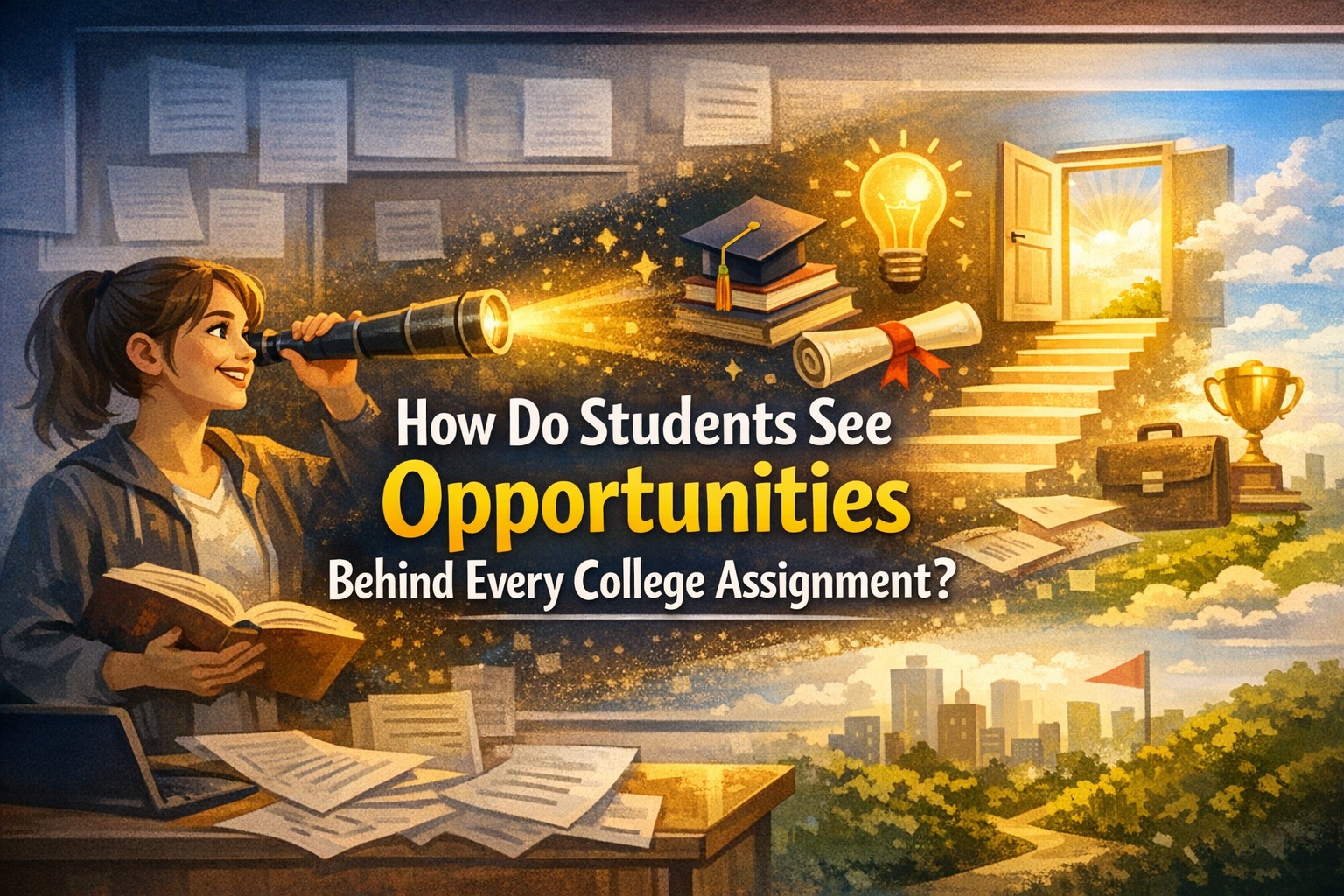
For many college students, assignments are often associated with deadlines, grades, and academic pressure. They are seen as tasks that must be completed quickly before moving on to the next responsibility. However, some students view assignments from a completely different perspective. Instead of seeing them as routine academic work, they recognize opportunities hidden behind every task.
This perspective allows students to gain more value from their academic experiences. By looking beyond the basic requirements, they transform assignments into platforms for creativity, skill development, and real-world exploration.
CHANGING THE PERSPECTIVE ON ASSIGNMENTS
The first step in discovering opportunities behind assignments is changing the way students perceive them. When assignments are seen only as obligations, students tend to focus on finishing them as quickly as possible. As a result, they miss the chance to explore deeper ideas.
Students who recognize opportunities approach assignments with curiosity and interest. They ask how the topic connects to real-world problems or how their work might create meaningful solutions. This change in perspective encourages deeper engagement and more thoughtful work.
Over time, assignments become more than academic tasks. They become opportunities for intellectual exploration.
IDENTIFYING POTENTIAL IN EVERY TASK
Every assignment contains potential for learning and innovation. Whether it involves writing an essay, preparing a presentation, or conducting research, each task encourages students to explore new knowledge and perspectives.
For example, a marketing assignment may inspire a student to analyze real business strategies. A social science project could lead to discussions about community challenges. Meanwhile, a technology assignment might encourage the development of a simple digital solution.
When students look carefully at the purpose of each assignment, they often discover possibilities that go beyond the classroom.
USING CREATIVITY TO EXPAND IDEAS
Creativity plays a crucial role in turning assignments into opportunities. Students who think creatively often explore different ways to approach a topic. They combine ideas from various sources, experiment with new methods, and present unique perspectives.
This creative approach can transform simple tasks into meaningful projects. A presentation might become a public awareness campaign, while a research project could inspire a practical solution to a real issue.
Creativity allows students to see assignments as starting points rather than final products.
DEVELOPING SKILLS THROUGH OPPORTUNITY-FOCUSED LEARNING
When students treat assignments as opportunities, they also develop valuable skills that support their future careers. Skills such as critical thinking, problem solving, research ability, and communication improve when students engage deeply with their work.
Assignments that are explored creatively often require students to analyze information, organize ideas, and present solutions effectively. These experiences help students prepare for professional environments where innovative thinking is highly valued.
By recognizing opportunities in their assignments, students gain both knowledge and practical abilities.
THE ROLE OF MOTIVATION AND INITIATIVE
Motivation and initiative are essential for students who want to discover opportunities behind assignments. These students are willing to go beyond minimum requirements and invest additional effort in developing their ideas.
They may conduct extra research, experiment with new approaches, or collaborate with peers to improve their projects. This initiative often leads to results that are more meaningful and impactful.
When students take ownership of their assignments, they begin to see them as personal projects rather than mandatory tasks.
CONCLUSION
Opportunities often exist within everyday academic tasks, but not every student recognizes them. Students who change their perspective, remain curious, and apply creativity are more likely to discover the hidden potential behind their assignments.
By treating assignments as platforms for exploration and innovation, students can transform routine academic work into valuable learning experiences. In doing so, they not only improve their academic performance but also develop skills that will benefit them long after graduation.
Tentang Penulis
Gusti Ayu Tita
Penulis — Universitas STEKOM
Penulis aktif yang berfokus pada isu-isu akademik, teknologi pendidikan, dan pengembangan sumber daya manusia di lingkungan kampus.