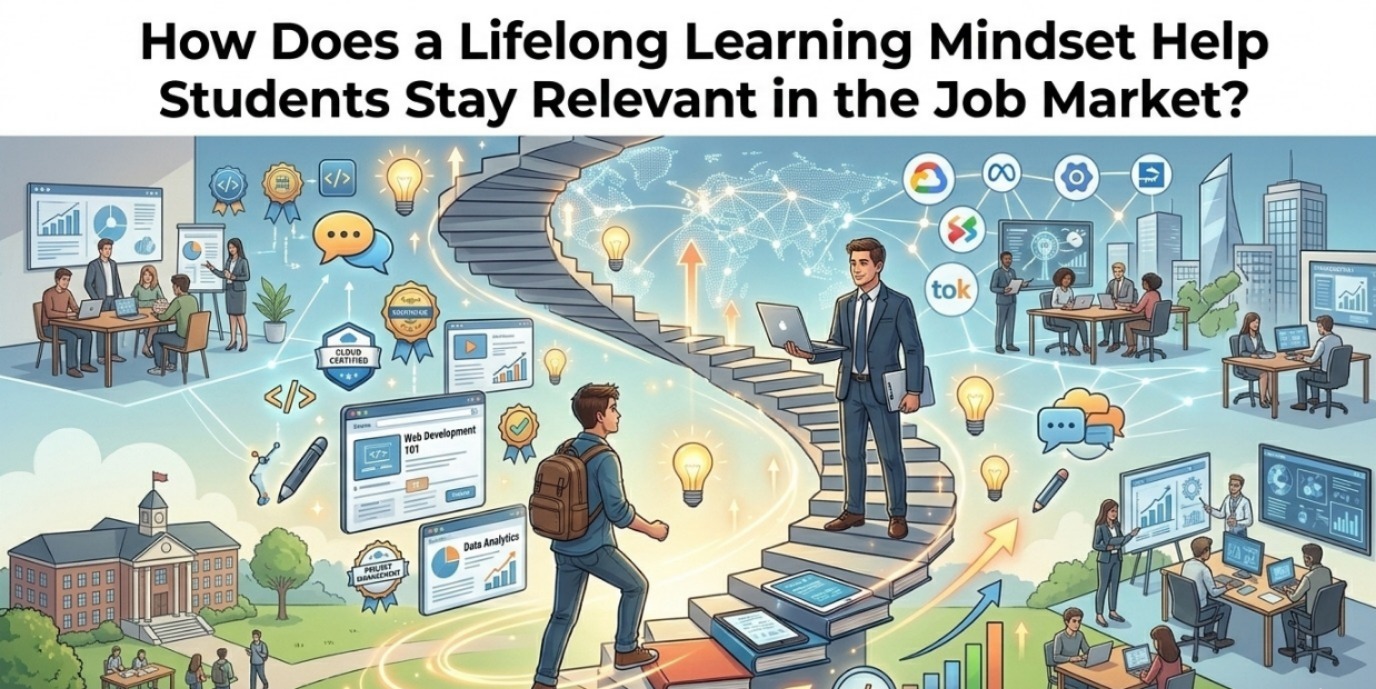
In today’s rapidly changing world, knowledge and skills can become outdated quickly. Technological advancements, evolving industries, and shifting workplace demands require individuals to continuously update their abilities. For students who are preparing to enter the professional world, developing a lifelong learning mindset can be an important strategy for staying relevant in the job market.
A lifelong learning mindset encourages individuals to continuously seek knowledge, improve their skills, and adapt to new challenges throughout their careers. For students, adopting this mindset early can provide a strong foundation for long-term professional development.
UNDERSTANDING THE CONCEPT OF LIFELONG LEARNING
Lifelong learning refers to the ongoing process of gaining knowledge and skills throughout a person’s life. It is not limited to formal education in schools or universities but also includes self-directed learning through various experiences.
Students with a lifelong learning mindset understand that education does not end after graduation. Instead, they see learning as a continuous journey that helps them grow both personally and professionally.
This perspective motivates them to explore new ideas, develop new competencies, and remain curious about developments in their field of interest.
ADAPTING TO CHANGING INDUSTRY DEMANDS
One of the main reasons lifelong learning is important is the constant evolution of industries. Many professions today require new skills that may not have been part of traditional academic curricula.
For example, digital skills, data literacy, and technological awareness have become increasingly valuable in many fields. Students who actively seek opportunities to learn new tools and technologies can better adapt to these changes.
By staying informed about industry developments, students can prepare themselves for future job requirements and maintain their competitiveness in the labor market.
EXPANDING SKILLS BEYOND ACADEMIC KNOWLEDGE
While academic knowledge provides an important foundation, many employers also value practical and interpersonal skills. A lifelong learning mindset encourages students to develop these additional abilities.
Students can participate in workshops, online courses, training programs, or collaborative projects that allow them to expand their skill sets. They may also improve soft skills such as communication, teamwork, critical thinking, and problem-solving.
These skills often complement academic knowledge and increase students’ readiness to contribute effectively in professional environments.
BUILDING ADAPTABILITY AND CONFIDENCE
Students who continuously learn and explore new experiences often develop greater adaptability. They become more comfortable facing unfamiliar situations and adjusting to changing circumstances.
Adaptability is particularly important in modern workplaces, where employees are expected to handle evolving responsibilities and new technologies.
At the same time, continuous learning helps students build confidence in their abilities. Each new skill or experience strengthens their sense of preparedness for future challenges.
CREATING LONG TERM CAREER OPPORTUNITIES
A lifelong learning mindset not only helps students find their first job but also supports their long-term career growth. Professionals who continue learning are more likely to discover new opportunities, expand their expertise, and advance in their careers.
By remaining curious and open to learning, individuals can adapt to different roles, industries, and professional environments over time.
For students, developing this mindset early can create a lasting advantage in an increasingly competitive job market.
CONCLUSION
A lifelong learning mindset plays a crucial role in helping students stay relevant in the job market. By continuously seeking knowledge, adapting to industry changes, and expanding their skills, students can prepare themselves for both current and future professional challenges.
When students view learning as a lifelong journey rather than a temporary stage of education, they position themselves for sustained growth and long-term career success.
Tentang Penulis
Gusti Ayu Tita
Penulis — Universitas STEKOM
Penulis aktif yang berfokus pada isu-isu akademik, teknologi pendidikan, dan pengembangan sumber daya manusia di lingkungan kampus.