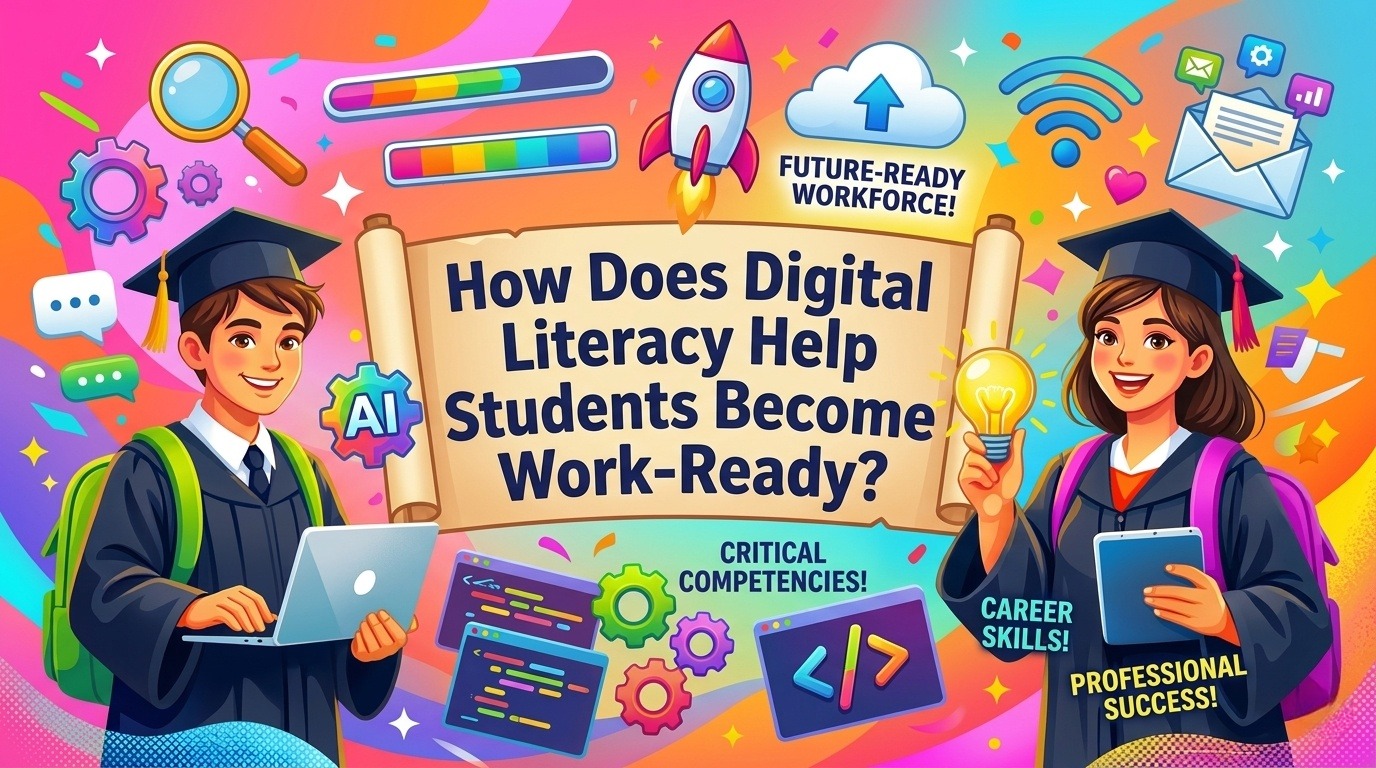
In today’s fast-paced digital world, students are expected to enter the workforce with more than just academic knowledge. Digital literacy has emerged as a critical skill that helps students prepare for professional environments, enabling them to work efficiently, communicate effectively, and adapt to evolving technologies.
Students who are digitally literate are better equipped to meet workplace demands and are more competitive when seeking job opportunities. This skill enhances both personal productivity and professional readiness.
THE ROLE OF DIGITAL LITERACY IN WORKPLACE READINESS
Digital literacy refers to the ability to find, evaluate, and use information through digital technologies responsibly and effectively. For students, mastering digital tools and platforms can significantly improve their academic performance and professional development.
By being digitally literate, students can manage data efficiently, collaborate online with peers, and present ideas clearly. This foundation ensures they are capable of navigating modern workplace systems with confidence.
IMPACT ON CAREER COMPETENCE
Digital literacy directly contributes to career readiness. Key benefits for students include:
* Enhanced Productivity: Using digital tools helps students complete tasks faster and more efficiently.
* Improved Communication Skills: Digital platforms allow students to interact professionally with colleagues, instructors, and clients.
* *Adaptability: Students can quickly learn and adapt to new technologies and workplace tools.
* *Innovation and Problem-Solving: Digital skills foster creative thinking and the ability to implement solutions effectively.
STRATEGIES TO DEVELOP DIGITAL LITERACY
Students can strengthen their digital literacy through several practical methods:
1. Participate in Online Courses or Workshops
Courses on software, data analysis, and productivity tools enhance students’ technical knowledge.
2. Engage with Digital Platforms Regularly
Using collaboration tools, cloud storage, and communication apps provides hands-on experience.
3. Join Projects or Student Organizations
Applying digital skills in real-world projects or campus initiatives builds practical experience and teamwork.
4. Learn Digital Ethics and Security
Understanding data privacy, cybersecurity, and responsible technology use is crucial for professional conduct.
LONG-TERM BENEFITS
Developing digital literacy equips students not only for immediate academic success but also for long-term career growth. Students with strong digital skills are more adaptable, efficient, and capable of innovation, making them highly valued in any professional environment.
CONCLUSION
Digital literacy plays a crucial role in helping students become work-ready. By mastering technology and online tools, students enhance productivity, communication, adaptability, and creativity. Prioritizing the development of digital literacy ensures students are prepared for the demands of modern workplaces and future career opportunities.
Tentang Penulis
Gusti Ayu Tita
Penulis — Universitas STEKOM
Penulis aktif yang berfokus pada isu-isu akademik, teknologi pendidikan, dan pengembangan sumber daya manusia di lingkungan kampus.